
F-35B vs. Eurofighter: British Carrier Based Stealth Jets Engage Fourth Generation Fighters in Mock Air Battles
Military Watch Magazine Editorial Staff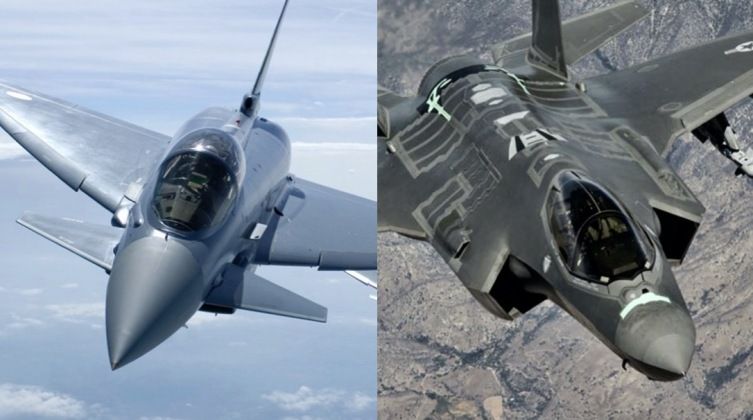
Eurofighter (left) and F-35 Multirole Fighters
As the British Royal Navy moves to increase the operational capabilities of its leading aircraft carrier HMS Queen Elizabeth, the warship’s air wing has tested its capabilities against Eurofigher Typhoon jets from the Royal Air Force in multiple mock air battles. The carrier is currently preparing for a 2021 deployment with a full strike group of destroyers attack submarines and frigates, which is expected to see the ships pass through the Mediterranean Sea, the Persian Gulf and end in the Pacific. Queen Elizabeth Class ships lack catapults or arresting gear meaning they are only able to deploy fixed wing aircraft with vertical landing capabilities - namely the F-35B fifth generation single engine platform of which each carrier is intended to deploy 36-48. Although the F-35B has attained an initial operating capability, it is still very far from fully operational or ready for air to air combat against a high end adversary. This combined with the relatively small numbers in which is fielded, and the retirement of the last of its Cold War era Tornado jets in 2019, has placed a heavy burden on the Eurofighter to meet Britain’s defence requirements over the coming years.
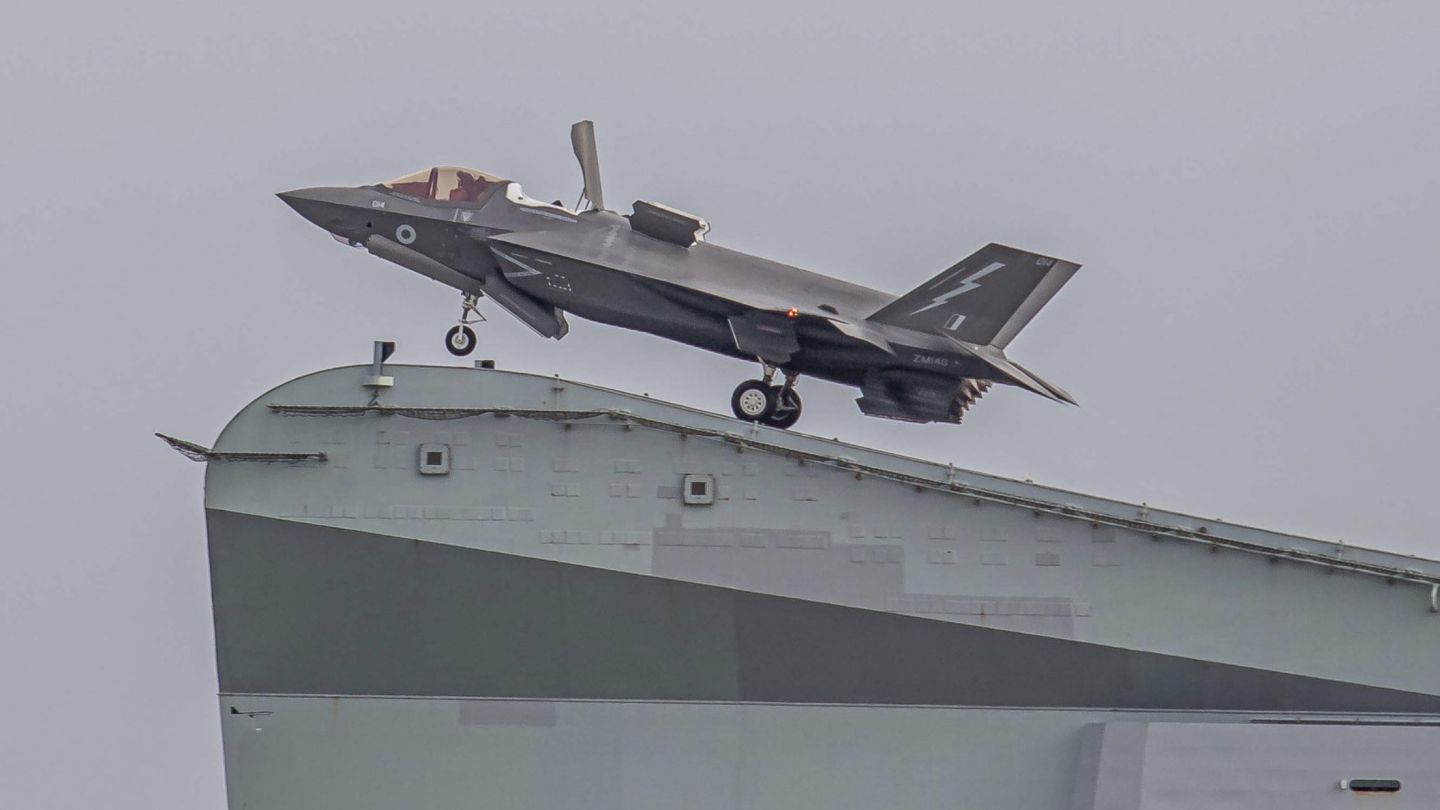
While the F-35B was primarily designed for an air to ground mission, the Eurofighter is balanced between air to air and land attack roles and boasts a superior flight ceiling, higher speed and much better manoeuvrability. It is thought that the F-35B will eventually be able to match the older fourth generation jets in air to air combat however, with the new stealth fighters boasting a range of advanced features including a radar evading airframe, state of the art avionics and electronic warfare systems and an extremely powerful sensor suite built around the AN/APG-81 active electronically scanned array (AESA) radar. British Eurofighters are still reliant on passively scanned radars which are not only less powerful but are also considerably easier to jam, which combined with older avionics and a lack of comparable stealth capabilities could leave them at a significant disadvantage at longer ranges once current issues with the F-35 are resolved. Britain is currently developing a sixth generation fighter to succeed the Eurofighter under the Tempest program, although it remains to be seen whether its performance will be comparable with the ambitious programs underway in the United States, China and other states with much larger defence sectors and research and development budgets.
