
Britain’s Tempest Sixth Generation Fighter Program - Can it Succeed?
Military Watch Magazine Editorial Staff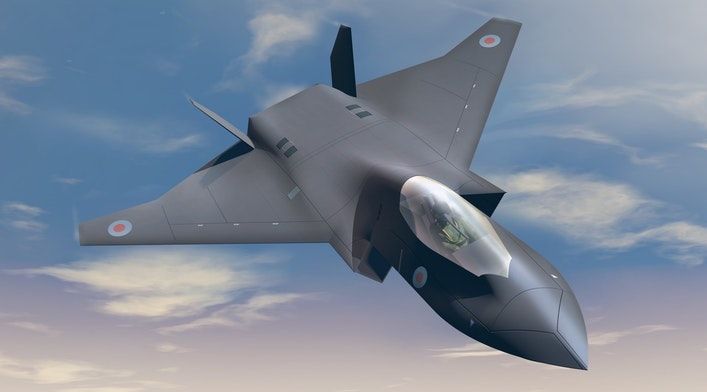
British Tempest Sixth Generation Fighter Concept Art
Team Tempest
Possibly the country's first indigenous fighter since the Harrier Jet, the British Tempest fighter was announced in July 2018 as a planned replacement for the ”˜4+ generation’ Eurofighter Typhoon - an aircraft developed jointly with Germany and Italy which allowed a number of European powers to replace Cold War era platforms such as the F-4 Phantom. The announcement of the new fighter, which would allegedly field sixth generation capabilities, came within a month of Germany and France’s unveiling of their own plans for a joint next generation jet. While France produced fighter jets independently throughout the Cold War, albeit at higher prices and with inferior capabilities to the U.S. and Soviet analogues, and abandoned the Eurofighter program to produce the ”˜4+ generation’ Dassault Rafale, the country’s defence industry is unlikely to be able to support a sixth generation program alone. Given the growing political rift between Britain and mainland Europe, a joint French-German rather than a British-German program as per the previous Tornado and Eurofighter aircraft is likely a shift which has come at least in part as a result - a closing of ranks among the leading powers of the European Union - with France even having proposed making a pan-EU combat aircraft.
Regarding plans for the new fighter, UK Defence Secretary Gavin Williamson introduced a full sized model of the new Tempest jet at the Farnborough Air Show in 2018 - as British Prime Minister Theresa May pledged that the country would retain world class military aviation. The sixth generation fighter is set to deploy hypersonic missiles, laser weapons and new engines surpassing those of anything currently in service anywhere in the world - including those of fifth generation fighters currently in service such as the F-35 and J-20. These technologies all remain theoretical, and while the United States, China and Russia have reportedly invested heavily in developing such technologies Britain and European powers in general remain considerably behind in such cutting edge combat systems used by the latest aircraft. Another technology being designed for the fighter is a ”˜cooperative engagement capability’ - which will allow the aircraft to better coordinate and share information with other battlefield systems and coordinate its actions.
The Tempest may well lack conventional guns altogether - and making use of lasers, microwave emitters and other radiation emitters alongside hypersonic weapons it could likely have little need for them. The main question about the Tempest however is whether the program is viable - and whether it is anything more that a publicity stunt at a time when the sharply declining British armed forces’ place in the world are brought to serious question. Considering that Britain has long relied on cooperation with defence partners, either in Europe or the United States, for its fighter programs, the country’s ability to develop a sixth generation fighter independently is highly questionable. With the United States, China and Russia all well ahead in their military aviation technologies, and set to induct sixth generation fighters in considerably greater numbers than Britain ever could and, based on the history of European and British fighter programs - far more cost effectively, the future of the Tempest on export markets does not appear promising. The fighter will also face considerable competition for the relatively small domestic market, with U.S. analogues including possible sixth generation variants of the F-35 likely to be not only more advanced but also cheaper based on the precedents consistently set by previous generations of fighter jets. Unless taken up as a joint program with the United States or some other major power, the Tempest is unlikely to be viable either fiscally or technologically as a sixth generation fighter jet. Its success as a primarily indigenous British combat aircraft given its highly ambitious planned capabilities remains unlikely.
