
Britain Makes Rare Surge of Heavily Armed Nuclear Submarine Forces at Sea Amid High Tensions with Russia
Military Watch Magazine Editorial Staff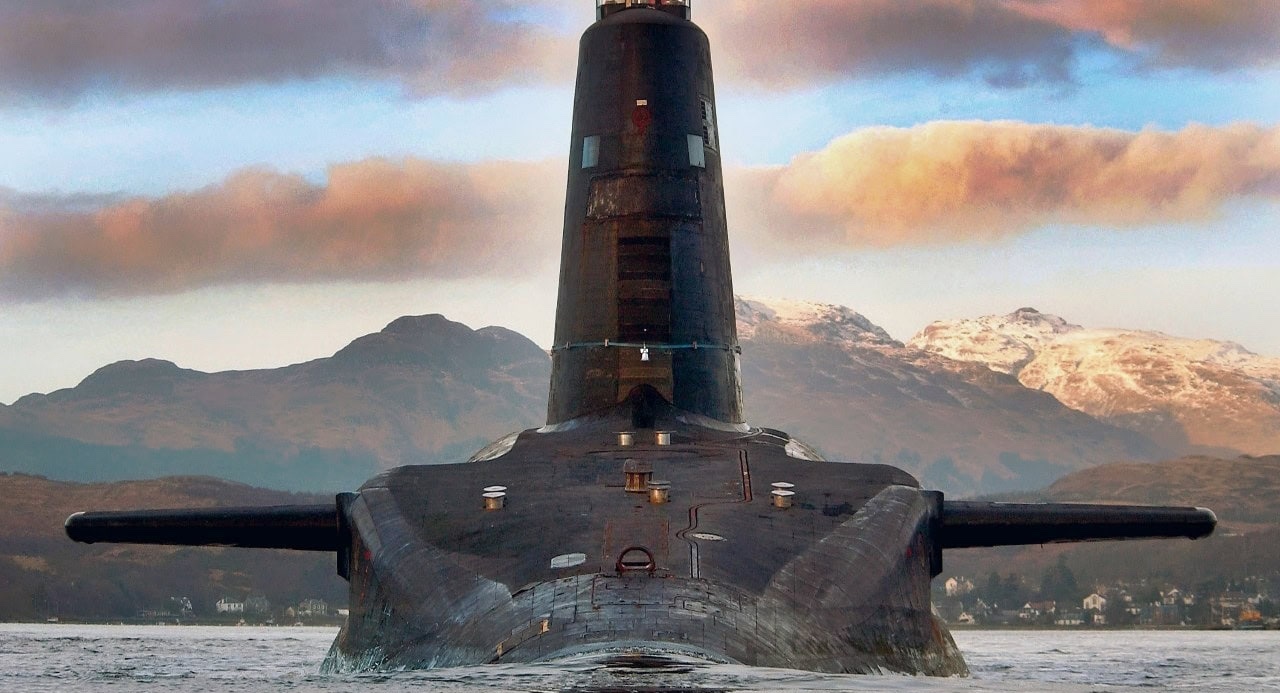
British Royal Navy Vanguard Class Submarine
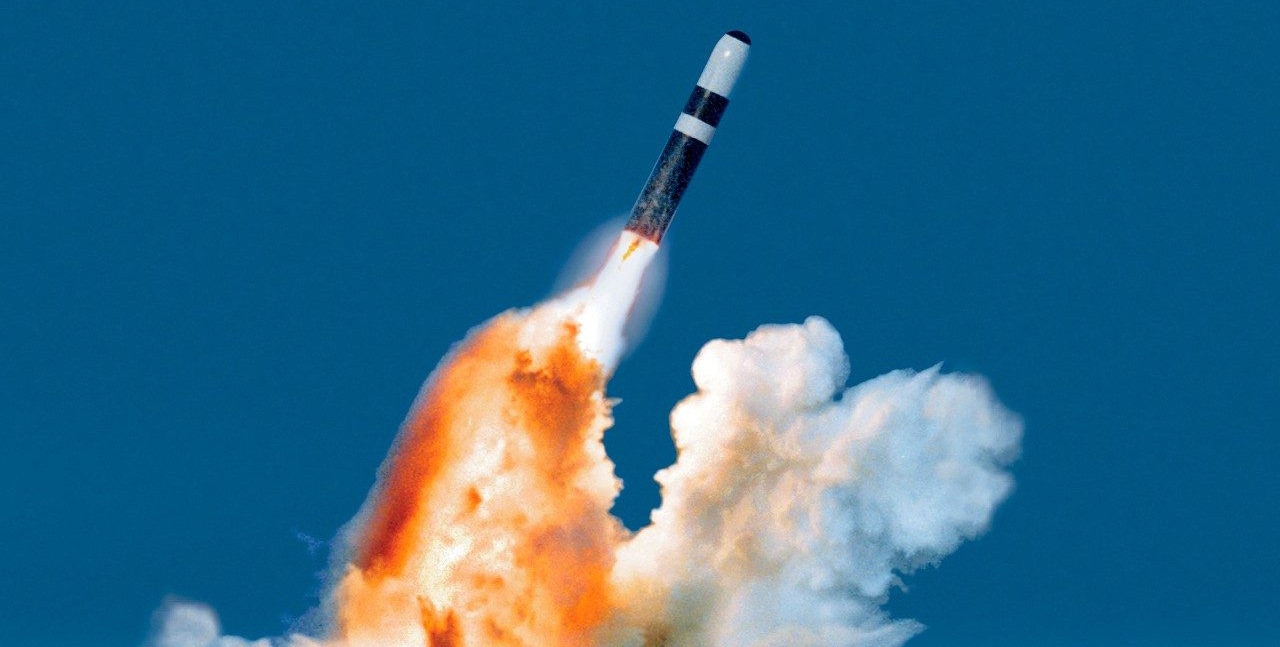
The British Royal Navy has sent three of its four Vanguard-class nuclear-powered ballistic missile submarines to sea simultaneously, which is a highly unusual development that reportedly has not occurred for at least five years. At least one submarine is believed to be conducting a routine nuclear deterrent patrol carrying Trident intercontinental range ballistic missiles armed with nuclear warheads, while the other two are thought to be preparing for operations or conducting sea trials. Vanguard class ships are among the most heavily armed in the world, with each deploying up to 16 intercontinental range ballistic missiles, each of which can carry up to eight warheads for a total of up to 128 warheads per ship.
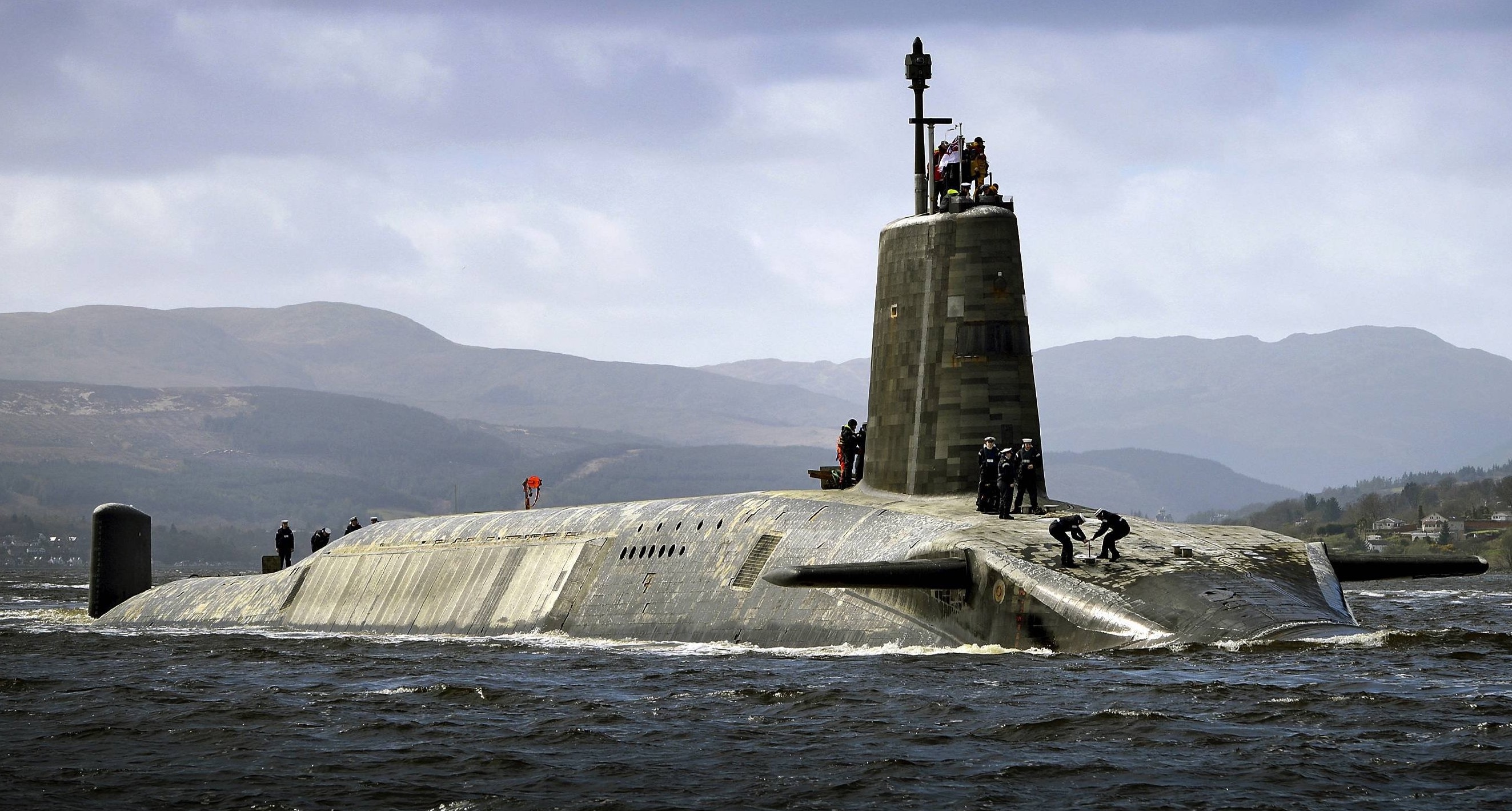
The Royal Navy’s continuous at-sea deterrence policy requires at least one nuclear-armed ballistic missile submarine to remain on patrol at all times. This provides the United Kingdom with a survivable nuclear retaliatory capability, allowing the country to maintain a nuclear deterrent even if its territory and other military assets come under attack. The Ministry of Defence has declined to disclose the submarines’ missions during the latest surged deployment, leaving uncertainty over whether the simultaneous deployments reflect improved fleet availability or other operational requirements. Britain’s nuclear deterrent currently depends on its four Vanguard class submarines, which entered service between 1993 and 1999 and are approaching four decades of operational use. The class is scheduled to be replaced by the Dreadnought class during the next decade, with the new submarines intended to sustain Britain’s continuous at-sea deterrence into the future.
Having three of the four submarines at sea simultaneously is not part of the normal operating pattern, and may cause greater challenges with availability in future by increasing wear on the fleet. Low availability rates have forced strategic submarine crews to endured exceptionally long patrols in recent years. HMS Vanguard reportedly spent more than 200 days at sea during a patrol in 2025, while HMS Victorious conducted a deployment lasting 207 days in 2021. Such prolonged operations place considerable demands on personnel and equipment, making the availability of additional submarines important for maintaining the continuous deterrent while allowing boats and crews time for maintenance and recovery. The fleet has suffered a number of further issues, with the Navy forced to abort a secret operation and recall one of the ships, HMS Victorious, after a fire broke out onboard, as was revealed in November 2022.
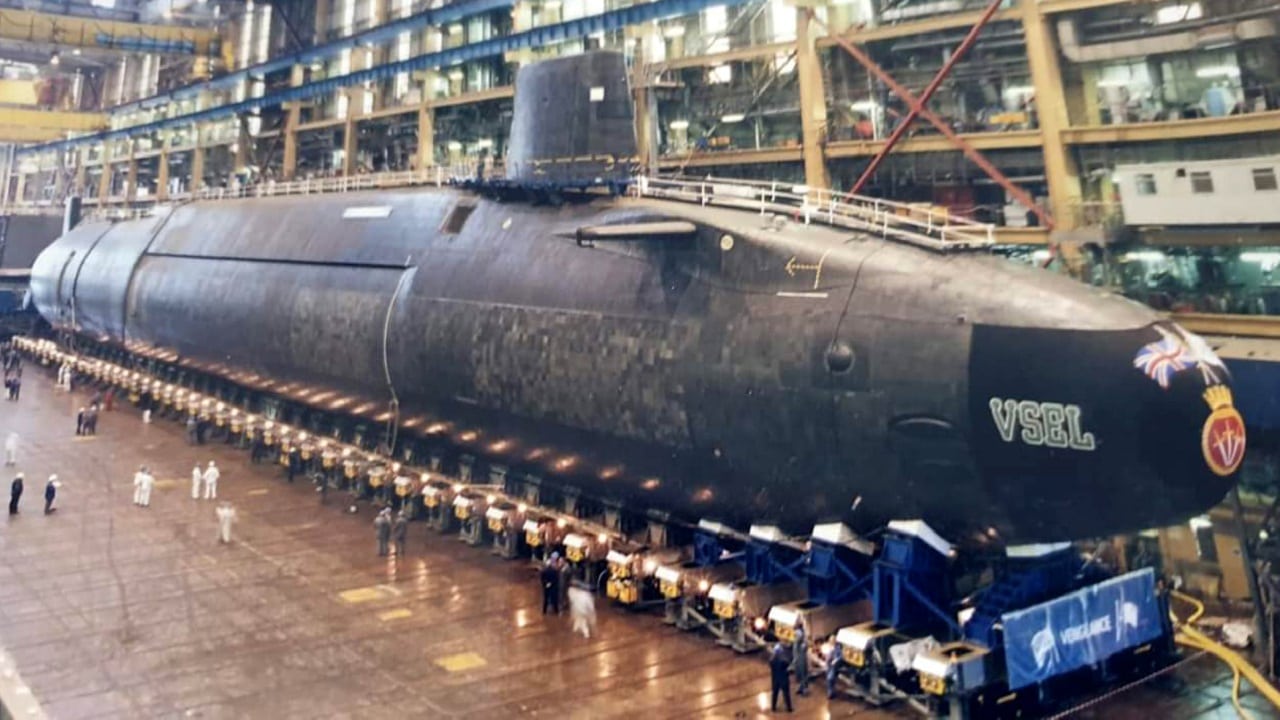
The United Kingdom’s ability to sustain its submarine fleet has repeatedly been brought to question. Commenting on issues industry has faced, former director of nuclear policy at the Ministry of Defence Rear Admiral Philip Mathias in December 2025 warned that the country was no longer capable of running its nuclear submarine program. “The UK is no longer capable of managing a nuclear submarine program… Performance across all aspects of the program continues to get worse in every dimension. This is an unprecedented situation in the nuclear submarine age. It is a catastrophic failure of succession and leadership planning,” he concluded. The admiral observed that years of mismanagement had seriously eroded fleet availability rates and a wide range of other performance metrics, and stressing that the fleet has suffered from “shockingly low availability” rates.
