
Britain Reveals Expanded Role For New F-35A Fighters Beyond Nuclear Strikes
Military Watch Magazine Editorial Staff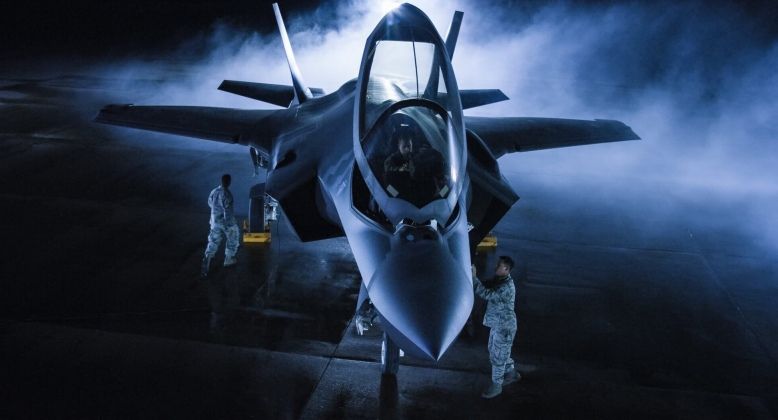
F-35A Fighter
The British Royal Air Force has clarified that the planned procurement of F-35A fifth generation fighters was not driven primarily by the requirement to carry U.S. B61-12 tactical nuclear bombs, despite the government’s announcement last year that the aircraft would restore an airborne nuclear role for the first time since 1998. Senior Air Force officials have instead argued that the conventional take-off and landing (CTOL) F-35A was selected because it offers substantially greater affordability, range, endurance, and training efficiency than the short take-off and vertical landing (STOVL) F-35B currently in service. This follows widespread speculation that a much greater role is intended for the F-35A.
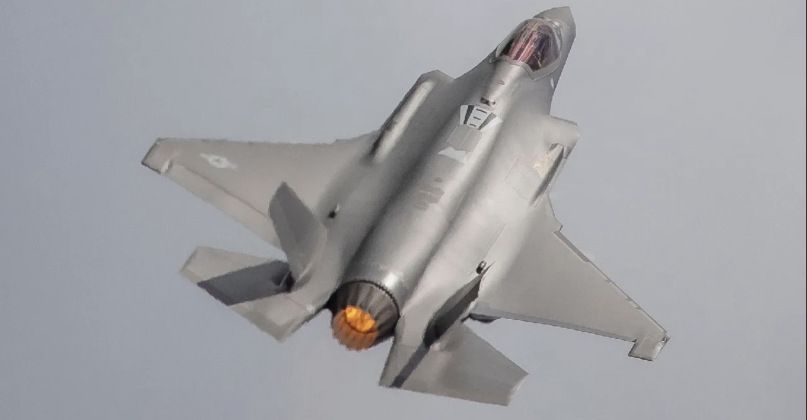
According to Air Vice-Marshal Mark Flewin, the aircraft’s principal purpose will be to support the Air Force’s Operational Conversion Unit, which trains new F-35 pilots. Because the F-35A has lower acquisition and operating costs than the F-35B, as well as greater range, higher payload capacity, and reduced maintenance requirements, it is considered significantly more efficient for routine flying and pilot training. Any nuclear certification would therefore represent an additional capability rather than the primary reason for acquiring the aircraft. This statement provides one of multiple indications that larger scale F-35A procurements beyond the 12 fighters announced are likely, since the current number would be insufficient both to train pilots for the F-35B and to provide a nuclear strike capability.
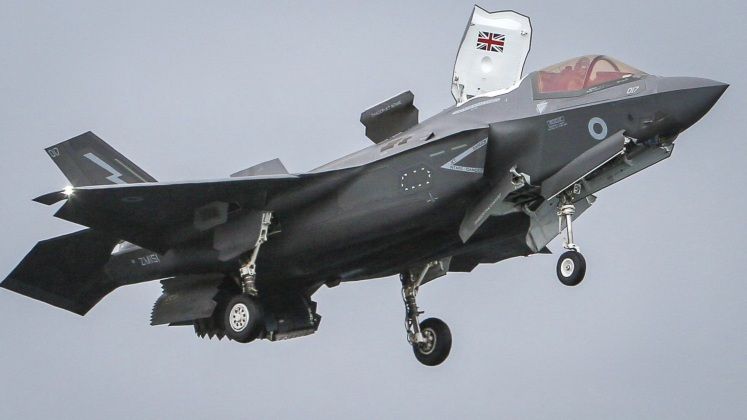
The British Ministry of Defence was previously expected to concentrate procurement funding on the Eurofighter fourth generation fighter and the F-35B, with significant lobbying efforts from local industry having been intended to ensure that the Eurofighter program continues to receive funding while the F-35A is not considered as an alternative. The United Kingdom has ended Eurofighter procurements and begun to rapidly phase the aircraft out of service, despite many of the fighters being just a fraction of the way through their service lives, while investing heavily in the F-35 program.
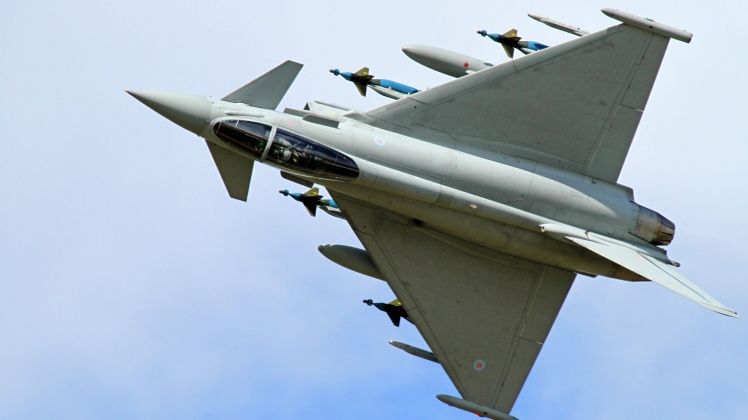
The decision to end Eurofighter procurements was first reported in November 2024, with the fighter having consistently been evaluated by export clients from South Korea and Singapore to Finland and Belgium to be uncompetitive against the F-35 despite the similar costs of both aircraft. In contrast to France, which has refused to procure the more advanced fifth generation F-35, has relied solely on its own closely related analogue to the Eurofighter, the Rafale, and Germany, which has hedged between the two options and expanded orders for both the F-35 and the Eurofighter, the United Kingdom is expected to focus all fighter procurement funding on the F-35 for the foreseeable future, and to gradually expand its F-35A fleet beyond training and nuclear strike roles. This will likely provide it with a much more capable and cost effective fleet than those relying on less advanced European fighter types.
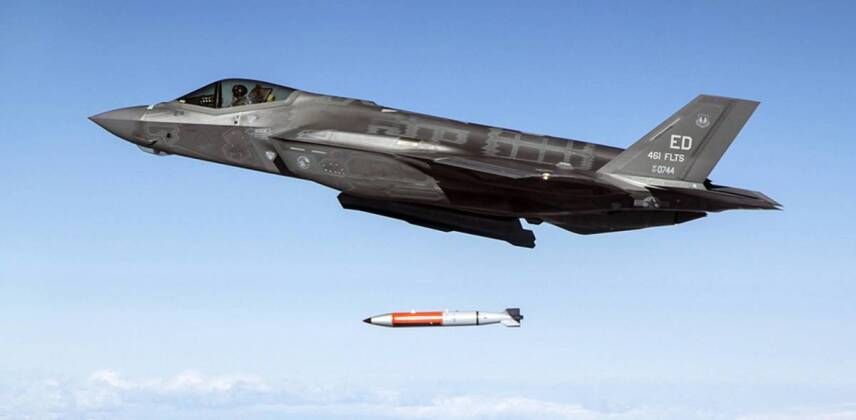
The decision to procure the F-35A reflects broader financial considerations. The F-35A is generally regarded as the least expensive variant of the fighter type, both in terms of its procurement and its sustainment costs. By using the aircraft for most domestic training, the Air Force expects to preserve flying hours on its carrier-capable F-35Bs, reducing wear on aircraft needed for expeditionary operations with the Royal Navy. Not only is the F-35A 30-35 percent less costly to procure, but it is also far easier and less costly to maintain, while having a superior flight performance, longer range, and a significantly higher weapons carrying capacity.
