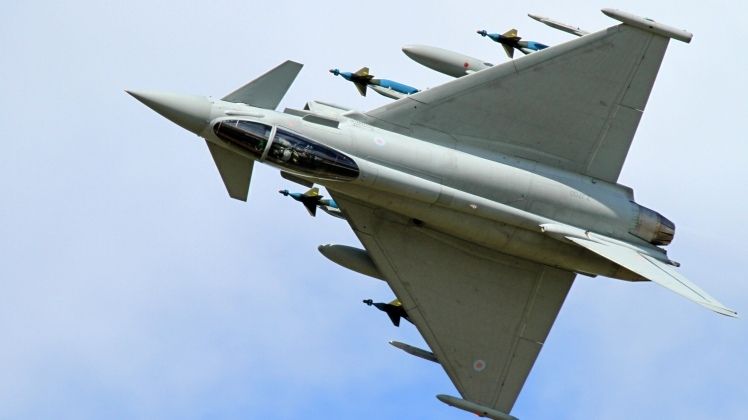
The United Kingdom Ministry of Defence has for the first time permitted Eurofighter combat jets based in Romania to shoot down Russian aircraft inside Ukrainian airspace, representing a major landmark in the expansion of Britain’s direct involvement in the ongoing Russian-Ukrainian War. The Romanian Defence Ministry reported that one Eurofighter made radar contact with an unmanned aircraft at a distance of 1.5 kilometres from the Ukrainian city of Reni in the Odessa region, and received permission to destroy it, setting a precedent for NATO members to potentially play a much more active role in the ongoing air campaign against Russia. “The pilots had authorisation to engage the drones,” the Ministry stated, adding that multiple explosions were subsequently reported in Reni.
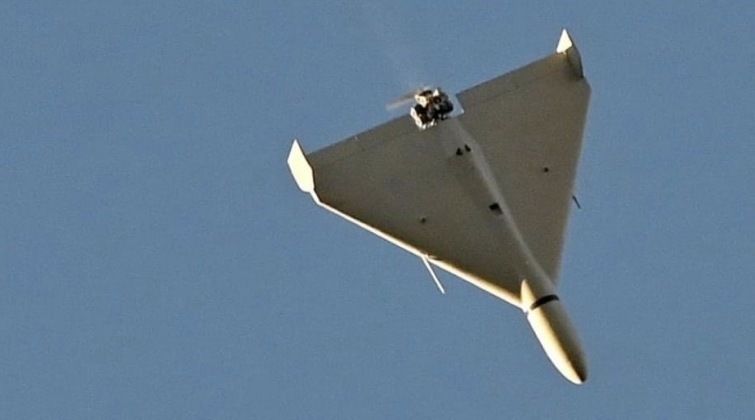
Shahed 136 Single Use Attack Drone in Russian Service
Eurofighters are currently based at the 86th Air Base in Fetesti, with their presence representing part of a broader surge in Western European NATO members’ fighter presences near Russian and Ukrainian territory. The British Armed Forces already maintain a significant presence on the ground in Ukraine, which was more widely acknowledged following the death of one serviceman, Lance Corporal George Hooley of the Parachute Regiment, in December 2025. Ukrainian political and military leaders have from 2022 called for NATO members to provide greater support to its air defences, although Western military leaders have consistently made clear that Russia’s nuclear capabilities have limited their readiness to escalate their involvement in the war including with such direct intervention.
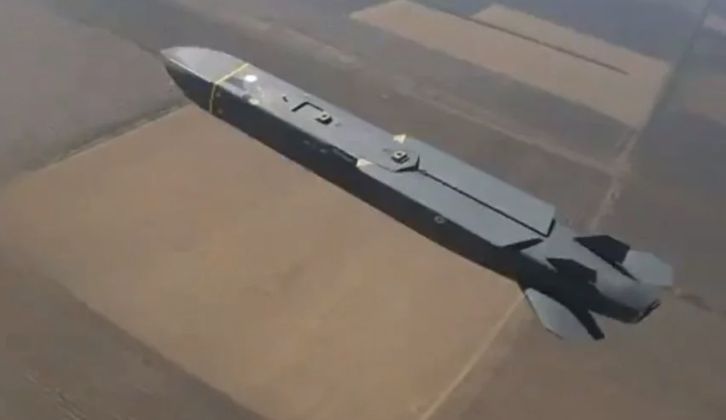
Launch of British Storm Shadow Cruise Missile By Ukrainian Su-24 Fighter
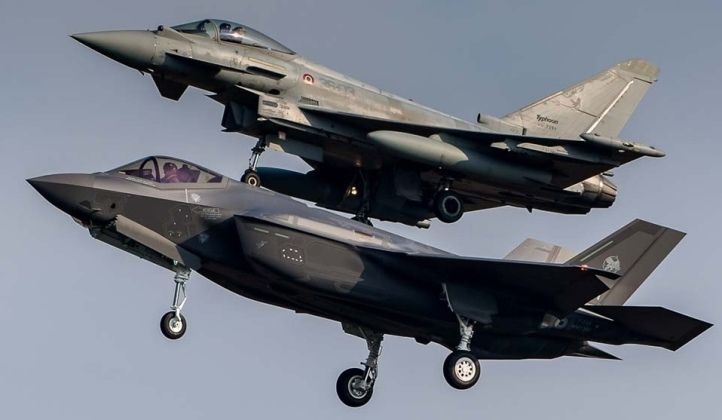
In January 2024 German Chancellor Olaf Scholtz confirmed that British special forces on the ground in Ukraine were providing vital support in facilitating cruise missile launches against Russian targets. In May that year the head of the U.S. Special Operations Command General Bryan Fenton stated that the Pentagon had been learning about the ongoing war “mostly through the eyes of our UK special operations partners,” who he stated had been testing new approaches to modern warfare in on the ground in Ukraine. As early as December 2022, British Deputy Chief of Defence Staff Royal Marines Lieutenant General Robert Magowan revealed that the Marines had been carrying out high risk operations alongside Ukrainian government forces from April that year. 300 personnel from the Royal Marines 45 Commando Group were revealed to be conducting “discreet operations,” with Magowan stressing that these were carried out “in a hugely sensitive environment and with a high level of political and military risk.” With the United Kingdom having played a leading role in escalating direct involvement in the war effort, it remains highly possible that it will set a precedent for fighter operations to defend Ukrainian airspace.F-35 (front) and Eurofighter
The viability of British Royal Air Force Eurofighters for high intensity engagements with Russian forces has been seriously questioned by analysts, with the fighters relying on mechanically scanned array radars that are considered well over a decade past obsolescence. In January 2026 it was revealed that the Ministry of Defence was financing the procurement of urgently needed active electronically scanned array new radars for just 40 of the Eurofighters in its fleet, which is in line with broader trends towards the aircraft’s deprioritisation. The Ministry in 2025 confirmed that there were no plans purchase further Eurofighters, with the Air Force set to continue to withdraw them from service while ordering more advanced F-35A fifth generation fighters, from the United States the first of which will arrive in the early 2030s.