
Boeing’s First Preview of the F/A-XX Sixth Generation Carrier Based Fighter Reveals Very Low Observable Design
Military Watch Magazine Editorial Staff
F/X-XX Sixth Generation Fighter on Carrier Deck - Artwork
A new rendering of Boeing’s F/A-XX sixth-generation fighter provides the clearest view yet of the U.S. Navy’s planned future carrier-based combat aircraft, following Boeing’s selection for the program over rivals Lockheed Martin and Northrop Grumman. The newly released rendering shows the aircraft taxiing toward a carrier catapult, providing an unusually detailed view of its configuration. The aircraft has a very broad fuselage and large wing area, with the overall design appearing to place a strong emphasis on internal volume. This is consistent with the Navy’s requirement for an aircraft capable of carrying substantial fuel, weapons and mission equipment while maintaining low observability.
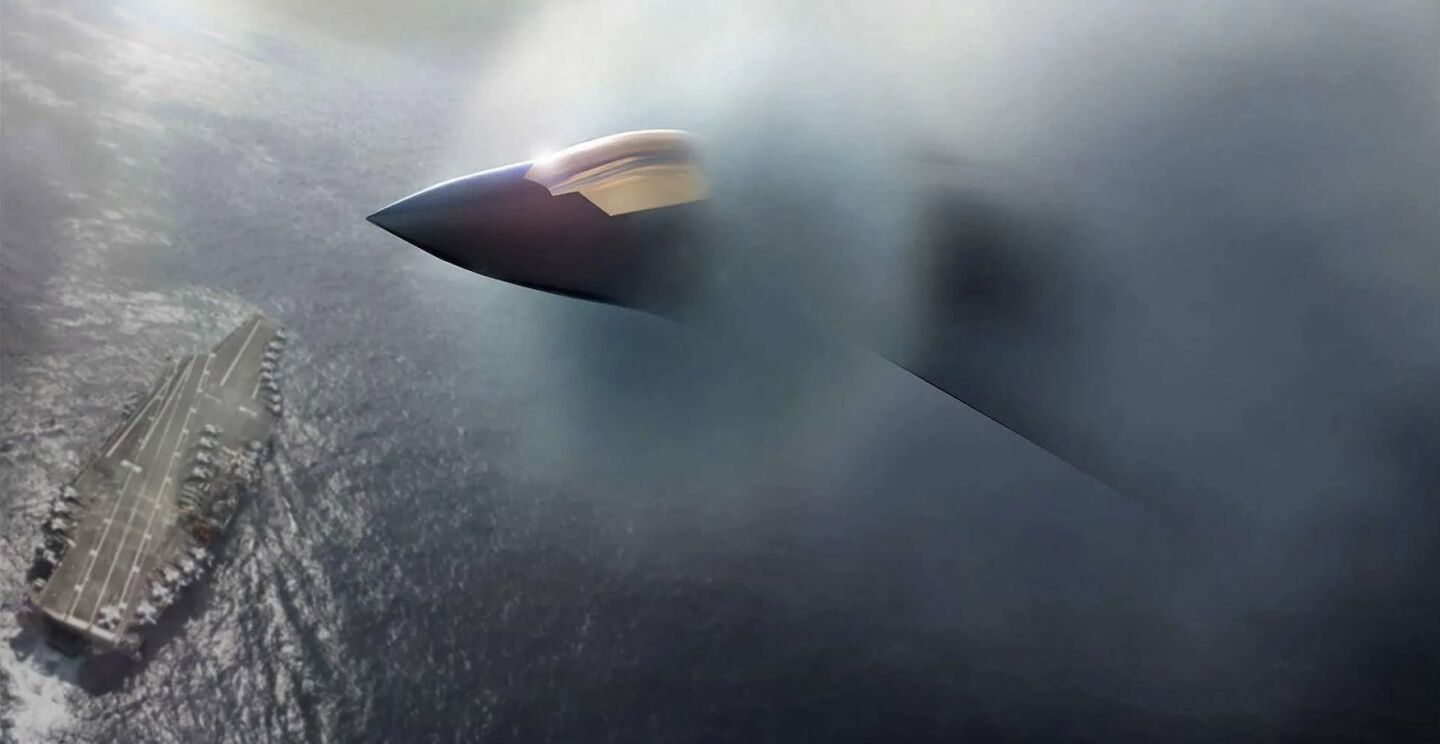
The U.S. Navy selected Boeing for the program on September 29, with a development contract valued at more than $20 billion covering multiple test aircraft for ground, airworthiness, systems and weapons integration testing. The new image also appears to show a single-seat cockpit, despite earlier speculation suggesting that the F/A-XX could potentially use two crew members because of the complexity of its missions, particularly if the aircraft were required to manage large numbers of unmanned aircraft. The latest rendering instead depicts a single pilot beneath what appears to be a large single-piece canopy.
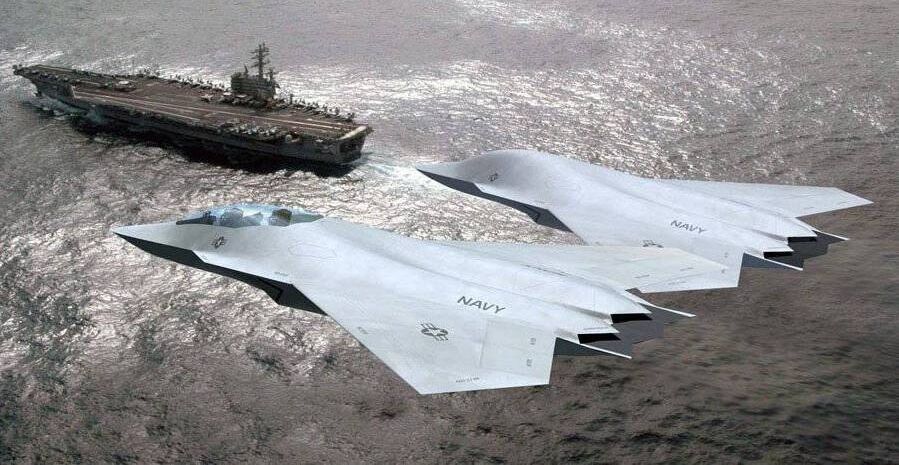
The aircraft has a particularly broad forward fuselage and nose section. This could accommodate a large active electronically scanned array radar, although the precise radar configuration remains classified. A pronounced chine extends around the forward fuselage, a feature commonly associated with shaping aircraft surfaces to control radar reflections and reduce observability. The new rendering also provides a clearer view of the engine intake arrangement. The intakes appear to be positioned on the lower sides of the fuselage and relatively far aft of the nose, with a blended trapezoidal shape. Their placement is consistent with the requirements of a low-observable aircraft, where inlet geometry and the masking of engine faces are important considerations.
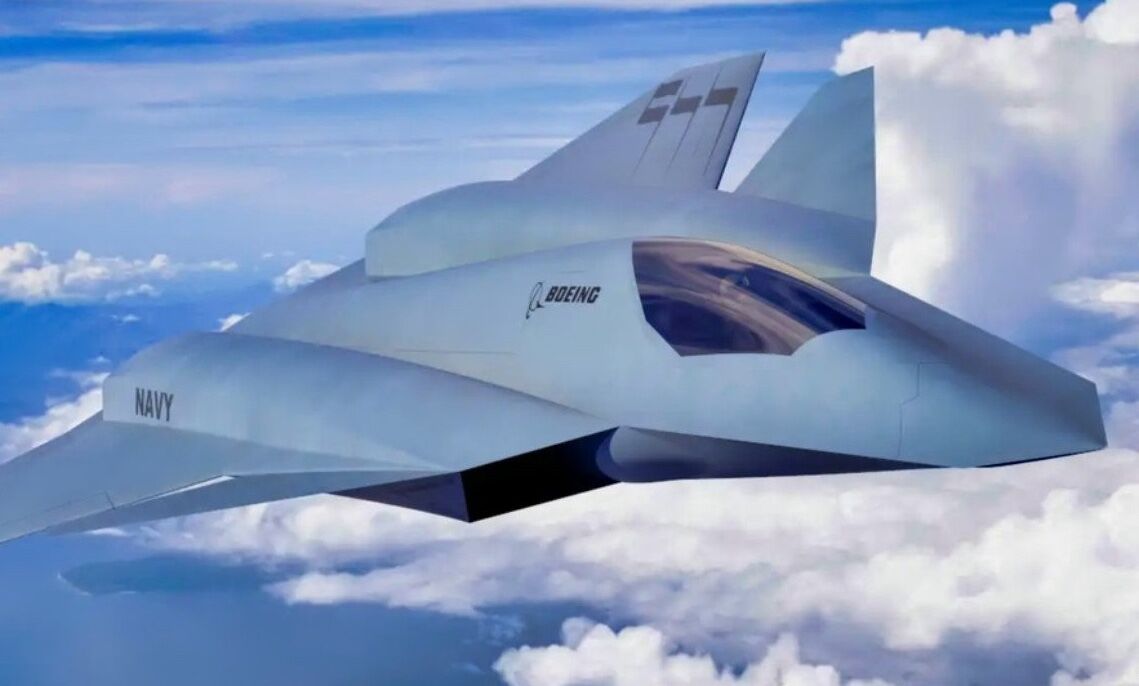
The F/A-XX shares several visible characteristics with Boeing’s F-47 being developed for the Air Force, with both featuring broad, tailless configurations, similar wing geometry and an emphasis on internal volume. The similarities have led to speculation that the two aircraft could share substantial underlying technology and design architecture. The extent of this commonality remains unknown. Boeing has stated that developing the two aircraft in parallel was part of its planning. The company has been expanding its St. Louis facilities with a secure manufacturing complex intended to support multiple advanced aircraft program. Boeing said the new F/A-XX award follows its 2025 selection for the F-47 and that it had invested in facilities, technology and personnel to support concurrent development.
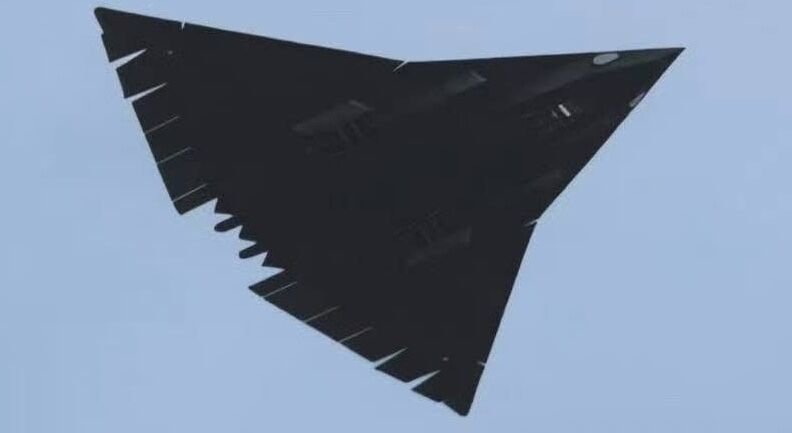
The F/A-XX and F-47 programs have gained greater urgency over the past two years due to rapid progress being made to develop rival Chinese sixth generation fighters. Fighters developed by the Chengdu and Shenyang aircraft corporations both made their first flights in 2024, and have since made rapid progress in flight testing. China and the United States are currently considered in a league of their own in sixth generation fighter development, with China expected to bring its first flights into service around 2030, while the F-47 and F/A-XX are expected to enter service in the early 2040s.
