
Better Than the Su-35? How Capable Are the Russian Su-30SM2 Fighters Iran Just Ordered to Enhance Its Fleet?
Military Watch Magazine Editorial Staff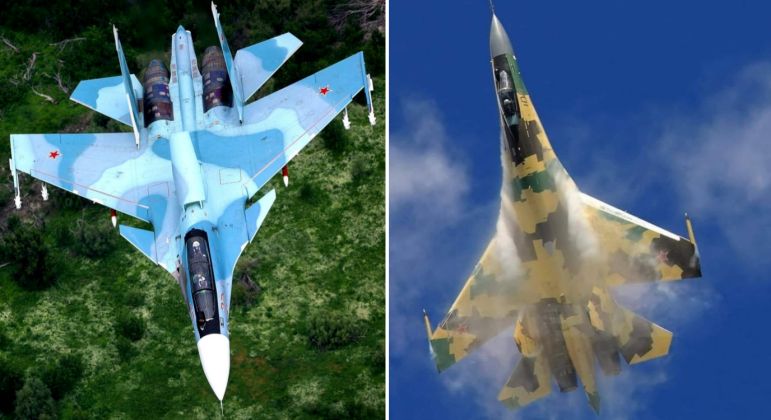
Su-30SM (left) and Su-35 Fighters
Following confirmation on June 4 that the Iranian Defence Ministry had ordered 12 Russian Su-30SM2 fighter aircraft to modernise its combat aviation fleet, significant questions have been raised regarding how their service entry scheduled for mid-2027 will improve the combat capabilities of the Iranian fleet. Although it remains possible that the fighters will serve in the Iranian Navy or the Revolutionary Guard Corps, the latter which already operates Su-22M4 strike fighters that the Su-30s could replace, it is considered most likely that the fighters will serve in the Iranian Air Force, the Su-30SM2 first entered service in early 2022, and currently serves in the Russian Navy and Aerospace Forces, as well as the Belarusian Air Force, providing an advanced ‘4+ generation’ combat capability very considerably superior to those of early variants of the Su-30 design developed in the 1990s.
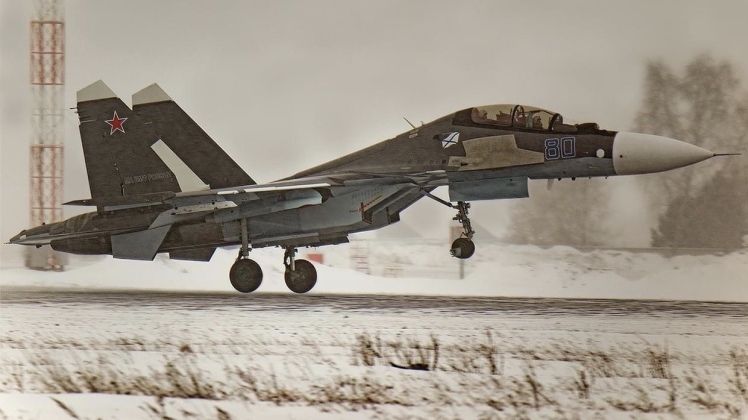
The Su-30SM2 was designed with a twin-seat configuration in which both crew members can actively participate in combat operations, and is a well balanced platform for strike and air superiority operations, as well as for airborne command and contour. The Su-30 design was from the late 1980s conceptualised to serve as a command and control aircraft to coordinate groups of aircraft over long distances, with the second crew member managing sensors, weapons, and communications while the pilot focuses on flying. This capability was pioneered by the MiG-31 interceptor in the early 1980s, with the Su-30’s very long range and powerful sensor suite making it similarly optimal for such roles. Thus even a small number of the fighters could serve as a force multiplier for Iran’s antiquated fleet of much lighter fighter aircraft that rely on obsolete Vietnam War era sensors, presuming that data sharing can be facilitated smoothly.
The Su-30SM2 represents a major modernisation of the design that brings the capabilities of the Su-30 design closer to those of the Su-35 air superiority fighter, primarily through integration of the same AL-41F-1S engines which significantly improve thrust, acceleration, detection range, and overall combat effectiveness, while reducing operational costs and maintenance needs. The engines’ far greater power output can support more demanding avionics, sensors, and electronic warfare systems, providing greater growth potential for future subsystems such as directed energy weapons. From an overall capability perspective, the Su-30SM2 is best viewed as a two-seat counterpart to the Su-35 combining a long range, heavy payload, advanced sensors, supermaneuverability, and a large crew workload capacity in a way that very few fighter types in the world can match. The power of its radar and its range and manoeuvrability are significantly superior to those of any Western fighter type.
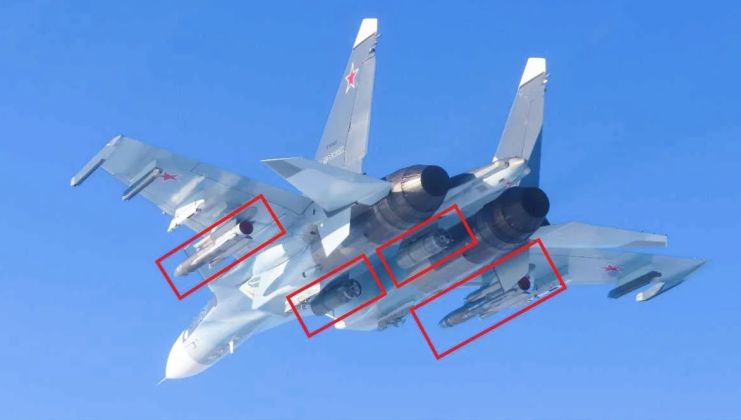
The design of the Su-30SM2 blurs the line between fighter, strike aircraft, and mini-airborne command post. During long-range missions, the weapons systems officer in the rear cockpit can monitor the tactical situation, manage datalinks, coordinate with ground controllers, and assist in target assignment for other aircraft. This capability is particularly valuable over large areas such as the Middle East and the Indian Ocean. Its range is very significantly longer than that of any other fighter type fielded by a Middle Eastern fighter, including Iran’s antiquated F-14 fighters which were for years the longest ranged fighters fielded by any Air Force in the the world. The fighter type’s outstanding large weapons carrying capacity allows it to use oversized missile types such as the R-37M, which has a 350 kilometre engagement range and can seriously threaten targets such as tankers and strategic bombers, which would significantly complicate a planned Western or Israeli attack on Iran.
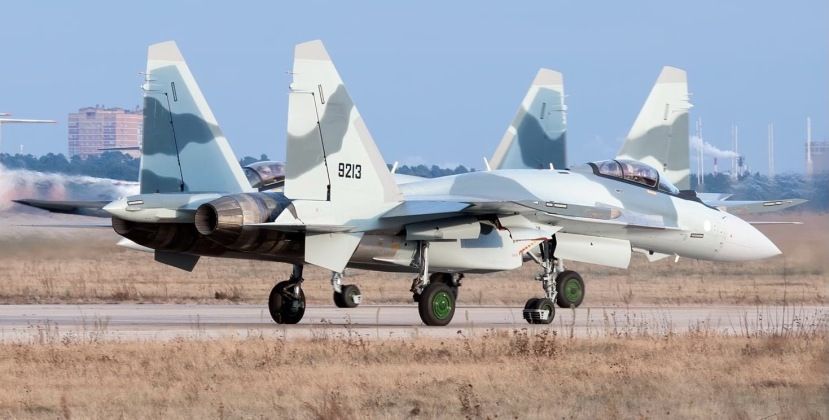
Having been designed decades later, many of the Su-35’s systems were integrated from the beginning rather than added through modernisation as was the case for the Su-30SM2, resulting in a lower weight, less complexity, and somewhat better overall performance. The aircraft’s cockpit, mission systems, and electronic warfare suite were built around a single coherent design philosophy rather than evolving through several generations of upgrades. The Su-30SM2 delivers an estimated 85–95 percent of many of the Su-35’s capabilities while providing a second crew member and often at a lower acquisition and operating cost, leading it to be seen as a much more cost effective aircraft, and one that for command and control and strike operations is in many respects superior. While neither fighter type integrates sensors, avionics, weaponry or high composite airframes on par with Chinese ‘4+ generation’ or fifth generation fighters like the J-16 or J-20, the service entry of the Su-30SM2 and Su-35 will represent a very significant improvement for Iran’s fleet that will shift the balance of power in the air over the Middle East very significantly in its favour.
