
Belarus Receives New Su-30SM2 ‘4+ Generation’ Fighters With Supercharged Engines: How Capable Are They?
Military Watch Magazine Editorial Staff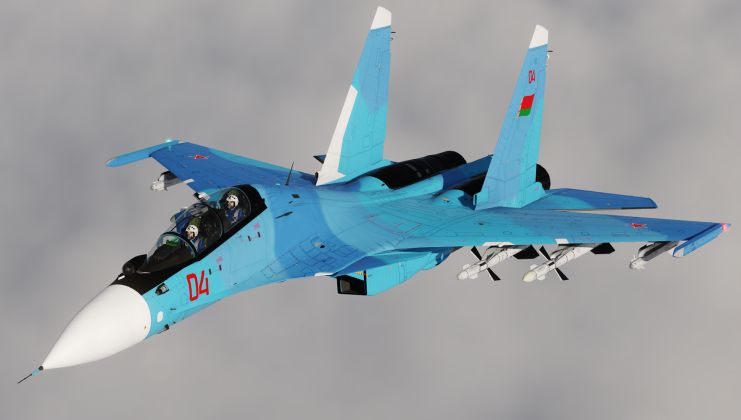
Belarusian Air Force Su-30SM2
The Belarusian Air Force has received a new batch of Russian Su-30SM2 fighters, marking the latest in multiple deliveries since 2019 to significantly enhance the post-Soviet state’s aerial warfare capabilities. Commenting on the delivery, Deputy Commander of the Belarusian Air Force and Air Defence Forces, Chief of Aviation Colonel Alexander Belyaev, observed: “the arrival of new aircraft has already become a good tradition: the fleet is being steadily renewed… These aircraft will soon undergo technical inspection at the air base and, in two weeks at most, will enter on duty to defend our beloved homeland in the airspace.” “This is not the last batch: new equipment will continue to arrive,” he added, describing the Su-30SM2 as “a fighter aircraft that meets all the requirements for aircraft of this class.” “Flying it is a true joy,” he concluded.
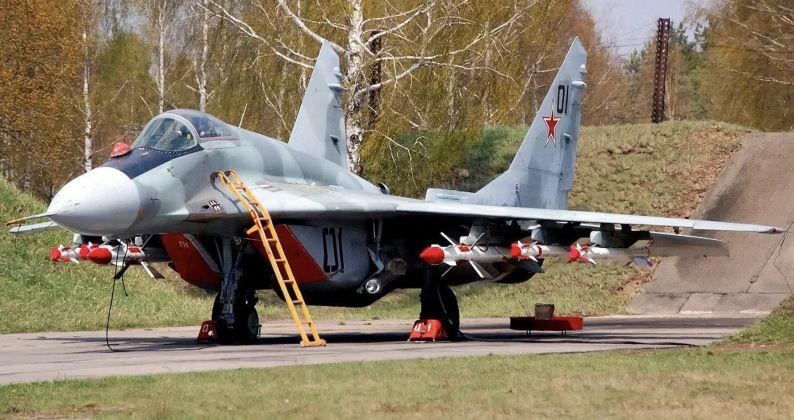
Belarus previously ordered twelve Su-30SM fighters under a $600 million contract, before the terms of the contact were altered for the more capable Su-30SM2 variant to instead be procured. With the Air Force reported in August to have received the last of the twelve fighters, the delivery of further fighters in December has raised the possibility that a followup order for further aircraft may have been signed. The Su-30SM2 is gradually replacing the Soviet-built MiG-29 in forming the backbone of the country’s fighter fleet. Although Belarus previously fielded Su-27 air superiority fighters and Su-24M strike fighters inherited from the Soviet Union, these were phased out of service due to their high operational costs, with the Su-30SM2’s significantly more modern and maintenance friendly design making it more affordable to sustain despite its high weight. A single Soviet Su-27UB has been brought back into service to serve as a trainer for the Su-30SM2 fleet.
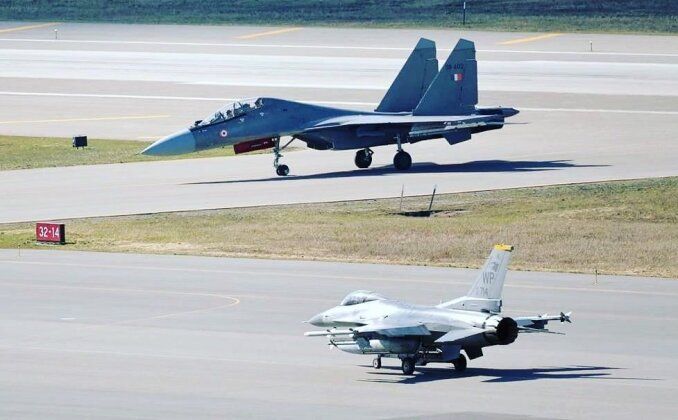
The Su-30SM’s design incorporated multiple features from cancelled Soviet fighter programs. Loosely based on the Su-27PU heavy interceptor design, the aircraft used a wide range of technologies from the cancelled Su-27M and Su-37 air superiority fighters, including use of the Su-37's N011M radar, which was one of the first ever electronically scanned array radars integrated onto a fighter, as well as the Su-27M’s controlled canards, AL-31FP engines, and thrust vectoring nozzles. The Su-30SM2 integrates the AL-41F-1S engine which powers the Su-35 air superiority fighter, and has a power level and fuel efficiency more comparable to early fifth generation engines such as the American F119 powering the F-22 fighter. The engines provide the Su-30SM2 with by far the longest range of any fighter fielded by a European country, as well as by far the highest levels of manoeuvrability due to their high thrust and three dimensional thrust vectoring capabilities.
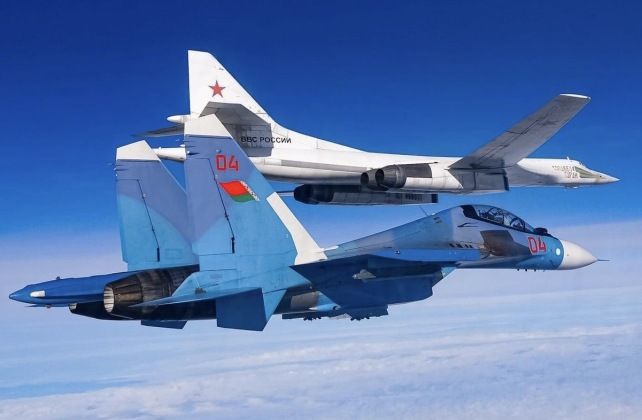
The Su-30SM2 variant has been intensively combat tested since it began to enter service in early 2022, with the outbreak of full scale hostilities between Russia and Ukraine just weeks after it became operational providing opportunities to further refine operational tactics. Russian state arms export conglomerate Rostec in November 2025 reported: “Aircraft of this type have confirmed their effectiveness in the special military operation. They have a record of hundreds of destroyed aerial and ground targets, including Patriot systems.” “Thanks to its powerful radar, the Su-30SM2 can ‘see’ farther and more accurately, which facilitates the crew’s operation. In turn, its advanced electronic warfare system allows the fighter to effectively counter enemy air-launched weapons,” the report added. The fighter is approximately 70 percent as costly to procure as the Su-35, while being considerably simpler to maintain and having lower sustainment costs, making it highly attractive and in many respects more cost effective.
