
Belarus’ Buk-MB3K Mobile Missile Defence System: A Low Cost Competitor on Export Markets
Military Watch Magazine Editorial Staff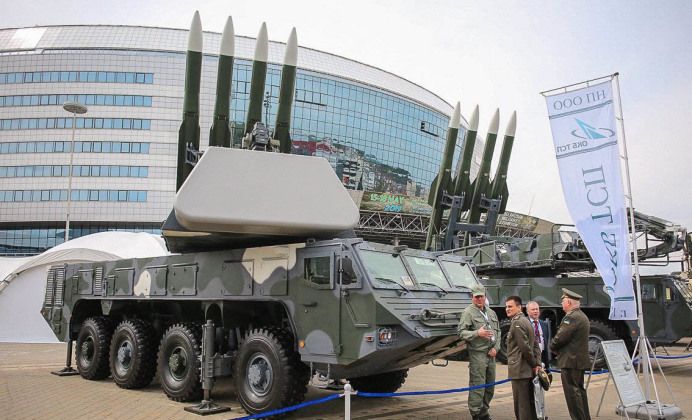
BuK-MB3K
Belarus’ unveiling of the BuK-MB3K medium range air defence system has indicated that the country’s defence sector is still capable of producing medium-end aerial warfare systems capable of competing internationally - both against modern adversaries on the battlefield and against high end defence producers on international markets. Other than Russia and Ukraine, no Soviet successor state inherited more of the Soviet Union’s defence sector than Belarus, providing it with a formidable technological base - with the country upgrading its tanks and aircraft and providing upgrade services for Soviet and even for post-Soviet weapons systems including high end platforms such as Su-27 and Su-30 fighters. The new BuK system, however, shows that Belarus is not only capable of offering upgrades for existing aerial warfare systems, as it has for several countries form Vietnam to Angola, but that it can also produce entirely indigenous platforms for export.
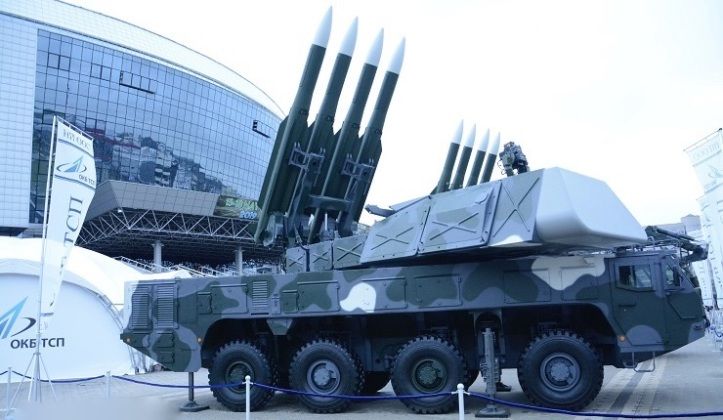
The BuK-MB3K integrates a newly developed S-range solid state phased array AESA radar capable of detecting air targets at ranges up to 130 km, and uses a self propelled firing unit capable of operating at 60km/h speeds for maximum mobility. The radar can perform automatic target detection and tracking, measuring the primary data of an aerial target, including azimuth and range, and the radial speed in both active and passive modes. According to Belarusian sources, the new BuK system can detect and intercept all types of targets from cruise missiles to attack and surveillance drones. New subsystems for digital communications and data sharing will better allow the system to operate as part of a larger air defence network, with BuKs in Belarus itself likely to be integrated alongside S-400 long range platforms provided by Russia, which could make it attractive for clients which already operate Russian or Soviet air defence systems. The system is much easier to operate than older BuK variants, with all combat components fitted with new automated workstations featuring LCD displays and digital indicators.
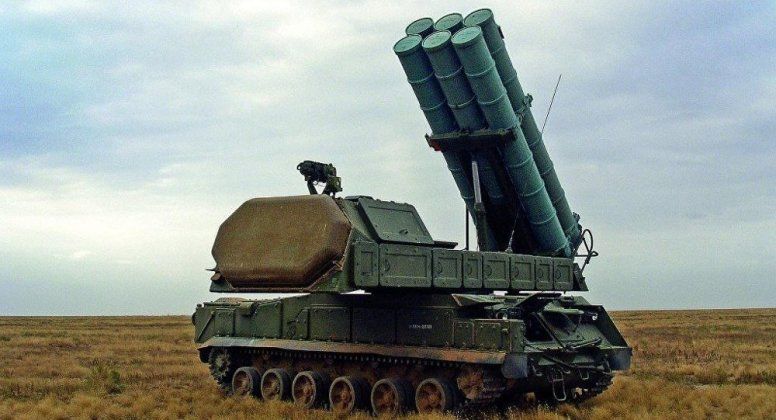
The market for medium range air defence systems is currently dominated by the Russian BuK-M2 and BuK-M3 systems, and to a lesser extent by the Chinese HQ-16, which are direct competitors to the new Belarusian system. The BuK-M2 is today operated by around 10 countries, and while the newer BuK-M3 is thought to far surpass the capabilities of its Belarusian competitor it is notably considerably more expensive. This could provide the BuK-MB3K with a niche in the global arms market, one which has been enlarged by U.S. threats to apply sanctions against clients for Russian arms which has deterred many potential buyers of advanced air defence systems, and the possibility of sales to countries less friendly to Russia such as Georgia, Bulgaria and Ukraine which already operate older BuK-M1 or S-300 systems is also significant.
