
Artificial Intelligence on China’s New Trainer Jet Expected to Help Produce Better Pilots
Military Watch Magazine Editorial Staff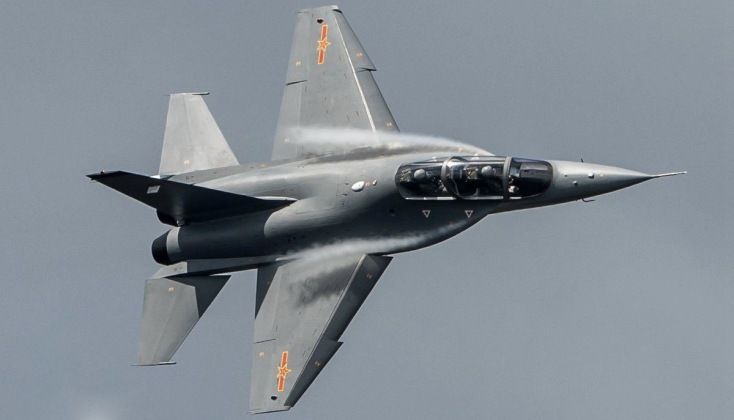
Chinese JL-10 Advanced Trainer Jet
China’s Hongdu JL-10 advanced trainer jet has continued to integrate new technologies since its first flight in 2006, with the aircraft considered among the world’s most capable trainers both in terms of sophistication and, if needed, in terms of its combat capabilities. Revealing the aircraft’s possible future technologies, the JL-10’s chief designer and general manager of Hongdu Aviation Industry Group Zhang Hong emphasised that aviation industries around the world were paying greater attention to developing more capable trainer jets - a field in which East Asian countries in general have a major lead. The chief designer highlighted that a virtual tactical training system was likely to be installed on future JL-10 jets, and could enhance pilot's skill more effectively through the use of artificial intelligence (AI)) technologies. He stated to this effect: “With the development of AI technologies in the future, we will be able to identify different habits each pilot has in flying. By managing them, we will let the pilots grow more safely and gain more combat capabilities in the future.”
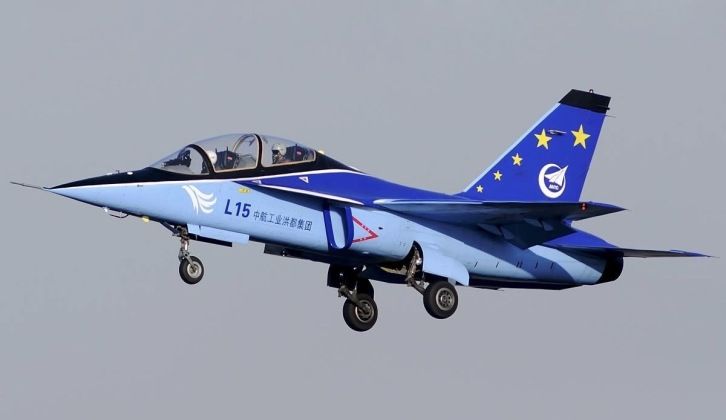
The virtual tactical training system can potentially be linked with simulators on the ground, according to Zhang, who stressed that real and simulated training would be interconnected. According to a separate report from Chinese state media outlet the Global Times, AI could potentially be used to analyse pilot cadets' flying records and moves in real time and provide key feedback. It remains uncertain whether these technologies will be marketed for export, and if they will be integrated onto aircraft other than the JL-10 which have been more widely exported such as the JL-8. Three of the world’s most advanced trainer jets in production today are notably produced in China, including the JL-9 and JL-10 platforms on the mainland as well as the Brave Eagle platform in Taiwan - officially the Republic of China which has been technically at war with the Chinese mainland for over 70 years. While the Brave Eagle has yet to enter service, over a dozen JL-10 fighters currently serve in China’s Navy, with a further two dozen or more serving in the Air Force. The aircraft is expected to be deployed on a much wider scale over the coming decade.
