
Armed to the Teeth With Stealth Fighters: A Look at South Korea’s Upcoming LPX-II Aircraft Carrier
Military Watch Magazine Editorial Staff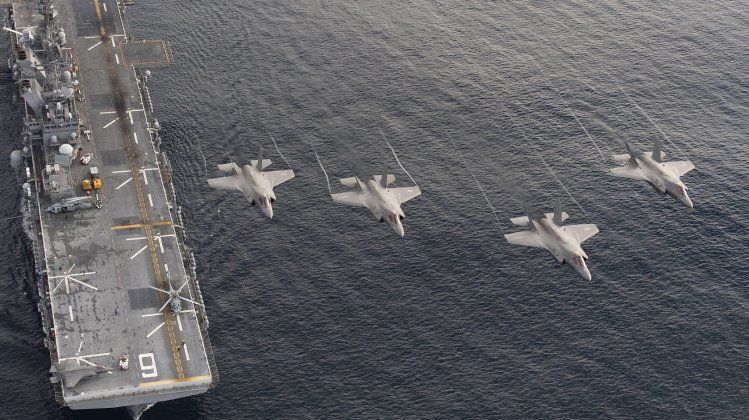
F-35Bs Stealth Fighters Deploy From Carrier
South Korea has revealed plans for a new class of carrier to succeed the Dokdo Class lightweight platform, with the new ships set to be the first in the country’s history to deploy fixed wing fighter jets. Plans to develop such a ship come after neighbouring Japan, with which Seoul has ongoing territorial disputes, began to convert 27,000 ton Izumo Class carriers to deploy fixed wing fighter jets as well - with two of the Izumo Class ships and two lighter Hyuga Class helicopter carriers currently in service. South Korea currently deploys two Dokdo Class light assault carriers, with a third set to join the Navy by 2025, and while these were initially considered for conversion to deploy combat jets their small size makes them poorly suited to deploying fixed wing aircraft. Known as the LPX-II, the new carrier will be built by Hyundai Heavy Industries, and will deploy U.S.-built F-35B fifth generation single engine fighters developed by Lockheed Martin.
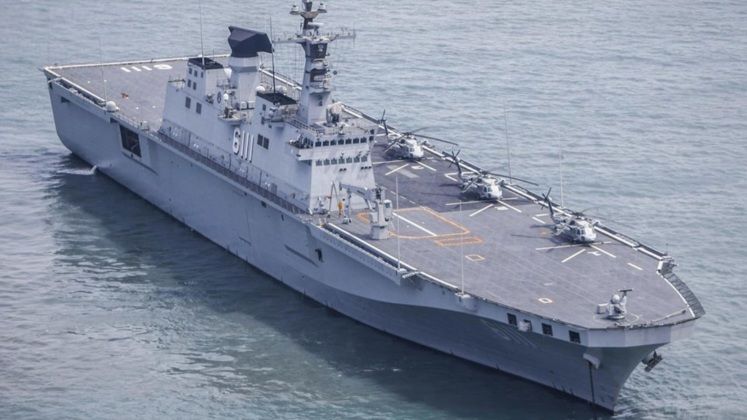
The F-35B is notably the same class of fighter Japan is planning to deploy from its Izumo Class ships, and is prized for its ability to deploy from light carriers which lack either arresting gears or catapult launch systems. The F-35B is notably the most expensive fighter in the world in production today, and while it faces serious limitations on its range and flight performance it can take off from very short runways and land vertically making it well suited to both carrier operations and operations from makeshift airfields. While South Korea is set to deploy an indigenous fifth generation fighter in the near future, which is being developed under the KF-X program and has a number of performance advantages over the F-35, the newer fighter will not come with the option for a vertical landing capable variant meaning the F-35B is currently the only option for integration into a carrier air wing.
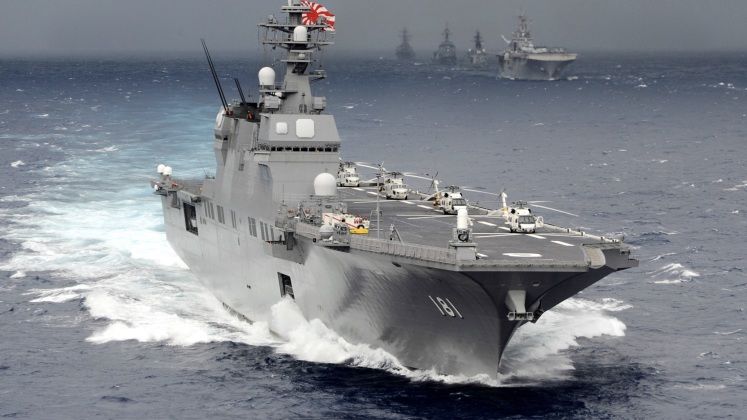
The LPX-II is expected to displace between 30,000 and 35,000 tons, and has a number of similarities to the lighter Dokdo Class design including a superstructure with twin exhaust funnel clusters. The front of the ship’s enlarged flight deck is squared off compared to that of the Dokdo, and the new vessel has two elevators at the stern to bring aircraft and other equipment up from lower decks. The LPX-II is notably a less radical departure from the Dokdo design than previous Korean concepts, leading to some speculation that the platform could be a stepping stone to heavier classes of carrier and that only a single ship of the class may be built. Japan is reportedly also considering commissioning heavier classes of carrier, possibly including a medium or heavyweight design which can deploy more capable F-35C fighters and is equipped with catapult launch systems and arresting gear. It remains uncertain how far South Korea’s Navy will go in seeking to compete at a peer level with its much larger neighbour.
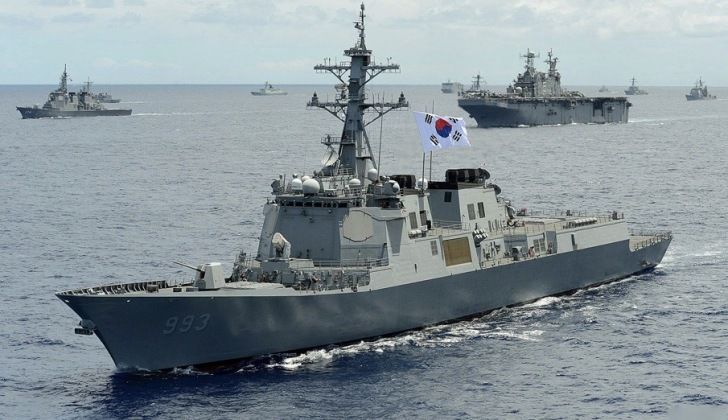
South Korea has notably invested heavily in a blue water naval capability since the 2000s, and alongside the Dokdo program its most notable achievement has been the development of the Sejong the Great Class destroyer. The Sejong Class ships are considered the most capable in the world of those that integrate the American AEGIS system, and are both massive and very well armed displacing 11,000 tons, with a length of 165 meters, and carrying 128 multirole vertical launch cells. The ships carry more firepower than even American cruisers, much less destroyer-sized vessels. The heavy destroyers are expected to serve as escorts to the upcoming carrier, although should the Navy commission even two of the new LPX-II warships it will bring the total fleet size to five - three Dokdos and two of the newer heavier platform - therefore requiring a larger destroyer escort.
