
America’s MIM-23 Air Defence System Still in Service 60 Years Later; How Viable is the Hawk Today?
Military Watch Magazine Editorial Staff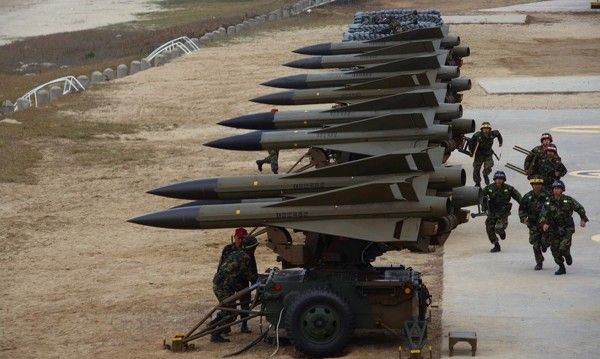
MIM-23 Hawk Surface to Air Missile Batteries
The MIM-23 Hawk first entered service in the U.S. Army 1959 as one of the world’s first surface to air missile systems, and was developed as a more modern and lighter counterpart to the nuclear armed MIM-14 Nike Hercules and deployed to complement the growing numbers of air to air to air missiles which had begun to be deployed by the U.S. Air Force. The Hawk remains one of the most prolific Western air defence systems ever designed alongside the MIIM-104 Patriot and FIM-92 Stinger which entered service in the early 1980s, and the system was been widely exported to over twenty American defence clients - making it the most widely used non-Soviet system of its kind in the Cold War. The Hawk entered service shortly after the Soviet S-25 and S-75 surface to air missile systems in 1955 and 1957 respectively - the former which was reserved for the defence of Moscow and Pyongyang exclusively while the latter was widely deployed and similarly widely exported to over 35 defence clients. The MIM-23 and S-75 were somewhat comparable in their roles, though the American system was more mobile while its Soviet counterpart was considerably faster, longer ranged and was capable of reaching higher altitudes with almost three times the payload. Both the Hawk and the S-75 have been extensively modernised, and while both were phased out of service with their primary manufacturers shortly after the Cold War’s end they remain widely in service with export clients across the world.
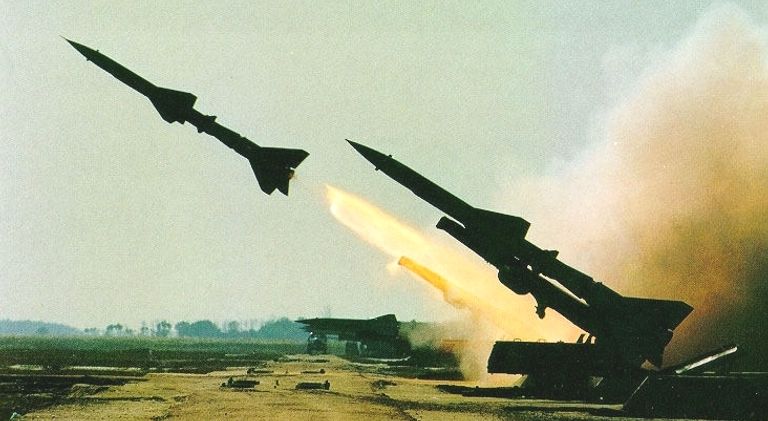
The MIM-23’s long service history and widespread use led to its employment in a number of conflicts from the late 1960s - with the missile system serving the U.S. Military from the Vietnam War, where the Marine Corps deplored its first batteries in early 1965, to the Gulf War where Hawks were deployed in a complementary role to longer ranged Patriot batteries. From October-November 1962 the Cuban Missile Crisis and perceived vulnerability of U.S. and allied ground forces to air attack forced the U.S. Military to invest in expanding production - which increased to around three missiles per day. Despite being by far the largest operator of the platform, the U.S. Military rarely fired Hawks in combat and the missile system thus primarily saw service when deployed by American allies - or in the case of the Iranian military from 1979 a former ally which relied heavily on the MIM-23 in the Iran-Iraq War of the 1980s. Much like the American AIM-54 Phoenix air to air missile, which saw its only employment during this conflict in Iranian hands, the most extensive employment of Hawk systems came during this war - with the MIM-23 credited with downing over three dozen Iraqi jets. The platform’s low speed and altitude limitations, however, meant that it was almost entirely ineffective against Iraq’s most capable strike platform the MiG-25RB.
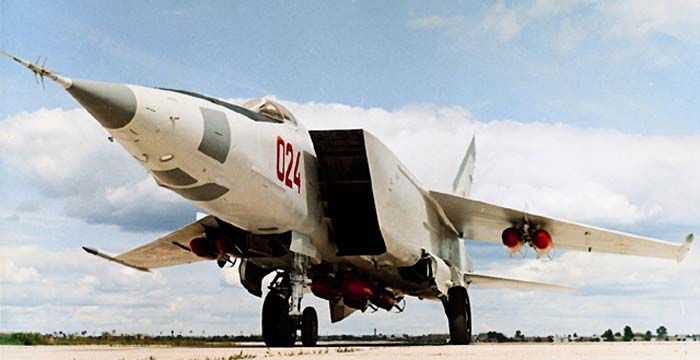
The Hawk saw service in Israeli hands after its delivery in the mid 1960s, and the first combat firing of the MIM-23 system was attributed to Israeli friendly fire during the Six Day War against a French built MD-450 light combat jet. The missile was credited with sooting down between eight and twelve Arab jets in the subsequent War of Attrition including MiG-17 fighters Su-7 strike fighters and possibly an Il-28 bomber. Israeli air defences were nevertheless considerably outmatched by their Arab counterparts, which deployed a multi layered system comprised of S-75, S-125 and 2K12 KuB surface to air missile systems - the last which was considerably more sophisticated and mobile than the Hawk. The limitations of the Hawk system were perhaps best demonstrated shortly before the outbreak of the Yom Kippur War, when Soviet operated MiG-25R Foxbats performed several reconnaissance flights over heavily fortified Israeli held Sinai - with the Mach 3.2 speed and 24km altitude of the jets rendering them all but completely invulnerable to the several rounds of Hawks fired as well as AIM-7 Sparrow armed F-4E Phantom fighters. While a missile intercepting a Mach 3 aircraft would ideally need to travel at speeds of at least Mach 5, the Hawk’s low speed of Mach 2.4 made it wholly ineffective.
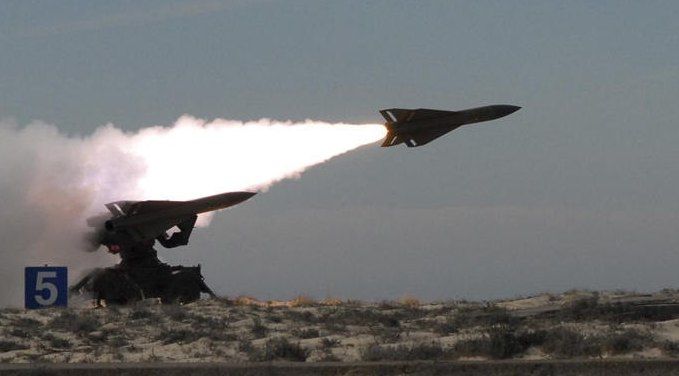
Since its entry into service the MIM-23 has been extensively modernised, with the MIM-23B which entered service from 1971 measuring 5cm shorter than its predecessor but deploying a warhead almost 50% heavier at 75kg and an improved motor and propellent. The platform saw its maximum engagement altitude increased from 11,000 to 18,000km and its range increase from 25km to 35km - which while still far lower than the Soviet S-75 made the Hawk considerably more viable against combat aircraft of its time. Later variants integrated minor enhancements in response to the fast improving survivability of Soviet aircraft - namely in the field of electronic warfare. The MIM-23C/D which entered service in 1982 integrated new electronic warfare countermeasures, while the MIM-23E/F in service from 1990 integrated low level multi jamming capabilities. Variants produced in later 1990s batches saw minor changes to warhead and fuzing. Changes to the design from the MIM-23B in 1971, which did represent a significant enhancement over its predecessor, were relatively minor.
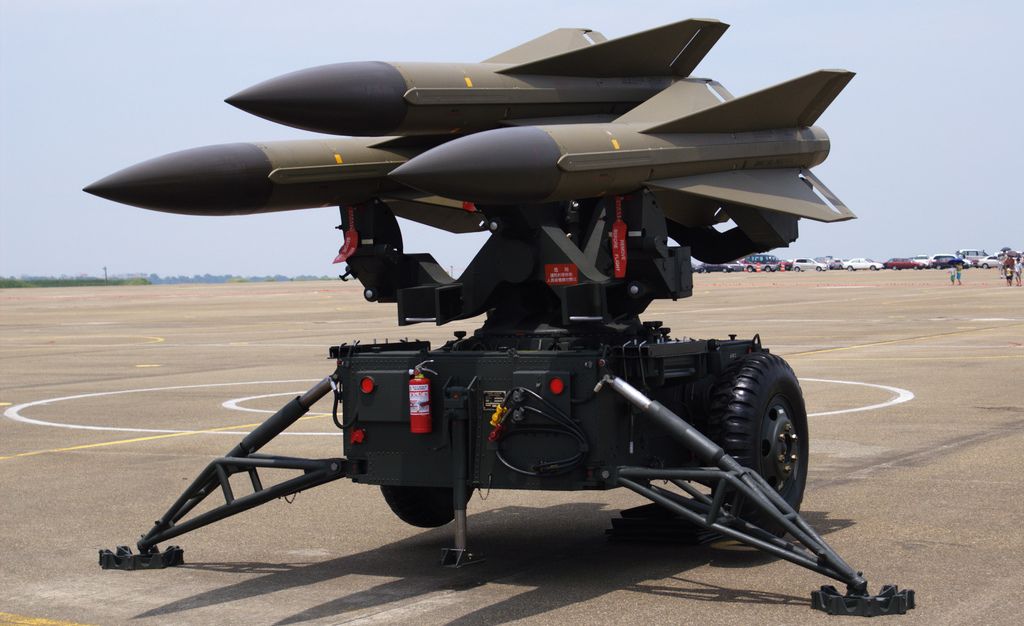
Approximately 40,000 Hawk missiles of various models were manufactured over a period of around 40 years, with the missile type still in production today in Iran as the indigenous derivative the Shahin, with a more advanced variant known as the Mersad entering mass production from 2010. The capabilities of these platforms, and whether they represent a considerable enhancement over the MIM-23B, is unknown. Iran has also reportedly integrated a number of MIM-23 technologies onto its new Fakour-90 air to air missile - an enhanced indigenous derivative of the AIM-54. Israel also deploys its own variant of the Hawk, modifying platforms received from the United States with the Super Eye electro-optical TV system, more powerful sensors for longer detection and identification ranges, and a higher maximum interception altitude. While a number of upgrades have been integrated, no party has succeeded in amending the Hawk’s most pressing weakness - its extremely low speed by the standards of modern missiles. While the Hawk retains the speed needed to realistically intercept slower jets such as the F-35, F-18E and JF-17 - all Mach 1.6 platfomrs - the vast majority of modern Russian and Chinese jets are designed to exceed speeds of Mach 2.2, which combined with modern electronic warfare systems and levels of manoeuvrability the Hawk was never designed to counter makes the viability of the ageing missile design highly questionable. This is particularly true given that hypersonic surface to air missiles are increasingly becoming the norm, with the most modern platforms such as the 40N6E deployed by the Russian S-400 capable of speeds well over Mach 10. While the Hawk has been phased out of service in the U.S. Military and many of its major allied operators such as Germany, it currently plays a critical role in the air defence networks of Taiwan, South Korea, Singapore, Israel, Egypt, Iran and Turkey, with other more minor operators including the United Arab Emirates, Saudi Arabia, Bahrain, Jordan, Greece, Spain and Romania.
