
Alternative to the AIM-120: Turkey Develops Gokdogan Long Range Air to Air Missiles for its F-16 Fighting Falcons
Military Watch Magazine Editorial Staff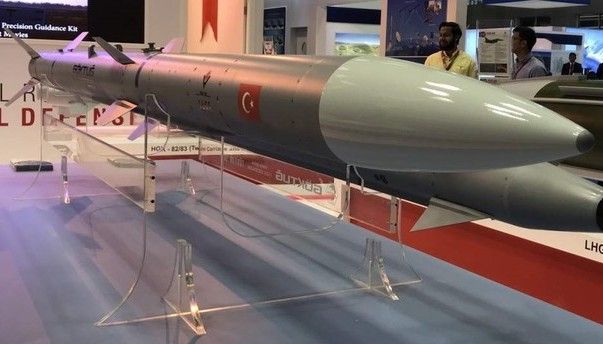
Turkish Gokdogan Long Range Air to Air Missile
The Turkish Air Force has recently test fired two indigenous classes of air to air missiles, the Beyond Visual Range Gokdogan and the Visual Range Bozdogan. Both of these missiles are still relatively early in their testing stages, and were fired from ground based launchers against target drones. The missiles appear intended as analogies to the American AIM-120C AMRAAM and the AIM-9 Sidewinder respectively, both of which are currently deployed by Turkish F-16 Fighting Falcons. While a number of states have integrated indigenous short ranged missiles onto American fighters for visual range combat, the British AIM-132 and Israeli Python-4 being prime examples, the Gokdogan appears to be the first attempt to replace the F-16’s long range armament. Information on the date of the test, the missile’s range and when it can be expected to enter service have not been published. The missile’s range is estimated at somewhere between that of the AIM-120B, at 75km, and that of the AIM-120C at 105km, although a slightly longer range is also possible given the age of these American designs.
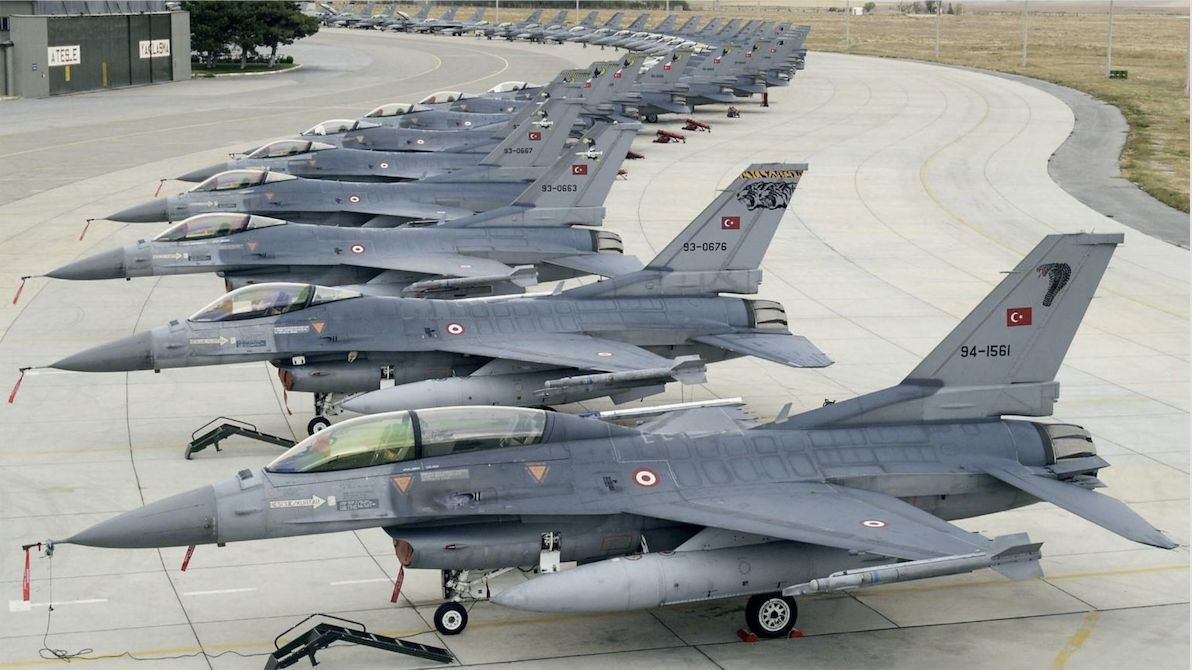
Like the AIM-120, the Gokdogan benefits from fully active radar homing, providing it with fire and forget capabilities critical to modern fighters. While the F-16C, Turkey’s only class of modern fighter, is set to integrate the missiles, the upcoming TF-X fighter is also likely to be equipped with the indigenous missiles. The possibility also remains that Turkey could seek to integrate the missiles onto classes of Russian fighter which it is currently negotiating the purchase of, such as the Su-35 and MiG-35, much as India has done with its own Russian Su-30 jets by integrating its indigenous Astra missile. Should Turkey improve the design further, and potentially surpass the capabilities of the AIM-120C by the end of the decade, it could have considerable export potential across the Middle East and beyond to states such as Pakistan and Jordan which also deploy the F-16. F-16 operators which lack access to the AIM-120 - namely Egypt, Venezuela and Iraq - could also be leading clients.
