
Algeria’s Chinese Electronic Warfare Systems Increase Frontline Units’ Survivability Against NATO
Military Watch Magazine Editorial Staff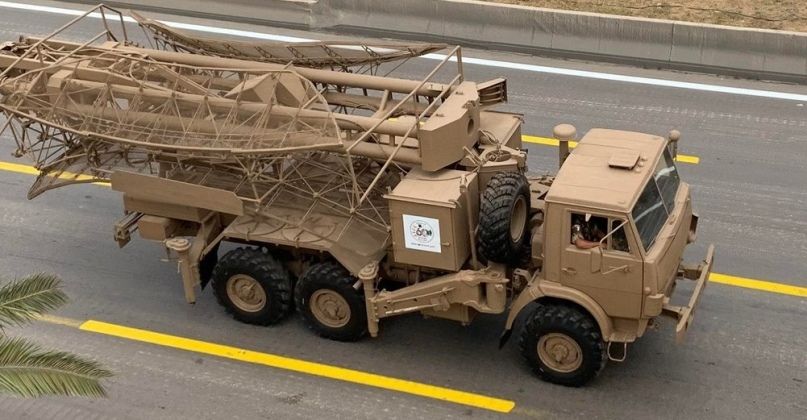
Mobile Radar Antenna From Chinese CHL-906 Electronic Warfare System in Algerian Service
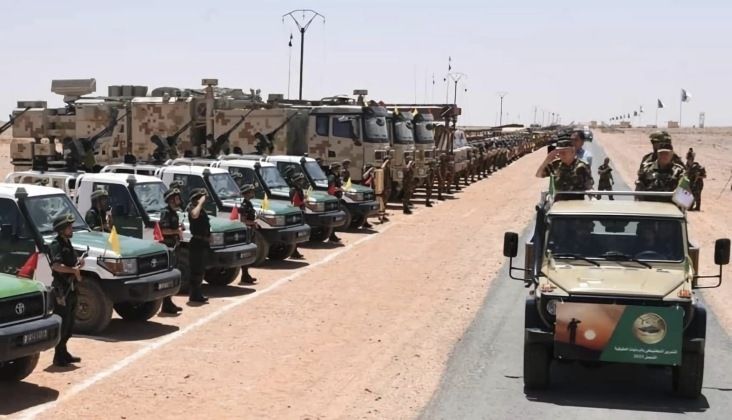
Footage from Algeria has indicated increasingly high intensity deployments of CHL-906 mobile integrated electronic reconnaissance and electronic attack systems, which appear to have been procured from China in considerable numbers. The system was first seen when the Algerian Ministry of National Defence released imagery showing vehicles associated with the system participating in an exercise in the 3rd Military Region in the strategically located southwest region. Its capabilities are considered highly complementary to Algeria’s multi-layered air defences, which are by far the most formidable in Africa, and to the growing number of fortifications protecting frontline units. The procurement of the CHL-906 reflects broader trends towards Algeria emerging as Africa’s leading military power, as the country accelerated military modernisation efforts from 2011 following NATO’s assault on neighbouring Libya.
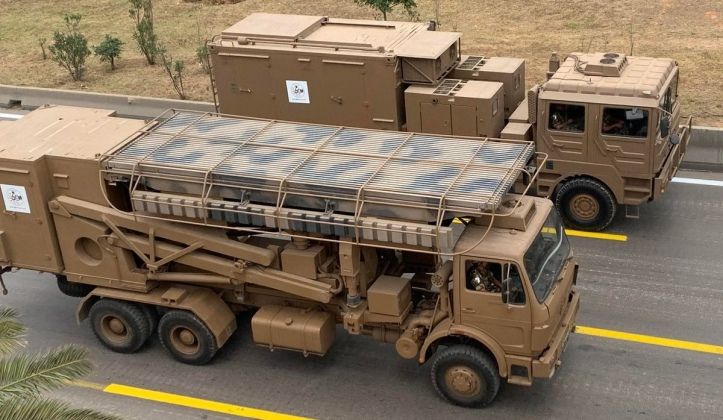
The CHL-906 includes an electronic intelligence station able to intercept and track radar emissions across 0.1-40 GHz range, and a multifunction radar-jamming element assessed capable of disrupting airborne radars to around 250 kilometres. Other optional can cover long-range radar jamming and millimetre-wave threats. The system has a detection range of close to 600 kilometres against large enemy radars, and is capable of identifying radar types, tracking aircraft and drones via radar emissions, and detecting adversary electronic warfare systems. It is thought to be able to detect low-observable targets such as stealth fighters indirectly via emissions or reflections. The decision to procure CHL-906 systems may have been influenced by lessons from the Russian-Ukrainian War, where ground-based electronic warfare systems proved highly successful in nullifying the capabilities of precision guided bombs, cruise missiles, and artillery supplied to Ukraine by NATO members. This could be particularly valuable in a potential conflict with NATO members, which heavily rely on such precision guided munitions to serve as force multipliers for their air power.
According to widespread interviews with personnel on the frontlines conducted by outlets such as the Wall Street Journal, U.S.-produced guided weapons such as the Excalibur artillery round have seen their effectiveness seriously undermined in the Ukrainian theatre due to Russian electronic warfare jamming their guidance. The Washington Post, which cited Ukrainian officials to highlight that the United States had completely ceased deliveries of Excalibur shells after Russian electronic warfare systems had rendered them ineffective, concluding that against modern electronic warfare systems: “the Excalibur technology in existing versions has lost its potential.” EMP task force scholar and former U.S. Department of Defence officer David T. Pyne observed that Russian electronic warfare systems "have proven effective at causing 90% of guided missile and drone systems supplied by the U.S. to Ukraine to miss their target, most importantly HIMARS.”
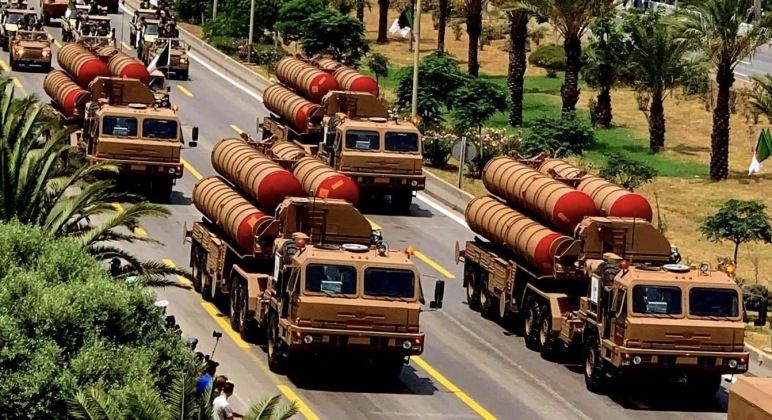
Considering the significantly more advanced state of the Chinese electronics industry than that of Russia, is it highly possible that Algeria’s extensive deployments of Chinese electronic warfare systems may be a game changer in a potential confrontation with NATO, or with the country’s Western-aligned neighbour Morocco. Facing a combination of Algeria’s dense integrated air defence network, and a low success rate when precision guided munitions can be fired against local targets due to jamming of their guidance systems, a potential attack on the country could be highly complicated. Even a limited or intermittent jamming capability may force an adversary to adapt tactics, change waveforms, or rely on alternate sensors, all of which consume time and bandwidth. The deployment of the CHL-906 is thus highly complementary to other advances being made in Algerian defensive capabilities, including the recent procurement of Su-57 fifth generation fighter aircraft which is expected to significantly improve air defence capabilities.
