
160 Nuclear Warheads Onboard: Russian Navy Receives Latest Borei-A Class Strategic Missile Submarine
Military Watch Magazine Editorial Staff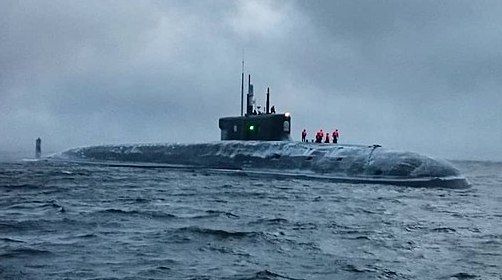
Borei Class Nuclear Attack Submarine
The Russian Navy has received the last Borei-A Class strategic nuclear submarine from the United Shipbuilding Corporation, with the warship Knyaz Vladimir set to enter service in the country’s Northern Fleet after being laid down in July 2012. A ceremony for the handover was held on May 28th, attended by Chairman of the State Ship Acceptance Commission of the Russian Navy Main Command Alexei Poteshkin, Sevmash CEO Mikhail Budnichenko, Chief Designer of the Rubin Central Design Bureau for Marine Engineering Sergei Sukhanov and submarine commander Vladislav Druzhin. Commander Druzhin noted that the crew had fully mastered the ship during the sea trials and were ready to receive assigned missions. The Knyaz Oleg is the fourth Borei Class submarine to enter service, and will join the first ship of the class the Yury Golgorukiy in the northern fleet. The second and third ships of the class are both operating in the Pacific Fleet. The first Borei Class ship was commissioned on January 10th 2013, and the ships are considered possibly the most capable ballistic missile submarines in the world.
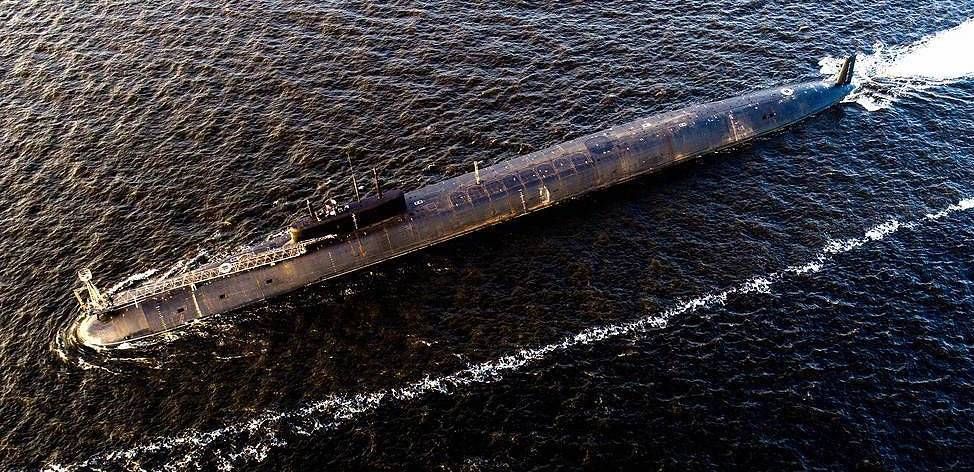
The Borei-A Class ships displace 24,000 tons when submerged, making them among the heaviest in the world but still considerably lighter than the 40,000 ton Soviet era Typhoon Class ships. High levels of automation facilitate a relatively small crew of 107 personnel, and the ships can carry 16 RS-56 intercontinental range ballistic missiles each with up to 10 nuclear warheads. This gives each submarine enough firepower to destroy multiple medium sized countries, with up to 160 strategic nuclear warheads on each ship. The ships are the first in Russian service to uses pump-jet propulsion, and have a noise level five times lower than their predecessors the Akula Class and twice as low as American Virginia Class ships making them highly survivable. The ships cost approximately $890 million each, less than half the cost of their American counterparts the Ohio Class, and are able to carry more missiles tan their predecessors due to the more compact design of the RS-56. Commissioning of new ships comes as part of a comprehensive effort to modernise the Russian nuclear deterrent, which has also included modernisation of air and ground arms of the nuclear triad through integration of new systems such as the Kh-102 air launched nuclear cruise missile and Kh-47M2 air launched ballistic missile as well as Avangard and Satan II ground launched ICBMs.
