
1,000 Russian T-90M Tanks Have Now Been Built in India: Fleet’s Future Remains Uncertain
Military Watch Magazine Editorial Staff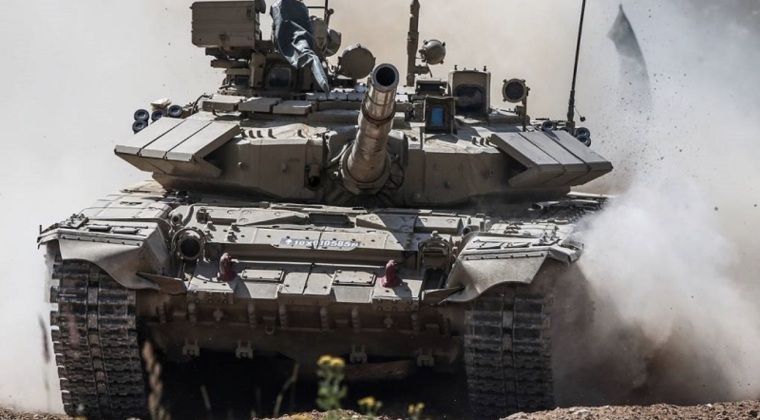
Indian Army T-90 Tank
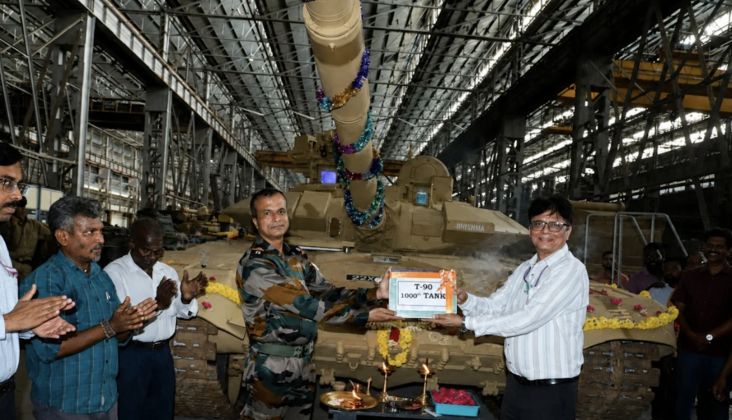
The Heavy Vehicles Factory in Avadi, southern India, reached a major landmark in tank production on May 22 with the completion of the 1,000th T-90 tank. A 2006 licensed production agreement authorised the manufacture of1,000 T-90s at the facility, with the first being completed in 2009. Over close to two decades of production, the vehicles have used growing proportions of indigenous components as India’s defence sector has become more capable of contributing to production, with approximately 80 percent of the vehicles now being made in India. The Heavy Vehicles Factory factory has been India’s primary armoured vehicle production facility since 1961, and previously produced Soviet T-72 tanks under license before transitioning to the T-90.
Preceding the outbreak of full scale Russian-Ukrainian hostilities in 2022, the Indian Army was the world’s largest operator of the T-90, with the Russian Army receiving only a limited number of the vehicles due to the perceived greater cost effectiveness of modernising Soviet era T-72B tanks, and due to plans to invest in procuring the T-14 next generation tank. The current size of the Russian fleet remains highly uncertain, with procurements and production rates having expanded to several times pre-war rates, while battlefield losses have remained significant. A landmark in the T-90 program was the development of the T-90S variant for the Indian Army, which was far more capable than the problematic baseline variant that had been brought into service in the early 1990s, the first of which was delivered in 2004. This design was used as a basis for the development of the T-90M variant that currently equips the Russian Army and was brought into service in 2020.
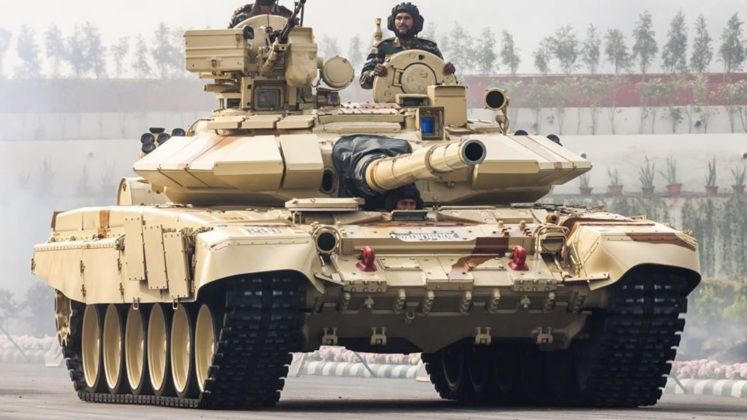
The Indian Army currently fields 1,300 T-90s in active service, initially receiving 124 fully assembled tanks from Russia, with the remaining vehicles arriving in semi-knocked-down kit form for local assembly. A benefit of the T-90 has been its high level of commonality with the T-72, which formed the backbone of the Indian Army’s armoured units throughout the late Cold War years, with the newer vehicle being an enhanced derivative of the older Soviet one. A major factor in the Indian Defence Ministry’s procurement of T-90 tanks on a very large scale was the failure of the domestically built Arjun tank program, which aside from high maintenance needs and operational costs, has had a very questionable performance following decades of delays in its development. With the Indian Army also fielding approximately 2,500 T-72 tanks, the Defence Ministry is planning to re-export a large portion of these while replacing them in frontline units with T-90 tanks.
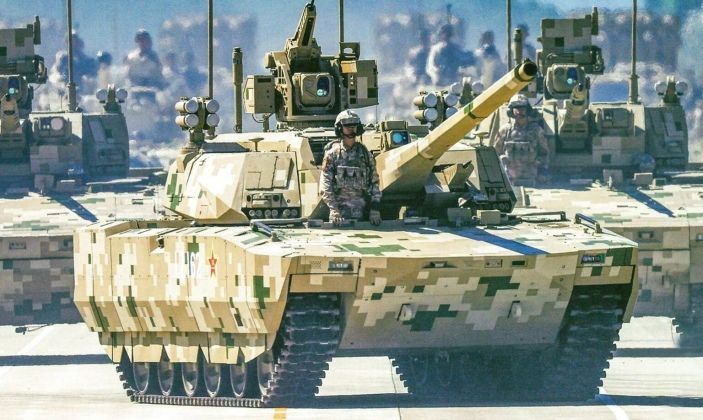
While the T-90 was cutting edge when first procured, its standing against the main battle tanks fielded by Indian adversaries has diminished considerably. China’s development of the Type 99 tank provided its frontline units with a significant advantage, which has been expanded tremendously with the service entry of the Type 100 next generation battle tank in 2025, which is widely considered the most advanced in the world and the very first of a new generation. The tank has a number of common features to the unfinished Russian T-14 design, but was developed in a small fraction of the time and with a design that is in many respects much more modern. The future of the Indian tank fleet remains highly uncertain, with the possibility of Indian investment to support the completion of the T-14’s development, and to subsequently procure it under a license production deal, having been raised as a significant possibility by analysts.
