
World’s Heaviest Fighter Moves to New Development Stage as China Unveils Enhanced Second Prototype
Military Watch Magazine Editorial Staff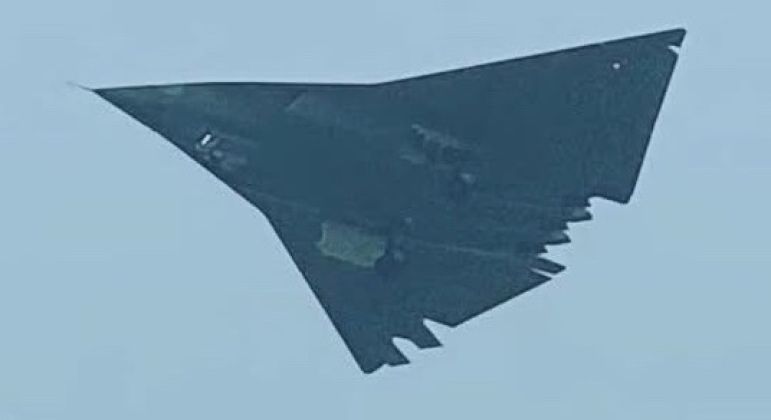
Chinese Ultra-Long Range Sixth Gen. Fighter Second Prototype
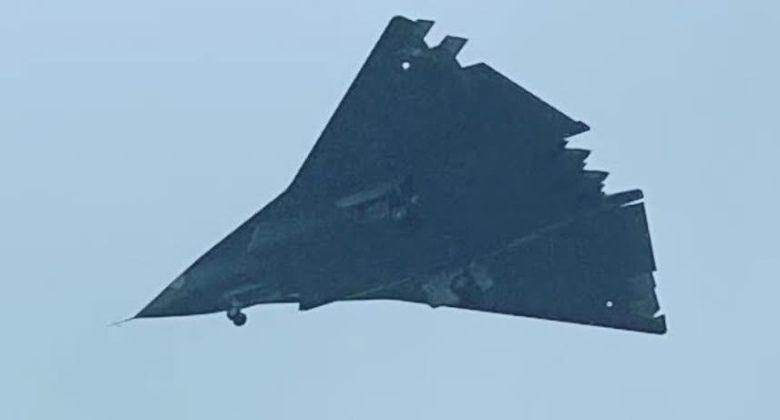
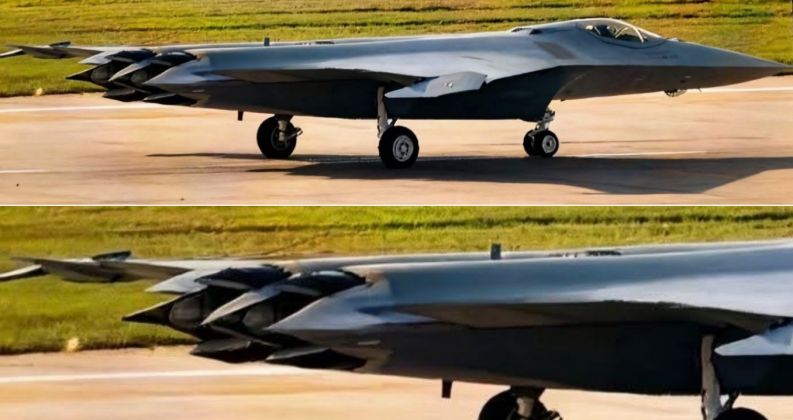
Footage released on October 28 has confirmed that a second prototype of the Chengdu Aircraft Corporation’s very heavy ultra long range sixth generation fighter aircraft is now in flight testing stages. This follows the unveiling of the first prototype in December 2024, which was the first sixth generation fighter confirmed to be in flight testing anywhere in the world. The new aircraft has notable differences from its predecessors, including new angular exhaust nozzles rather than recessed exhausts seen on the preceding model. The new exhausts resemble those used to provide thrust vector control. As sixth generation fighters use no tail fins to increase stealth, not only is the number of control surfaces increased to compensate for this, but it has also been speculated that they could integrate thrust vectoring engines for additional control, which direct the direction of the engine’s exhaust to increase aircraft stability. The exhaust is more heavily serrated likely to improve the aircraft’s stealth capabilities.
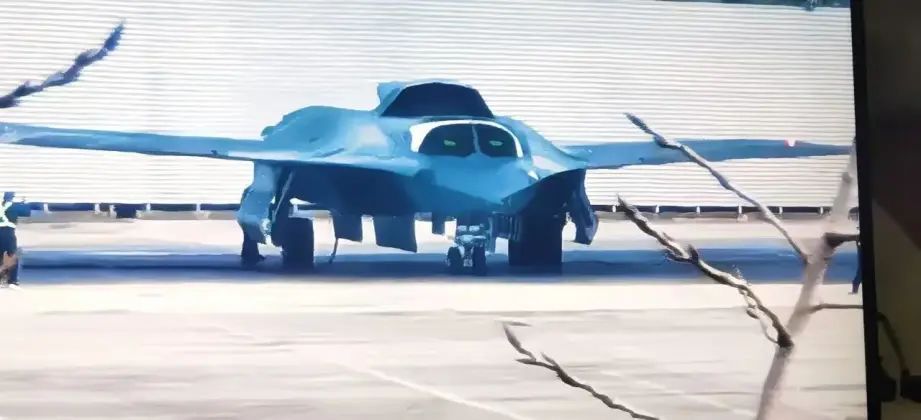
The new sixth generation aircraft has a unique triple engine configuration with one dorsal and two lower air intakes. The intakes previously used caret-like design, but now use divertless supersonic intake that are considered better optimised for stealth. A further conspicuous change is the use of new landing gear, with wheels side by side rather than in tandem. This is the most unusual major change, and may represent a response to feedback from operations using the first aircraft. Should the new fighter program follow the precedent set by its direct predecessor from the fifth generation, the J-20, then two demonstrator airframes will be built before the program moves on to a more production representative prototype stage. The J-20 notably moved from its first demonstrator flight to service entry in just six years and one month, with a similar development time for the new fighter putting it on schedule to enter service in January 2031. This projected schedule is years ahead of that expected for the U.S. Air Force’s own sixth generation fighter the F-47.
In early June a new image of the very heavy sixth generation fighter provided what is to date the clearest frontal view of the aircraft, and showed three open ventral weapons bays with a capacity for ordinance that appears to be several times that of fifth generation fighters such as the F-35 or J-20. This is expected to allow the fighter to carry large quantities of ballistic missiles, and oversized missile designs such as the PL-17 for very long range air-to-air engagements, or various longer range cruise missiles. With surrounding personnel providing an indication of scale, the sheer size of the fighter’s nose cone indicates that a particularly large radar is intended to be accommodated, potentially allowing the aircraft to engage targets at extreme ranges exceeding 400 kilometres without support from airborne early warning and control (AEW&C) systems.
The ability to operate independently deep into enemy controlled territory is likely to be a leading requirement of the new fighter, which is by far the largest in the world. The much smaller J-20 already has a significant range advantage over any of its Western counterparts with a combat radius estimated at over 2000 kilometres compared to around 1000 kilometres for its American rival the F-35. The new fighter is expected to have a combat radius of over 4000 kilometres, which is achieved using more efficient engines and by accommodating a much higher fuel capacity. Combined with advanced stealth capabilities, this will allow the aircraft to engage hostile aircraft far over the Pacific, including those transiting from Guam or Wake Island to Japan or the Philippines, thus making Western Bloc air operations in the region far more complex. The aircraft is being developed alongside at least two other types of lighter sixth generation fighter, one of which is being developed by the Shenyang Aircraft Corporation and has comparable dimensions to the J-20. Outside China, no other country is expected to unveil a sixth generation fighter at flight demonstrator stages until close to the year 2030.
