
Will China Ever Export the J-20 Stealth Fighter? Expert Assesses Possible Client Base
Military Watch Magazine Editorial Staff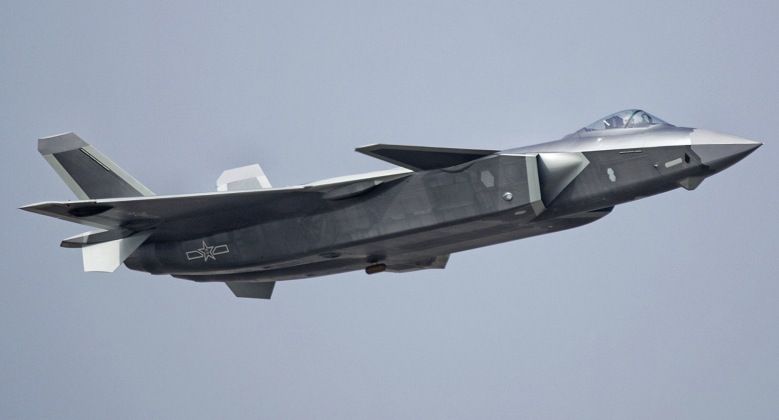
J-20 Fifth Generation Fighter
Since the unveiling of the first technology demonstrator of China’s J-20 fifth generation fighter in December 2010, analysts have widely speculated regarding the potential client base to which the aircraft could be marketed for export. Expectations for exports were disappointed, however, after it was made clear in the 2010s that the fighter was not being offered abroad, with the lighter FC-31 fifth generation fighter having been developed to compete on foreign markets in its stead. As observed in the China Daily in March 2018, the Aviation Industry Corporation of China was “testing the FC-31, another fifth-generation combat plane, and wants to use it to tap the international market for advanced fighter jets. The Air Force has made clear that it will not allow exports of the J-20.” Although the fighter has not been offered for export so far, the possibility of the J-20 being marketed abroad in future was recently explored in detail by leading expert on the J-20 program Abraham Abrams.
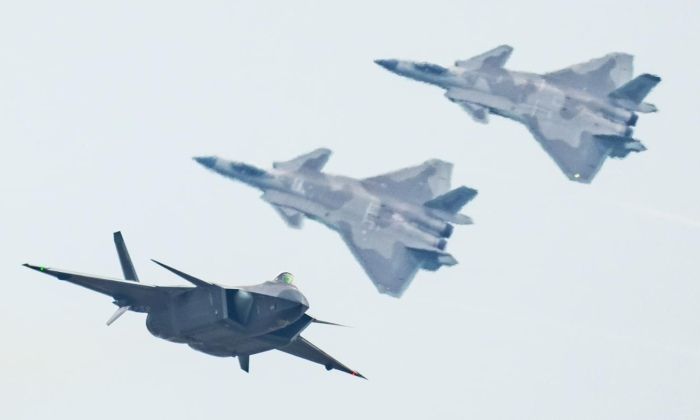
In his recent book: China's Stealth Fighter: The J-20 'Mighty Dragon' and the Growing Challenge to Western Air Dominance, Abrams observed that the J-20 was “the only fighter design in production worldwide not offered for sale abroad,” which reflected the fact that China’s defence sector was by far the least reliant on exports. Regarding the possibility of this policy changing, he noted that this may materialise “in the 2030s after progress has been made on a sixth generation successor, by which time the design will have further matured and the PLAAF will likely have a less urgent need for further units.” He noted that this had precedents in “how the United States began to actively market the F-15 to a wider range of clients in the 1990s after F-22 production had begun, or how the Soviet Union began offering its top air-to-air performing combat jet the MiG-25 abroad when its successor the MiG-31 was ready for production.” He noted that the development of a twin seat J-20 variant intended for command and control could significantly widen the aircraft’s appear to clients looking for something other than a traditional fighter.
Regarding the possible clients for the J-20, Abrams noted that the Algerian Air Force was among the most likely should the aircraft ever be approved for export. He observed:
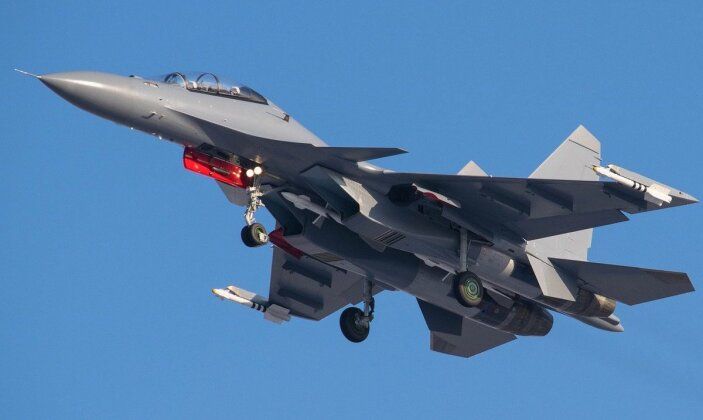
“ the Algerian Air Force as the most capable and by far the best funded in Africa was a leading candidate. Alongside many lighter aircraft, Algeria in the early 2020s operated a large fleet of heavyweight combat jets including over seventy Su-30s, thirty-six Su-24Ms and fifteen MiG-25s – the latter two both significantly larger than the J-20 and with comparable or higher estimated operational costs. Algeria had longstanding strategic and security ties with China, and Chinese armaments had formed a fast growing portion of its inventory throughout the 2010s.”
While acknowledging that the Algerian Air Force appeared poised to procure the Russian Su-57, which since his book’s publication has been confirmed, Abrams notes that the J-20 “could well prove a much more attractive option either instead of or alongside its Russian competitor.”
Alongside Algeria, Abrams notes that Saudi Arabia and the United Arab Emirates could a possible clients for the J-20. “As China increasingly formed closer economic, political and security ties with a number of traditional Western security partners, J-20 sales could cement the diminishing of Western spheres of influence in key regions. The Persian Gulf in particular, where states were denied access to the F-35, but where both Saudi Arabia and the United Arab Emirates (UAE) increasingly bolstered economic, strategic and security ties with China, could by the 2030s see the emergence of potential buyers,” he observed. He noted “the UAE’s 2022 order for Chinese L-15 fighter/trainers, and its use of Huawei telecommunications infrastructure despite warnings from Washington that this would rule it out as an F-35 client,” as possible initial steps in this direction.
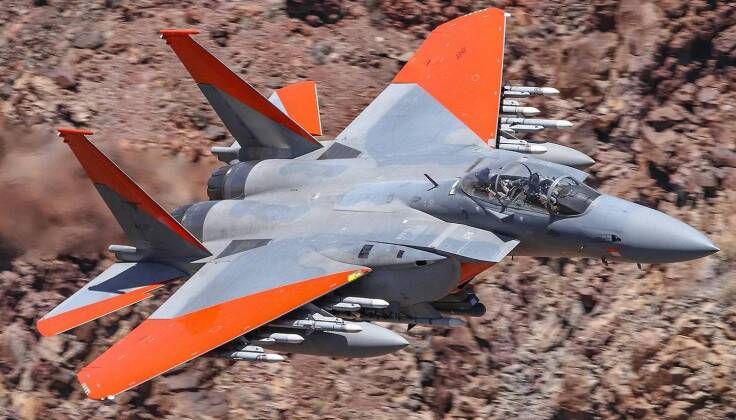
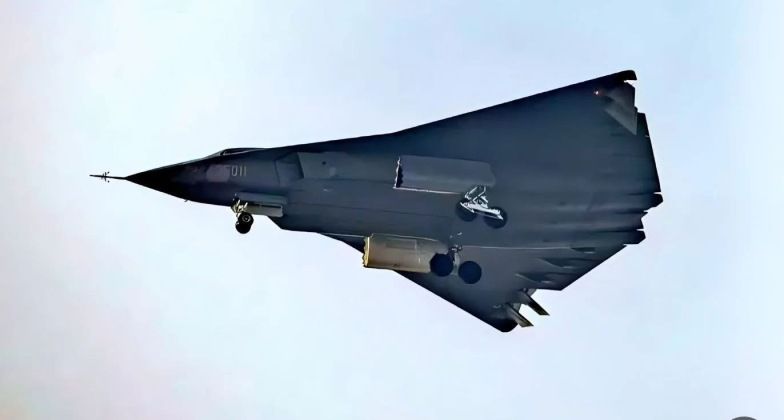
Further elaborating on possible sales, Abrams observed: “Saudi Arabia, too, opened a joint venture with China for drone production in March 2022, had long operated Chinese ballistic missiles, and from the late 2010s accelerated improvements in strategic ties with Beijing which had emerged as by far its greatest trading partner.” Regarding the Royal Saudi Air Force’s ability to accommodate the aircraft, he noted, it “was one of very few in the world comprised primarily of heavyweights, namely F-15s, and with these having no apparent Western successor the J-20 or FC-31 could be natural choices in the 2030s.” While the future of the J-20 remains highly uncertain, in particular after China revealed its first sixth generation fighter prototypes in flight in December 2024, there remains a slim possibility that the aircraft could be offered for export to clients seeking a higher end and longer ranged alternative to the FC-31 - an aircraft confirmed n 2025 to have been designated the “J-35.”
