Why North Korea's Air Force Can't Escort Mashal Kim Jong Un to Singapore; Which Party Could Take Their Place
Military Watch Magazine Editorial Staff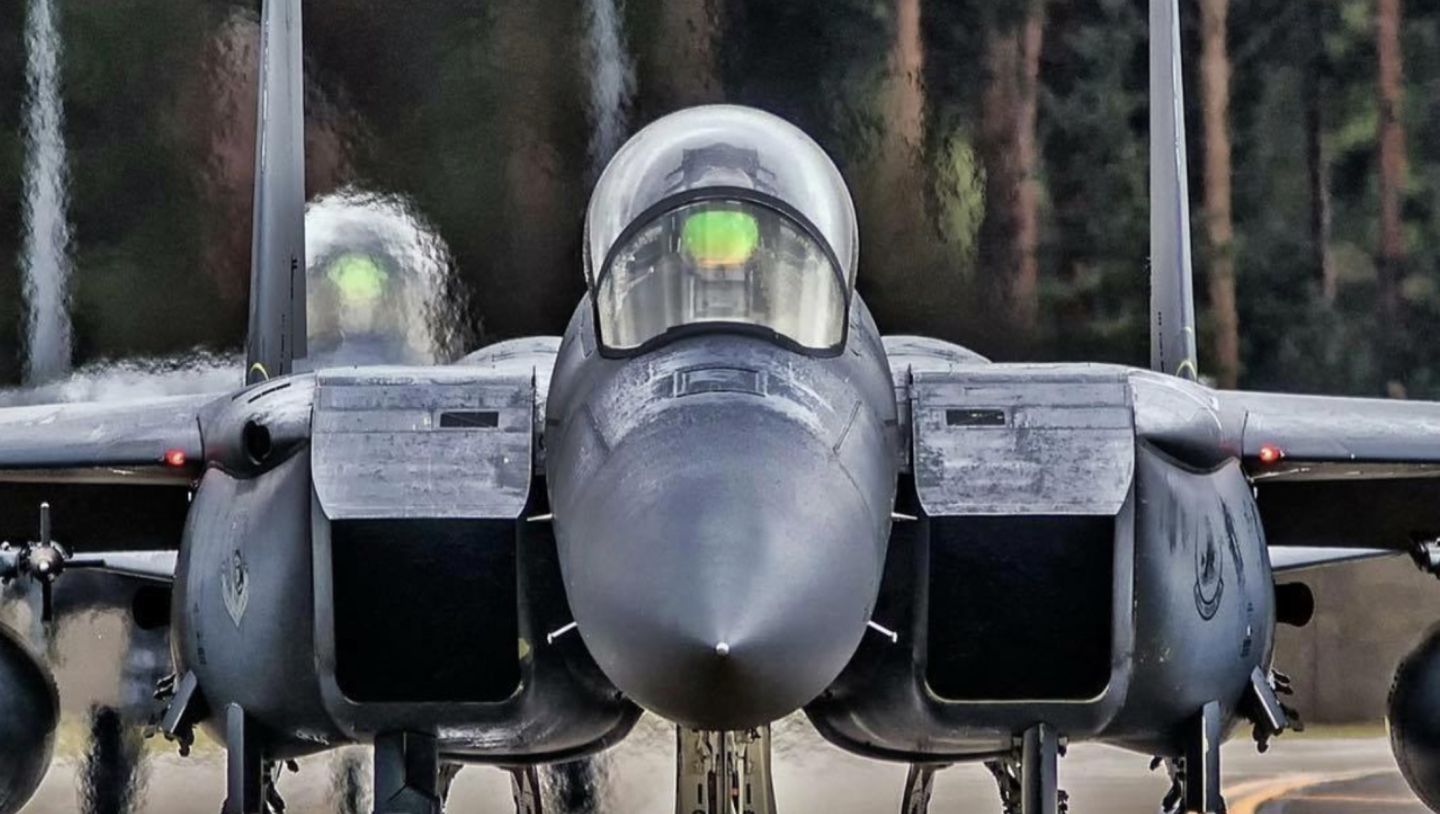
F-15E Strike Fighters
With North Korean leader Mashal Kim Jong Un set to travel to Singapore for a two day summit with U.S. President Donald Trump scheduled for June 12th, the question has been raised as to how the Marshal will be escorted to the South East Asian state in his first trip across the Pacific since assuming leadership. While both Koreas remain among the most capable military powers in the world (ranked well within the top ten as Tier Two military powers), neither retains the capabilities to fly an escort mission using fighter jets across such long distances. Neither air force fields any aerial tankers whatsoever or is trained for aerial refuelling operations, a result of both states' armed forces being overwhelmingly defensively oriented.
While South Korea does retain some formidable naval power projection assets, in the form of a state of the art destroyer fleet and two large carrier warships, Seoul has yet to invest in the capabilities to conduct air operations far beyond its coasts using aerial refuelling. With the South Korean Air Force fielding formidable long range strike fighters, the F-15K Slam Eagle, an advanced derivative of the American F-15E capable of striking targets across North Korea as well as much of China and Japan if needed, the country has little need for aerial tankers or long range power projection capabilities for its fighters. North Korea for its part, relying on heavy bombers, ballistic missiles and missile equipped submarines to project force abroad, namely by delivering weapons of mass destruction as part of the country's deterrent force, has little need to deploy its fighters far beyond its airspace. Its air fleet thus remains confined to an air defence and intra peninsular strike role - with even relatively basic operations into South East Asian territory well beyond its capabilities.
With the North Korean leader unlikely to make such a high profile visit unescorted, reports have indicated that a number of third parties may well be willing and able to provide an escort for the prolific event. Singapore for one retains sizeable tanker fleet, and could use this to facilitate a long range operation for its F-16 and F-15E fighters. Another likely possibility would be for the People's Republic of China, a state treaty bound to protect North Korea from attack, to provide an escort using its own vast aerial warfare capabilities. Though Beijing's tanker fleet is smaller than that of Singapore, it is more than adequate for the required task and the long range of Chinese heavy fighters will reduce the need for frequent refuelling. A number of sources have indicated this possibility, which would provide Beijing with a much valued opportunity to demonstrate its new aerial warfare capabilities - deploying advanced air superiority fighters such as the J-11B and Su-35 - possibly even new J-20 stealth fighters. This would serve both as a show of force as well as a sign of solidarity with Pyongyang.
With Marshal Kim Jong Un having met with Chinese Premier Xi Jinping on two occasions since April 2018, Beijing has expressed strong solidarity with the Korean negotiating position. Though Chinese negotiators will not be present in Singapore, providing for the security of the Korean leader will serve as a potent symbol of Beijing's important role both in supporting peace talks and in protecting North Korea from hostile attacks by its Western adversaries, both until a peace treaty ending the near 70 year long Korean War can be reached and potentially after the peninsula's denuclearisation should it eventually occur.