
War Profits; U.S. Defence Stocks Plummet Following Trump-Kim Summit - Second Major Drop After Moon-Kim Summit in April
Military Watch Magazine Editorial Staff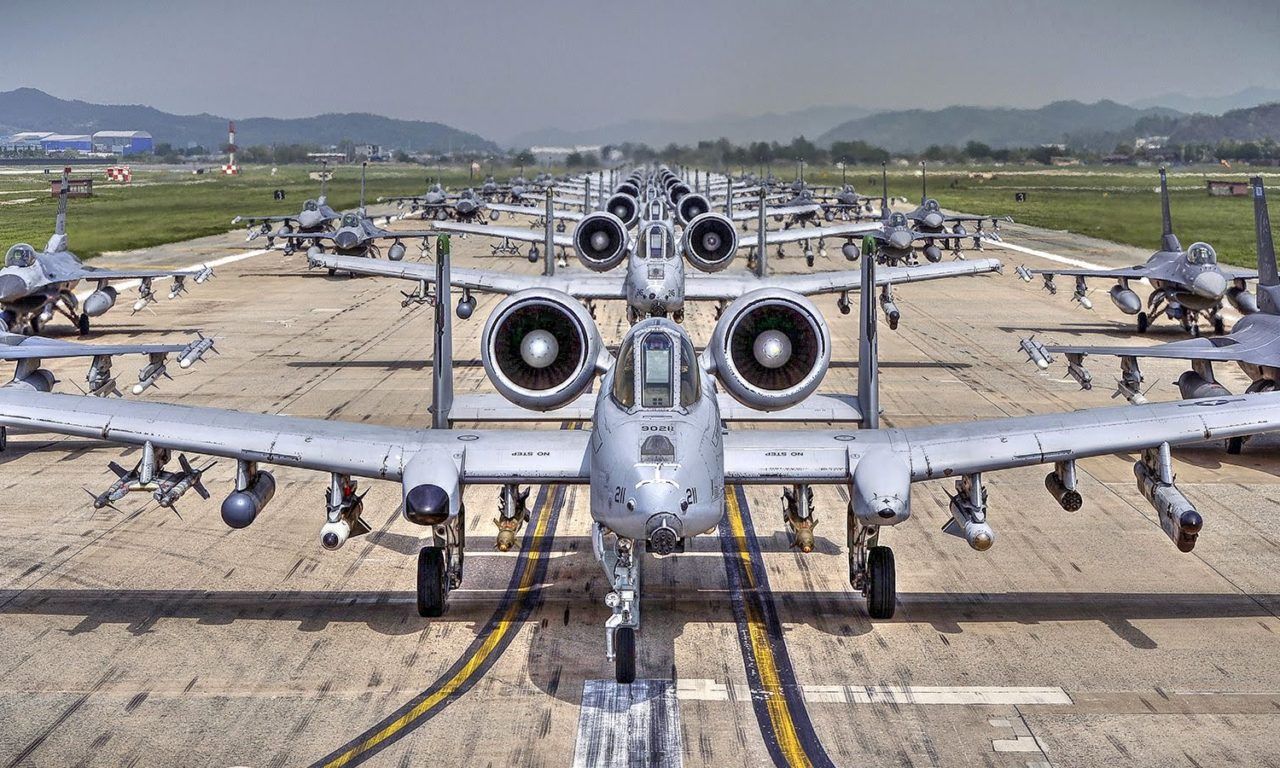
A-10 Attack Jets and F-16 Fighting Falcons at Osan Air Base, South Korea
AiirSource
The June 12 summit between North Korean Leader Kim Jong Un and U.S. President Donald Trump, in which the American leader pledged his intention to bring a swift end to the Korean War almost 70 years after it began, has led to hopes for a new and unprecedented peace on the Peninsula - as well as a future of mutual recognition and closer economic ties between the two Koreas. While the U.S. President hailed the summit as a great success, proclaiming the following day an end to the threat posed by Pyongyang’s nuclear forces and remarking on the great chemistry between himself and Marshal Kim, in the United States itself the development was met with considerably less enthusiasm by the President's opponents. Media outlets aligned with the Democratic Party for one were heavily critical of the summit, while human rights organisations slammed the President for talking to a leader who they alleged was a ‘gross human rights abuser’ - criticising him in particular for not raising North Korean domestic issues at the summit and covering only the foreign relations of the two countries.
One party which arguably has the most to lose from the success of the Trump-Kim summit and an abating of tensions in the Korean Peninsula is the U.S. defence sector, and to a lesser extent those in Europe as well, which have seen sales skyrocket as a result of growing tensions between North Korea and the United States in 2017. U.S. defence stocks notably fell considerably on the day of the summit in Singapore. Raytheon, the producer of Patriot air defence batteries, radar and missiles used by American combat aircraft and a number of other missile and electronic warfare missile platforms, closed with stocks valued 2.8% lower. Lockheed Martin, the largest defence producer in the United States and manufacturer of a number of prolific combat platforms including the new F-35 stealth fighter widely exported across the Pacific, lost 1.3%. Northrop Grumman, which has produced a number of advanced drones combat aircraft and electronic warfare systems, itself saw a loss of 1.5%. Navy shipbuilder lost 1.6%.
The fall in stocks was hardly unprecedented, with the highly successful meeting between South Korean President Moon Jae In and North Korean Leader Kim Jong Un in April having also hit defence manufacturers hard. Raytheon lost 3.9% in the aftermath of those talks, having been hit particularly hard as a result of North Korea’s heavy focus under its military modernisation program on ballistic missile capabilities which it the U.S. manufacturer specialised in countering by producing missile defences including the Patriot, GMD, and the Standard missile used by the Aegis system. General Dynamics, Northrop Grumman and Lockheed Martin all lost over 2%. With the agreements signed under the Moon-Kim summit having been far more comprehensive, it was to be expected that defence stocks would take a greater hit in April than they did in June.
Explaining the cause of the losses suffered in the aftermath of the Trump-Kim summit, chief investment officer for Commonwealth Financial Network in Waltham Brad McMillan stated: "If weapons are used they need to be replaced. That makes war a growth story for these stocks, and one of the big potential growth stories recently has been North Korea… What the (Trump-Kim) agreement does, at least for a while, is take military conflict off the table." Not are American arms clients across the Pacific likely lower military expenditures on arms imports, but the United States is also less likely to need to acquire weapons for a major war in the region.
A number of analysts have speculated that the United States may well have sought a peace agreement with North Korea to allow itself to better focus and ready itself for full engagement against the Islamic Republic of Iran, a far softer target in the Middle East. Lacking North Korea's regional support, unified population, mountainous terrain, nuclear deterrent, or massive conventional military - engaging Iran is far less dangerous for the United States and its allies than the risk of conflict with Pyongyang. Defence stocks could well see a considerable rise in the near future as American rhetoric escalates alongside preparations for war, and the Untied States' greater focus on cooperation with its defence parters in the Middle East is set to lead to more involvement in that region. This would very likely more than compensate for losses made by major defence producers in the aftermath of the peace process with North Korea, with some of the largest defence spenders in the world situated in the Middle East and acquiring ever growing arsenals of American made weapons as the U.S. military itself makes preparations for a potential armed confrontation with Tehran.
