
Valuable ‘Lightning Carrier’ Lost? USS Bonhomme Richard Feared Damaged Beyond Repair After Five Day Fire
Military Watch Magazine Editorial Staff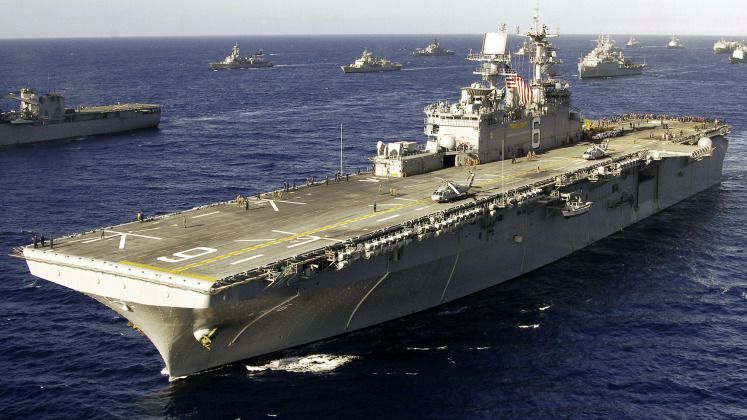
USS Bonhomme Richard in the Pacific Ocean.
James R. Evans
Following a major fire and multiple explosions onboard the U.S. Navy’s Wasp Class carrier USS Bonhomme Richard, which began on July 12th and lasted for five days, the Navy is reportedly facing prospects of having to permanently decommission the ship. The fire saw 63 injured including 40 sailors, with the initial cause unknown. The Bonhomme Richard displaces approximately 40,000 tons, and was commissioned into service in the U.S. Navy in August 1998. The warship was previously thought to have several decades remaining in its service life, with ships of its kind highly prized for their extreme versatility and high suitability for operations in the Western Pacific region. Wasp Class carriers are capable of operating as amphibious assault ships, deploying approximately 1,900 Marines for amphibious landings alongside supporting transport and combat helicopters, but can also deploy for a dedicated anti-submarine warfare role using multiple helicopters. Perhaps most significantly, the ships are capable of functioning as aircraft carriers and deploying up to 20 fixed wing fighters - with the Wasp Class platforms designed with the Harrier II vertical landing capable fighter in mind.
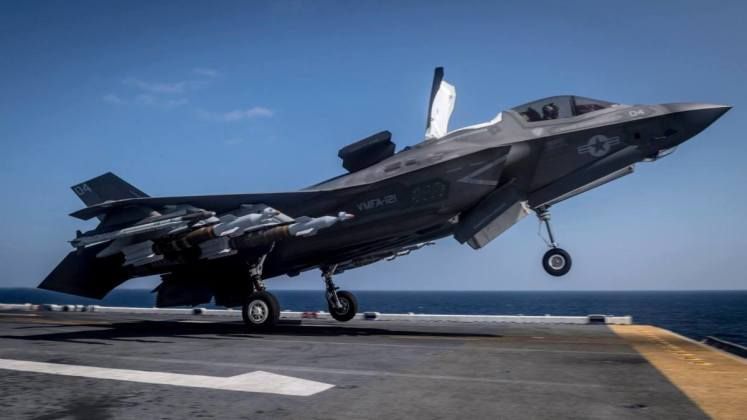
The ability of Wasp Class ships and their heavier 45,000 ton successors, the America Class, to function as carriers, has been particularly emphasised by the Navy in recent years. A leading cause of this has been the commissioning into service of the F-35B Lightning II vertical landing capable fighter into service from 2014, with the aircraft designed to replace the Harrier II and providing far superior capabilities across the spectrum - making Wasp Class ships much more potent in a carrier role. Wasp and America Class ships deploying F-35B fighters have been dubbed ‘Lightning Carriers,’ and are notably expected to play a greater role as the U.S. increases its military presence in the Western Pacific targeting China and North Korea. Lightning Carriers are prized for their much lower costs and crew requirements than the U.S. Navy’s Nimitz and Gerald Ford Class supercarriers, which is particularly important given the growing threats to large and expensive ships posed by long range hypersonic anti ship missiles such as China’s DF-21D and Russia’s Kh-47M2, as well as other anti-carrier assets such as Kilo Class submarines with wake homing torpedoes. With Wasp Class ships seen as far more viable for deployments to the Western Pacific the potential loss of one of these ships, which will cost an estimated $3.5 billion to replace with a new America Class platform, is a significant blow to the Navy’s operational capacity.
