
U.S. Air Force’s Urgently Needed KC-46 Tanker Still Stuck in Testing as Major Defects Unresolved
Military Watch Magazine Editorial Staff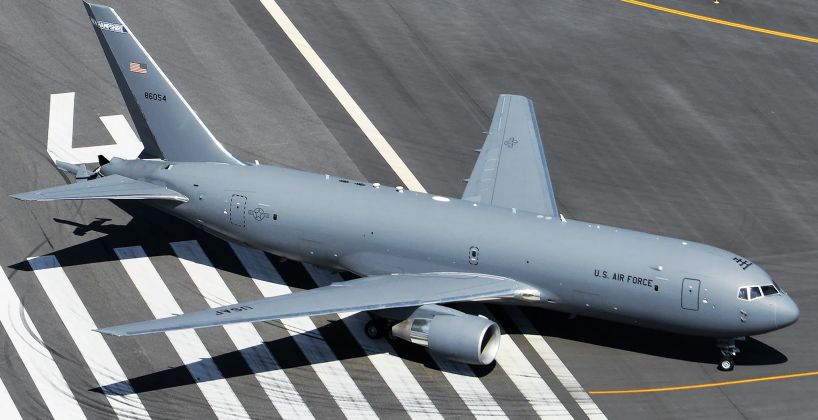
KC-46 Tanker
During U.S. Armed Forces’ military assault against Iran from February 28, the very widespread reliance on Cold War era KC-135 Stratotankers to support operations drew considerable attention to the ongoing issues with the Boeing KC-46A Pegasus tanker program intended to provide a direct replacement with next generation features. Due to ongoing issues and development delays, the KC-46A is still not fully through operational testing, despite already being in limited service, which has for years represented a concurrency problem for the Air Force. With the Air Force being outstandingly heavily reliant on tanker support to operate, issues with the KC-46 have significantly undermined the service’s ability to wage war, not only forcing it to hold the aircraft back from frontline deployments, but also resulting in issues for the Air Force in the few instances when it was deployed to support the war effort.
Recent Pentagon and U.S. Air Force reporting confirms that the KC-46’s Initial Operational Test & Evaluation is still incomplete, despite testing having effectively been ongoing since 2019. The Pentagon test report summarised that the aircraft “has not been able to meet several suitability metrics.” Mission-capable rates remain below required thresholds. Boeing has absorbed billions of dollars in losses due to cost overruns, as it signed fixed-price contracts to deliver the KC-46, as the Air Force is forced to widely resort to workarounds in operating the aircraft. As a result of issues with the KC-46, the Air Force has paused a follow-on order of 75 aircraft, confirming that defects may take several years to fix.
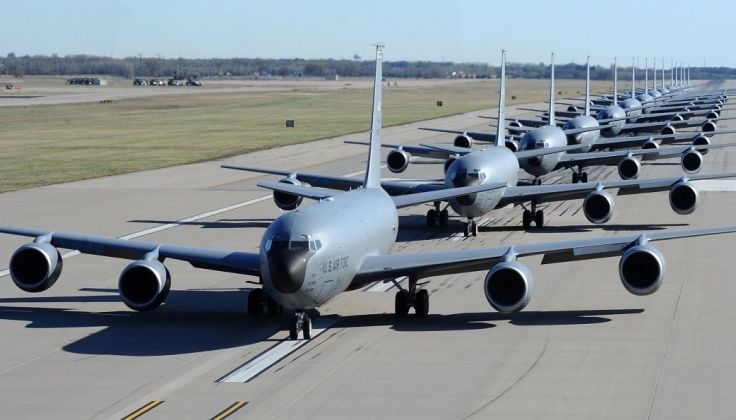
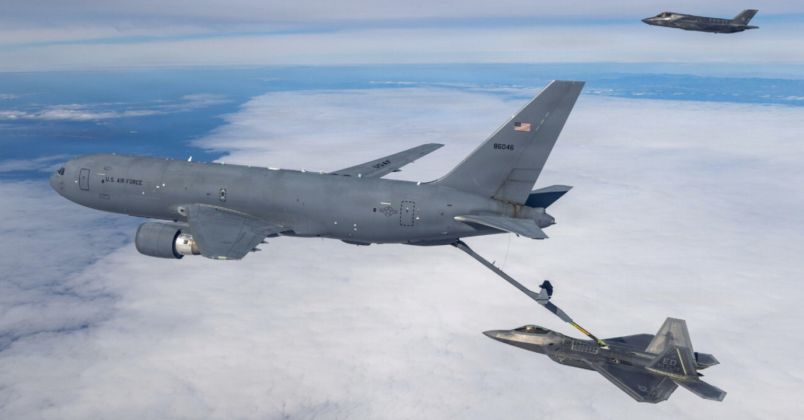
The KC-46 has several distinct advantages over the KC-135 Stratotanker, primarily because it is based on the far newer Boeing 767, a more modern airframe with greater growth potential, which was expected to have significantly improved efficiency and reliability. One of its most important strengths is its true multi-role capability, as unlike the KC-135, which is fundamentally a tanker with limited secondary transport functions, the KC-46 can simultaneously serve as a tanker, cargo aircraft, and aeromedical evacuation platform, allowing it to carry passengers, palletised freight, or medical patients with far greater ease and efficiency. It also benefits from slightly higher fuel capacity and more efficient engines, enabling it to offload fuel at longer ranges and support more distant operations.
The KC-46 is better suited for joint and allied missions because it can more flexibly employ both boom and drogue refuelling systems, whereas the KC-135 is more constrained in how it is configured. The new tanker was also designed from the outset with modern defensive systems such as missile warning sensors and infrared countermeasures, ensuring a better chance of operating in higher-threat environments. Its digital avionics and automated systems further reduce crew workload and improve situational awareness compared to the heavily upgraded but still older cockpit architecture of the KC-135. These factors make the KC-46 a far more versatile and future-oriented platform, which makes the resolution of ongoing technical issues particularly important.
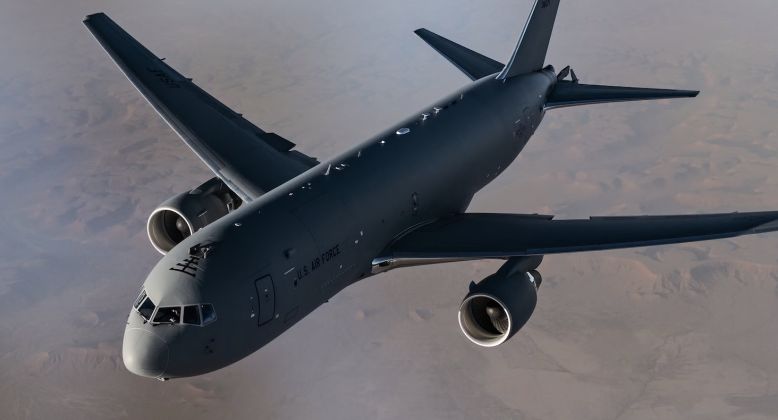
Leading reasons why the KC-46 remains stuck in an extended testing phase include issues with its Remote Vision System and the requirement for a redesign of its boom actuator redesign, which alongside other systems issues have prevented the completion of its Initial Operational Test and Evaluation process for the past seven years. Although approximately 85 percent of required flight data collected, it cannot be finalised until upgraded components are installed and validated. Ongoing issues also include poor mission-capable rates and reliability shortfalls, although the aircraft can refuel most receiver types with some restrictions. Issues with the KC-46 have reflected broader trends widely affecting major post-Cold War defence programs, ranging from the F-22 and F-35 fighters, to the B-52J bomber upgrade program, Littoral Combat Ship, and Gerald Ford class supercarrier. The post-1980s U.S. defence sector is assessed to have proven far less capable of completing programs on schedule and within budgetary limitations.
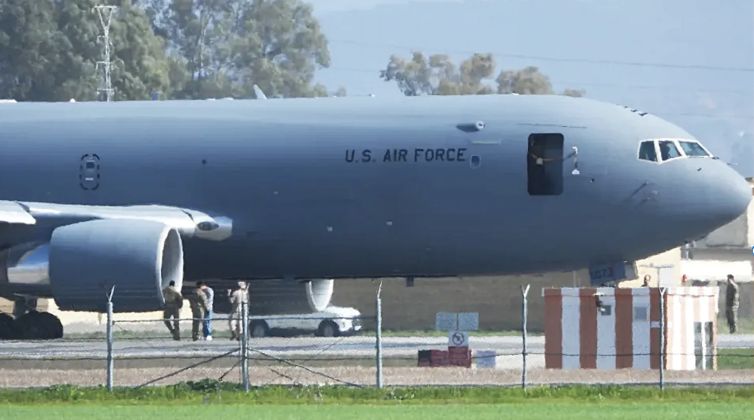
Issues with the KC-46 gained greater attention after the failure of a one of the aircraft o take off at Moron Air Base in southern Spain left the facility’s runway closed for several days, delaying a weeks long military buildup against Iran. It resulted in the grounding of several aircraft at the base, including a KC-135 aerial tanker, another KC-46A, and a C-17 transport. Alongside reliability issues, the existing fleet’s mission capable rates have remained outstandingly low, despite the aircraft being newly built. When considering the KC-46’s advantages, the Air Force’s inability to transition from the KC-135 to the new aircraft can be seen to have significantly hindered its ability to launch operations. Nevertheless, with the KC-135 fleet having suffered considerable losses during operations against Iran, many of them to missile strikes while on the ground, the fact that the higher value new tankers were not deployed may well have been beneficial to the Air Force by keeping them away from possible damage.
