
U.S. Air Force Redeploys ‘Micro Nuclear Reactor’ By C-17 Transport in Landmark Operation
Military Watch Magazine Editorial Staff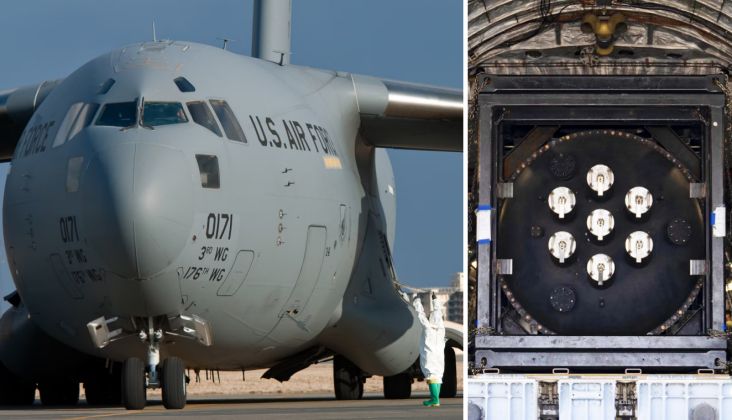
C-17 and Ward250 Reactor
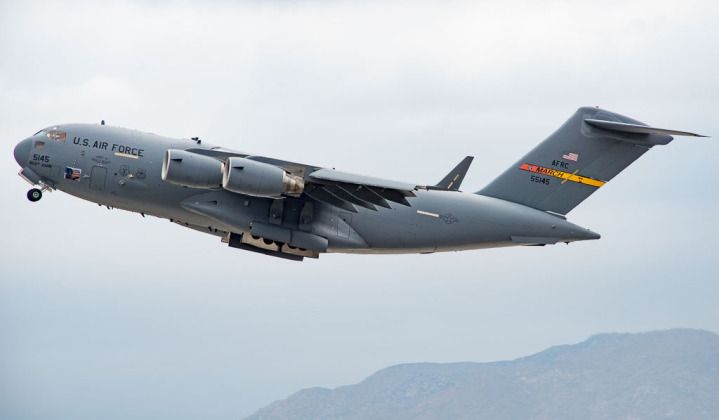
The U.S. Air Force has conduced an unprecedented operation to redeploy a micro nuclear reactor from March Air Reserve Base in Southern California using C-17 transports, with the destination being Hill Air Force Base in Utah. Three C-17s will bring the components of the Ward250 reactor, which is split between eight modules, to Utah, marking the first time the aircraft are used to redeploy reactors. As the Department of War looks to integrate micro nuclear reactors into the power grids of critical installations, which are expected to include key forward facilities such as Kadena Air Force Base next to the Taiwan Strait, it is expected that the C-17 fleet will be relied on to transport these reactors across much of the world, including potentially delivering backup reactors in wartime.
Developed by Valar Atomics, Ward250 uses helium coolant and graphite moderators, and uses tri-structural isotropic fuel at its core which consists of uranium kernels encased in ceramic layers. Its advanced features have led it to be considered a revolutionary next generation design. The use of TRISO nuclear fuels is expected to produce higher performance than would be offered by comparable amounts of traditional fissile material, with their use combined with helium-cooling, and graphite moderation, expected to “enable safer operations over past nuclear technologies and offer the ability to operate at higher temperatures than traditional plants,” according to the Utah San Rafael Energy Lab. Capable of reaching an output of just 100 kilowatts of thermal energy, the design is considered less efficient than larger reactors, but is optimal for military use including as a largely self-contained power source for key military facilities. Its cost viability for widespread deployment by the U.S. Armed Forces, however, has remained in serious question.
