
U.S. Air Force Receives Long Delayed Replacement For 65 Year Old T-38 Trainer Jets
Military Watch Magazine Editorial Staff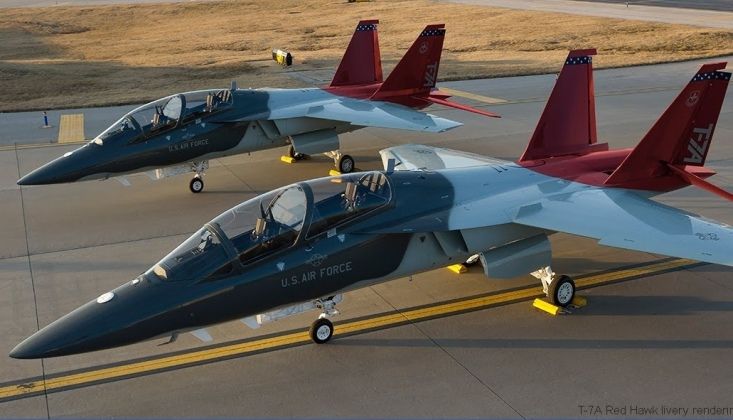
Boeing T-7 Trainer Prototypes
Boeing
The U.S. Air Force has received its first T-7A Red Hawk trainer aircraft, which arrived at Joint Base San Antonio Randolph to serve under the 99th Flying Training Squadron. Air Force officials have stated that the aircraft’s arrival marks the start of a transition away from the T-38 trainer, which entered service 65 years ago in 1965, emphasising that this shift is driven by the need to teach new pilots how to manage complex information flows and operate inside multi-domain architectures from the outsets of their careers The replacement of the pre-Vietnam War era T-38 with the advanced T-7 is expected to initiate a modernisation cycle in pilot training that is shaped by digital avionics, advanced simulation, and closer links between ground-based and in flight training.
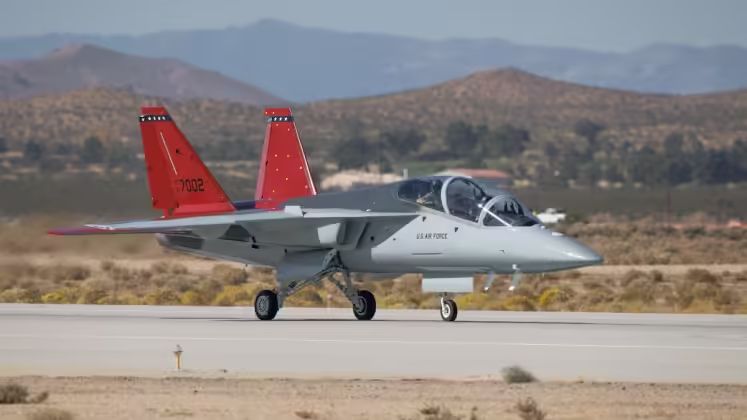
The T-7’s capabilities are expected to be particularly valuable for training F-35 and future F-47 pilots, as the F-35’s much higher levels of automation and far greater quantities of data shifting the responsibilities of pilots away from flying and more towards airborne data management. This trend is expected to continue as the F-35 is further modernised, and as the F-47 sixth generation fighter and the B-21 bomber are brought into service. Despite the T-7’s small size and simplicity, its development has been beset by wide ranging technical and other performance issues, significantly delaying its service entry timeline. Major shortcomings in digital engineering and testing technologies, which were previously expected to accelerate development of new aircraft to far greater extents than proved possible, were among the primary factors causing delays, leading Air Force leaders to refer to the technologies as having been ’overhyped.’
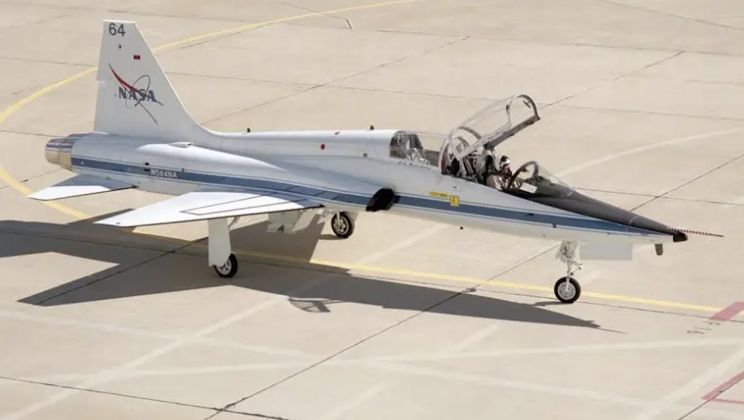
The T-38 first flew less than six years after the end of the Korean War in 1959, with over 450 of the aircraft estimated to still be in service in the Air Force. The aircraft was developed into the F-5 lightweight fighter which joined the Air Force in 1964, and would remain in production until 1987 for export, while being developed into the F-18 and stillborn F-20 fighters after significant enhancements and design changes were made. Reflecting advances in propulsion technologies, the T-7’s single F404 turbofan engine, which is common with that used on the F-18 fighter, engine produces three times the total thrust of the twin turbojet engines powering the T-38, allowing the newer trainer aircraft to simulate a much more impressive fight performance including high angles of attack. This could make the aircraft valuable for preparing pilots to operate more manoeuvrable aircraft such as the new F-15EX. Although the U.S. Air Force is only expected to procure 350-400 T-7s, Boeing reportedly aims to sell over 2,700 of the aircraft globally, representing more than double the production run of the T-38.
