
U.S. Deploys Nuclear ‘Doomsday Plane’ Near China During Donald Trump’s Visit: Air Force One Sets New Records
Military Watch Magazine Editorial Staff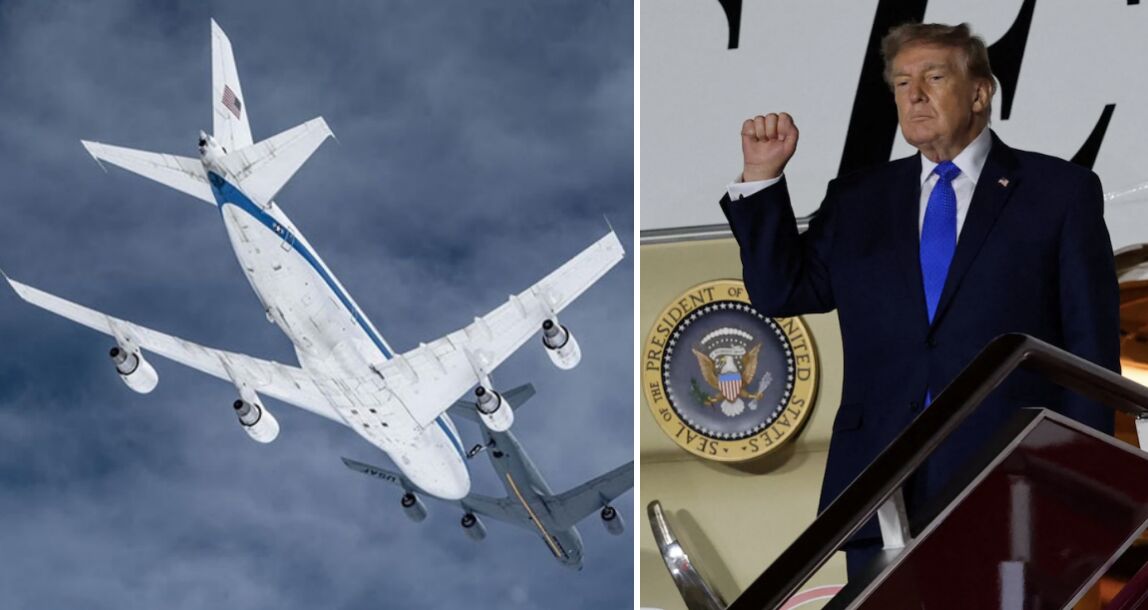
E-4B Nightwatch and U.S. President Donald Trump
President Donald Trump’s visit to Shenzhen, China, aboard a modified Boeing 747-8 has drawn attention to the endurance of the U.S. presidential aircraft and to the wider military operation that accompanies overseas presidential travel. The aircraft, known as the VC-25B Bridge jet, reportedly flew from Shenzhen to Joint Base Andrews without refuelling, completing what the White House described as the longest nonstop Air Force One flight to date. The journey also highlighted the role of the E-4B Nightwatch, the heavily modified 747 that routinely accompanies the president abroad as a survivable airborne command post and contingency platform.
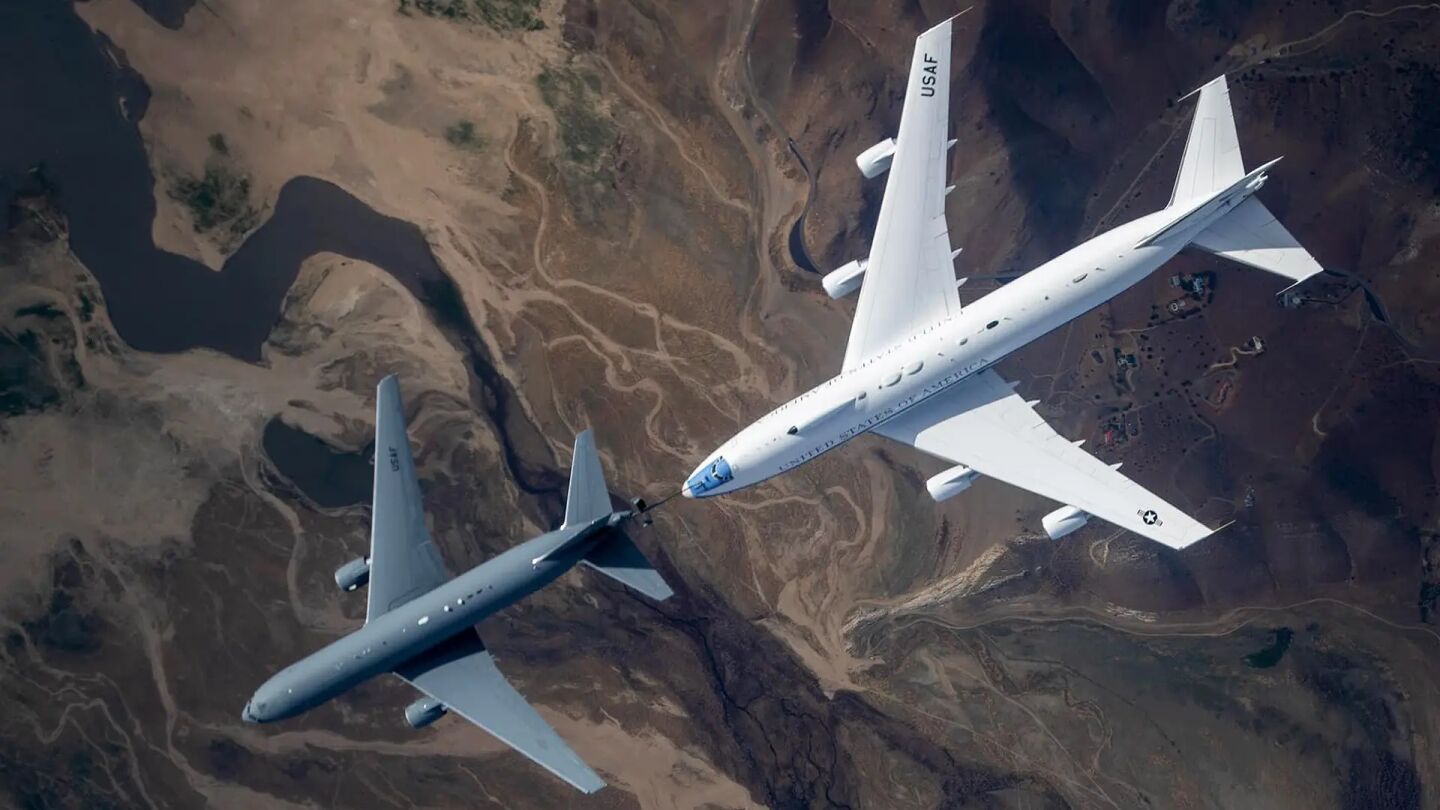
The E-4B is based on the Boeing 747-200, and is operated by the U.S. Air Force as a National Airborne Operations Center, providing a flying command post for senior national leadership during a major crisis. Its communications and command systems are designed to remain functional in extreme conditions, including the electromagnetic effects of a nuclear detonation. The aircraft is commonly called the “Doomsday Plane” because it is intended to support national command and control if conventional command facilities are damaged or destroyed. The aircraft’s presence during Trump’s trip was not an exceptional response to a specific threat. It is standard practice for an E-4B to deploy in support of overseas presidential travel, and similar aircraft have accompanied previous trips.
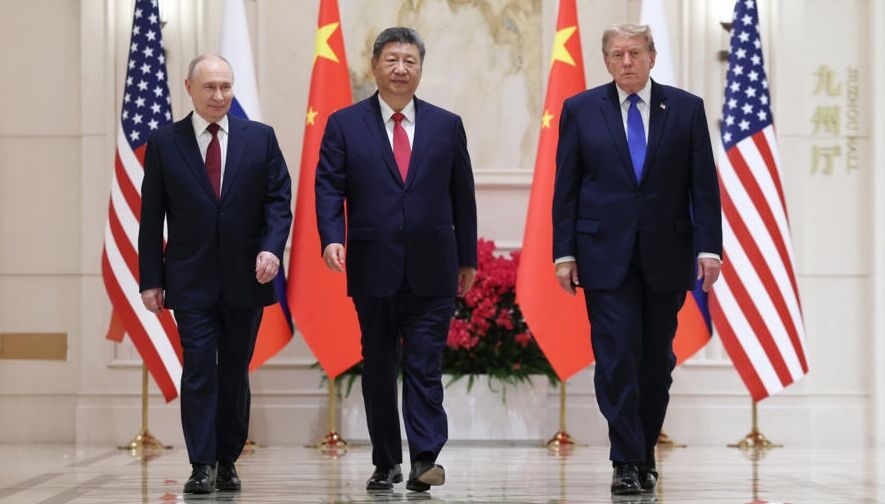
The E-4B’s primary function is to provide a resilient command centre from which the president, the Secretary of Defense and other senior officials could direct military operations during a national emergency. The aircraft is designed to operate for extended periods, with aerial refuelling allowing it to remain airborne for days. At least one E-4B is maintained on alert to support the National Command Authority, making the fleet a central element of US continuity-of-government and strategic command arrangements. Deploying an E-4B alongside Air Force One also provides additional options if the presidential aircraft encounters an emergency. The Nightwatch can serve as a contingency platform and, depending on circumstances, a place of refuge or departure from a threatened location.
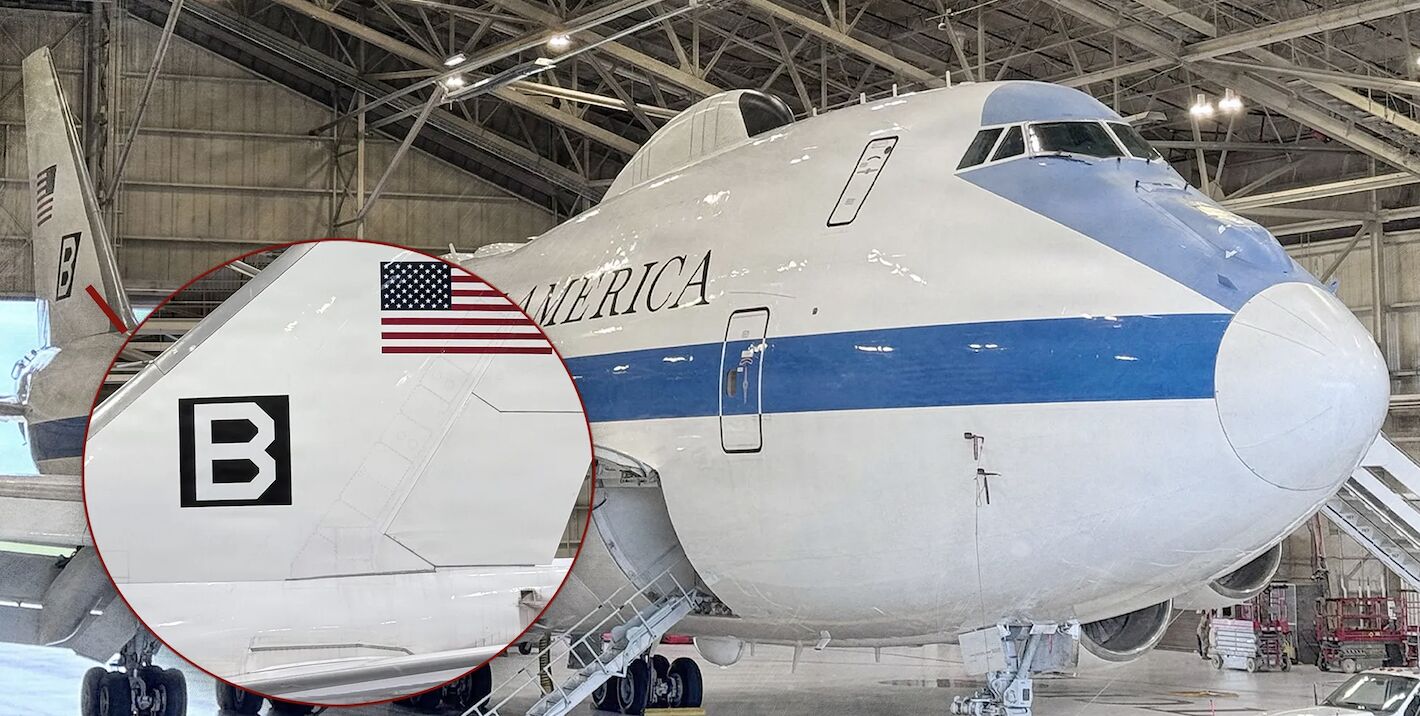
Transporting President Trump to China, the Bridge flew for approximately 14 and a half hours and covered close to 14,000 kilometres, passing over Shanghai, Tokyo, and Alaska. The White House said the aircraft also conducted the heaviest take-off in Air Force history, at just under one million pounds (454 tons). The flight was notable in part because the Bridge aircraft, a modified former Qatari 747-8 adapted for presidential transport, is not equipped for aerial refuelling. The aircraft is relied on while Boeing continues work on the purpose-built VC-25B aircraft intended to replace the ageing VC-25As as Air Force One. Its successful long-distance flight demonstrated the reach available from a large 747 airframe, but does not establish the range or endurance of the future presidential aircraft.
