
U.S. Marine Corps Integrates Long Range Cruise Missiles Onto AH-1Z Attack Helicopters For New Pacific Strike Capability
Military Watch Magazine Editorial Staff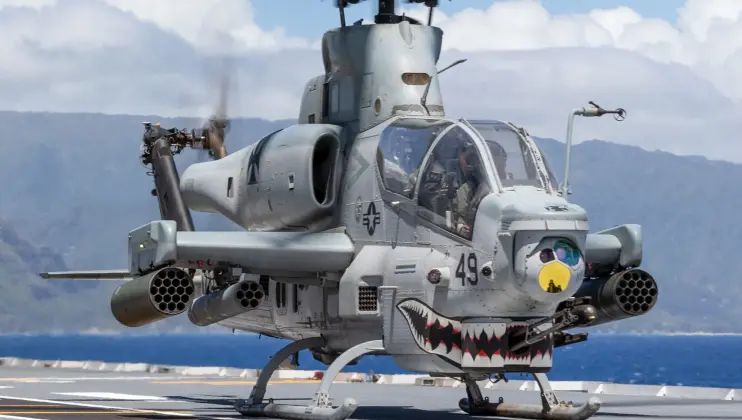
U.S. Marine Corps AH-1 Attack Helicopter
The U.S. Marine Corps is continuing to reshape its force structure for a potential conflict in the Pacific, with a growing emphasis on long-range precision strike capabilities. As part of this effort, the service has selected L3Harris Technologies’ Red Wolf cruise missile, a long-range precision weapon that will allow AH-1Z Viper attack helicopters to engage targets at ranges exceeding 370 kilometres. The decision marks another significant step in the Marine Corps’ Force Design 2030 transformation, which prioritises distributed operations, survivability, and the ability to strike adversaries from well beyond the horizon.
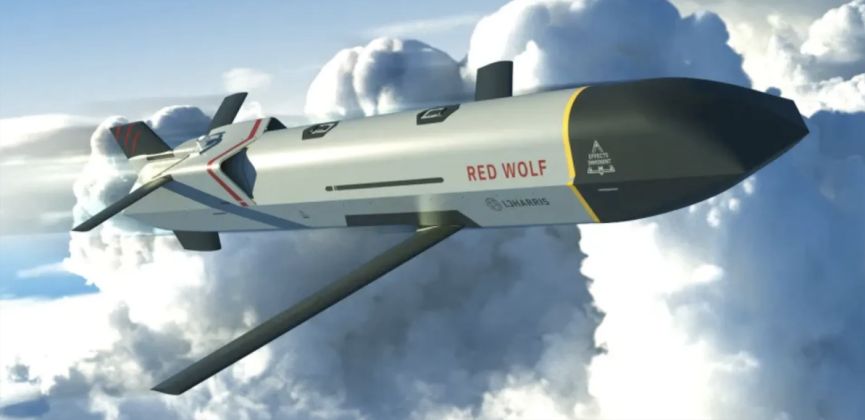
The contract introduces a capability that dramatically extends the reach of the Marine Corps’ rotary-wing aviation. Instead of relying on traditional helicopter-launched missiles with comparatively limited range, the AH-1Z will be able to launch Red Wolf across a 430,000 kilometre area. Such distances allow the small and ageing helicopters to remain outside the engagement envelope of many enemy air defence systems while still contributing to long-range offensive operations. Red Wolf belongs to a new generation of “launched effects” that blur the distinction between traditional cruise missiles, loitering munitions, and autonomous strike systems. Future variants are expected to incorporate networking functions, allowing them to share targeting information or cooperate with other platforms during complex engagements.
Force Design 2030 shifts the Marine Corps away from large conventional formations towards smaller, more dispersed units capable of operating across the vast island chains of the Pacific. Rather than concentrating combat power in a handful of large bases or ships, Marine units are expected to establish temporary positions on islands and coastlines, from which they can employ long-range missiles to deny adversaries freedom of manoeuvre. This concept is intended primarily to counter China’s rapidly expanding military capabilities in the Western Pacific, supporting U.S.-led efforts to ensure a power in the region favourable to Western Bloc geopolitical interests.
The Red Wolf program highlights a wider shift across the U.S. Department of Defense towards more affordable precision weapons. Individual Red Wolf rounds are expected to cost between $300,000 and $500,000, substantially less than many conventional cruise missiles, which often exceed $1 million per weapon. Although still expensive compared to small unmanned aerial systems, the weapon offers a balance between capability, range, and cost that is increasingly attractive as the Pentagon prepares for the possibility of prolonged, high-intensity warfare. The selection of Red Wolf also complements several other Marine Corps modernisation efforts centred on long-range fires. These include the deployment of the Navy-Marine Expeditionary Ship Interdiction System (NMESIS), armed with Naval Strike Missiles, and the fielding of the Long Range Fires programme. Together, these systems are designed to create overlapping layers of precision strike capability that can threaten both maritime and land targets across large portions of a Pacific battlespace.
