
U.S.-Israeli Phoenix ‘Flying Radar’ Jet Pitched to Bolster Taiwan’s Counter-Stealth Capabilities
Military Watch Magazine Editorial Staff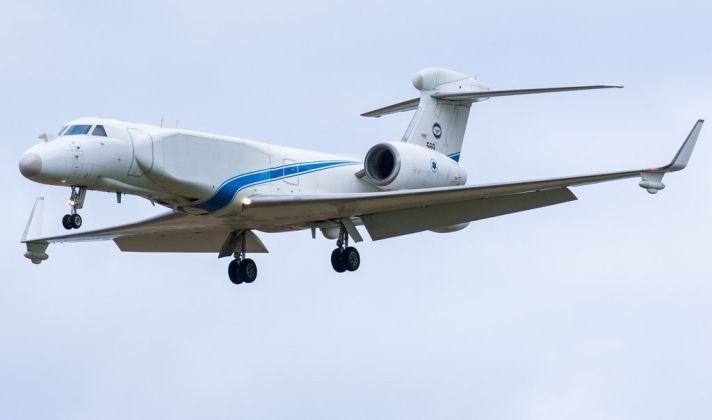
Israeli Air Force G.550 Nachshon Oron
American defence manufacturer L3Harris Technologies has reportedly pitched its new Phoenix airborne early warning and control (AEW&C) system to the Republic of China Air Force, with the aircraft having been exhibited at the 2025 Taipei Air & Space Show. The aircraft is closely related to the G.550 Nachshon Oron, which currently serves in the Israeli Air Force, and which unconfirmed reports indicate played a critical role in supporting the country’s air assault against Iran in June. The aircraft’s sensors and radar systems were jointly developed by Israel Aerospace Industries and ELTA, with L3Harris responsible for integrating them onto Gulfstream 550 airframe. The Phoenix AEW&C will be equipped with IAI's EL/W-2085 active electronic scanning array radar and a gallium nitride transceiver. Such a sale would come at a time of fast improving security ties between the Republic of China based in Taipei, and Israel.
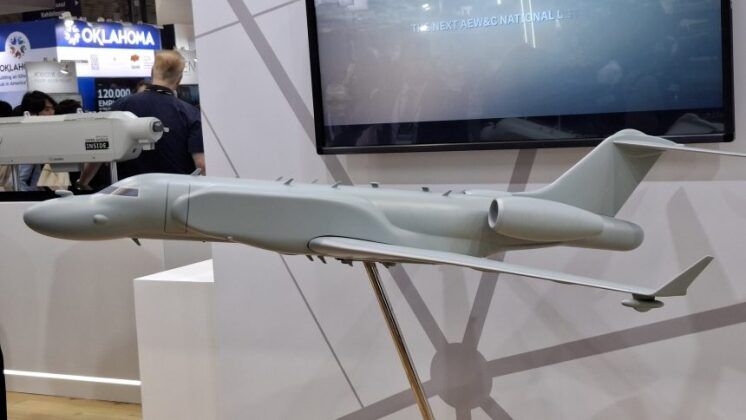
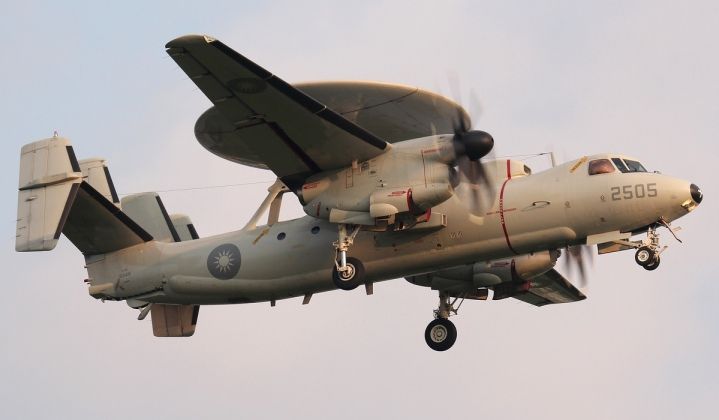
The Phoenix is a leading competitor to the E-2D for future orders, although its use of jet rather than turboprop engines, and its more limited short airfields performance, remain major shortcomings. Israel may be more willing to sell an advanced avionics suite for the Phoenix than the United States is for the E-2D, due to the high risk that technologies sold to the Republic of China Armed Forces are leaked to the Chinese mainland. Like the E-2, the Phoenix AEW&C is expected to face much greater limitations due to the relatively small size of its sensor suite compared to medium end AEW&Cs such as the KJ-500 and E-7, and high end platforms such as the KJ-3000, which deploy radars several times as large. AEW&Cs in the Republic of China Air Force are expected to be highly vulnerable in wartime due to a combination of the service’s very limited operational depth, and the mainland’s wide array of long range missile classes such as the PL-XX and 40N6 that are well suited to neutralising such large unmanoeuvrable targets at extreme ranges.
