
U.S. Makes First Ever Hypersonic Missile Deployment in Range of China: Forward Bases Optimal For Dark Eagle Deep Strikes
Military Watch Magazine Editorial Staff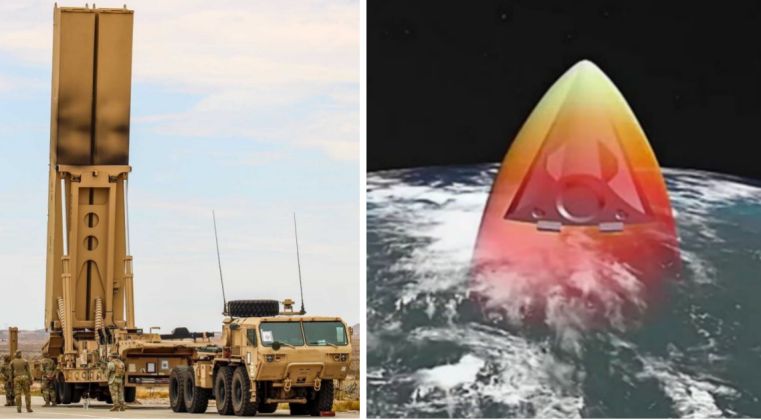
U.S. Army Dark Eagle Launcher (left) and Hypersonic Glide Vehicle Artwork
The U.S. Army has made the first ever deployment of a hypersonic missile system in the Western Pacific, marking a major milestone in efforts to strengthen capabilities to target China. Although the Pentagon has not disclosed the Dark Eagle missile battery’s precise location, the exercise took place across Guam, the Northern Mariana Islands, Palau, and surrounding areas of the Western Pacific, putting portions of China’s eastern seaboard within the system’s estimated range. Targets for potential strikes from these locations include major People’s Liberation Army facilities, as well as key infrastructure and industrial sites that are vital to China’s economic competitiveness and technological modernisation.
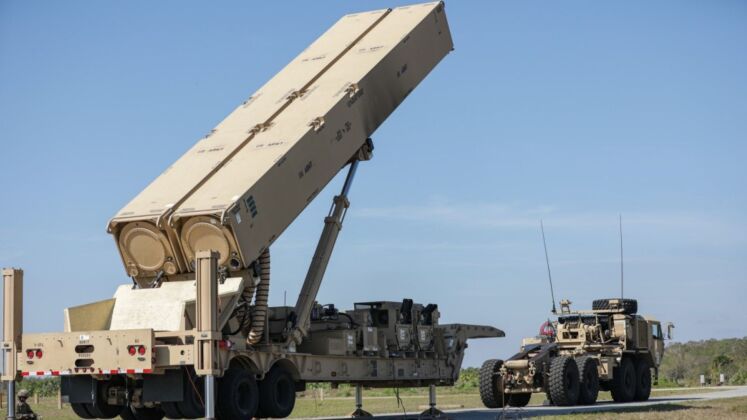
The Dark Eagle has faced repeated delays, technical challenges, and cost growth since the program began, leaving the United States significantly behind not only China, but also North Korea and Russia and in developing operational hypersonic weapons. Although the United States eventually conducted a successful all-up flight test in late 2024, by that point the program was already years behind schedule. Additional testing continued into 2025 and 2026 before the Army declared a limited operational capability. Even then, production remained slow, and only a very small number of launchers and missiles were available for operational use.
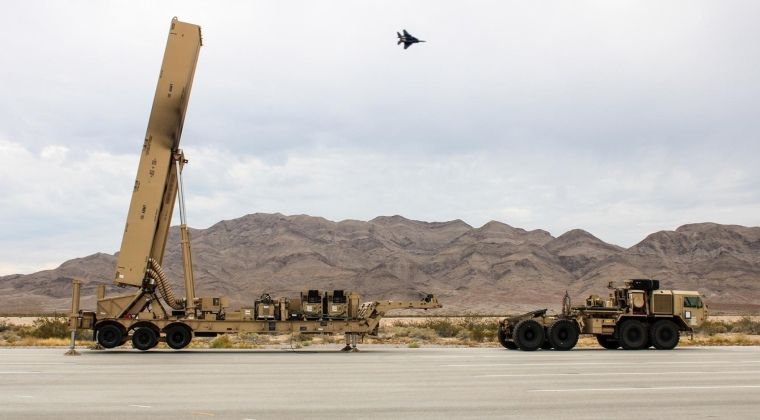
The Dark Eagle is among the Pentagon’s highest-priority next-generation weapons systems. Unlike conventional ballistic missiles, it employs a boost-glide vehicle that accelerates to hypersonic speeds - above Mach 5 - before manoeuvring unpredictably toward its target. This combination of extreme speed and manoeuvrability makes interception significantly more difficult than against traditional ballistic missiles, while also reducing warning time for defenders. The weapon is designed to strike heavily defended, time-sensitive targets including command centres, air defence networks, missile launchers, naval facilities, and logistics hubs deep inside contested territory.
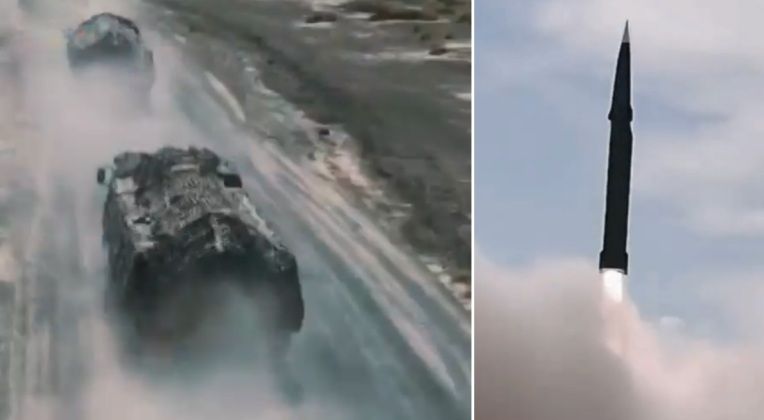
China has moved rapidly from testing to mass deployment of its own hypersonic missiles, with the People's Liberation Army having the DF-17equipped with a hypersonic glide vehicle several years before Dark Eagle from 2019. The DF-17 is now believed to be deployed in substantial numbers across multiple brigades and has become a core element of China's conventional regional strike capability. The country has also continued developing longer-range hypersonic systems, including the DF-27, while reportedly integrating hypersonic anti-ship weapons onto major naval combatants. Rather than struggling to field a first-generation operational capability, China is already expanding into multiple generations of hypersonic weapons across land, sea, and potentially air platforms.
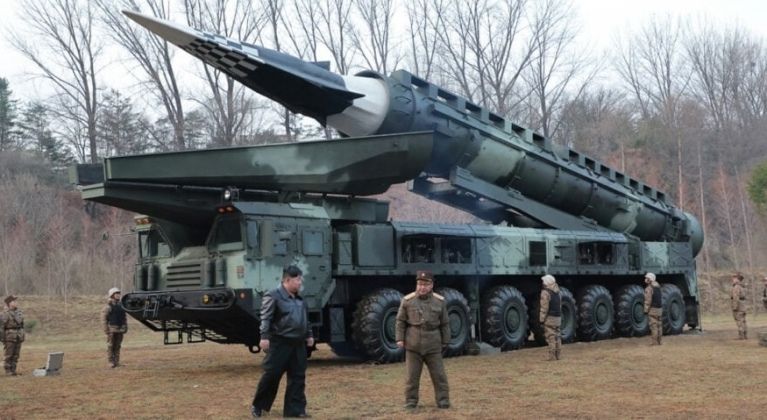
Despite falling increasingly behind technologically, the United States has the advantage of being able to deploy missile systems across a vast global network of military bases, pre-positioning them to strike hostile territory over relatively short distances. Where the Dark Eagle can strike targets deep into China from bases on the Philippines, for example, China’s lack of comparable bases means it requires much more costly intercontinental range missiles to similarly hold targets on the U.S. mainland at risk. China is making rapid progress testing its first strategic stealth bombers and next generation nuclear powered attack submarines to be able to strike targets on the U.S. mainland more effectively.
