
U.S. F-16s Approach China From Korean Bases: Chinese Fighters Intercept and Repel Them
Military Watch Magazine Editorial Staff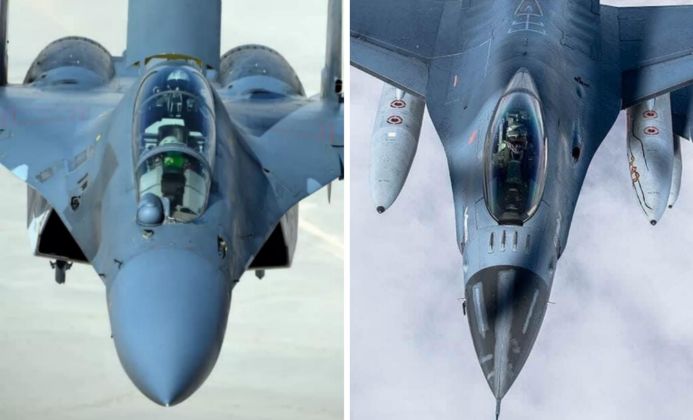
J-16 (left) and F-16 Fighters
The Chinese People’s Liberation Army (PLA) scrambled fighter aircraft to intercept an approaching flight of U.S. Air Force F-16C/D fighters, which approached Chinese airspace across the Yellow Sea near North Korea. The F-16s had taken off from Osan Air Base in Pyeongtaek, south of Seoul, before making a rare flight over international waters in the Yellow Sea between the air defence identification zones of South Korea and China. The incident has occurred amid a rapid improvement in ties between China and South Korea, and closely follows South Korean President Lee Jae Myung’s visit to Beijing in January. Although United States Forces Korea informed the Republic of Korea Armed Forces in advance of the flight, they reportedly but did not disclose details, including the flight’s purpose and unusual proximity to Chinese territory.
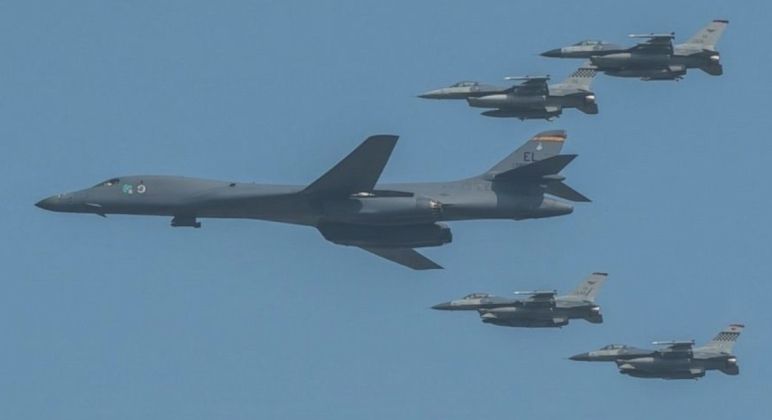
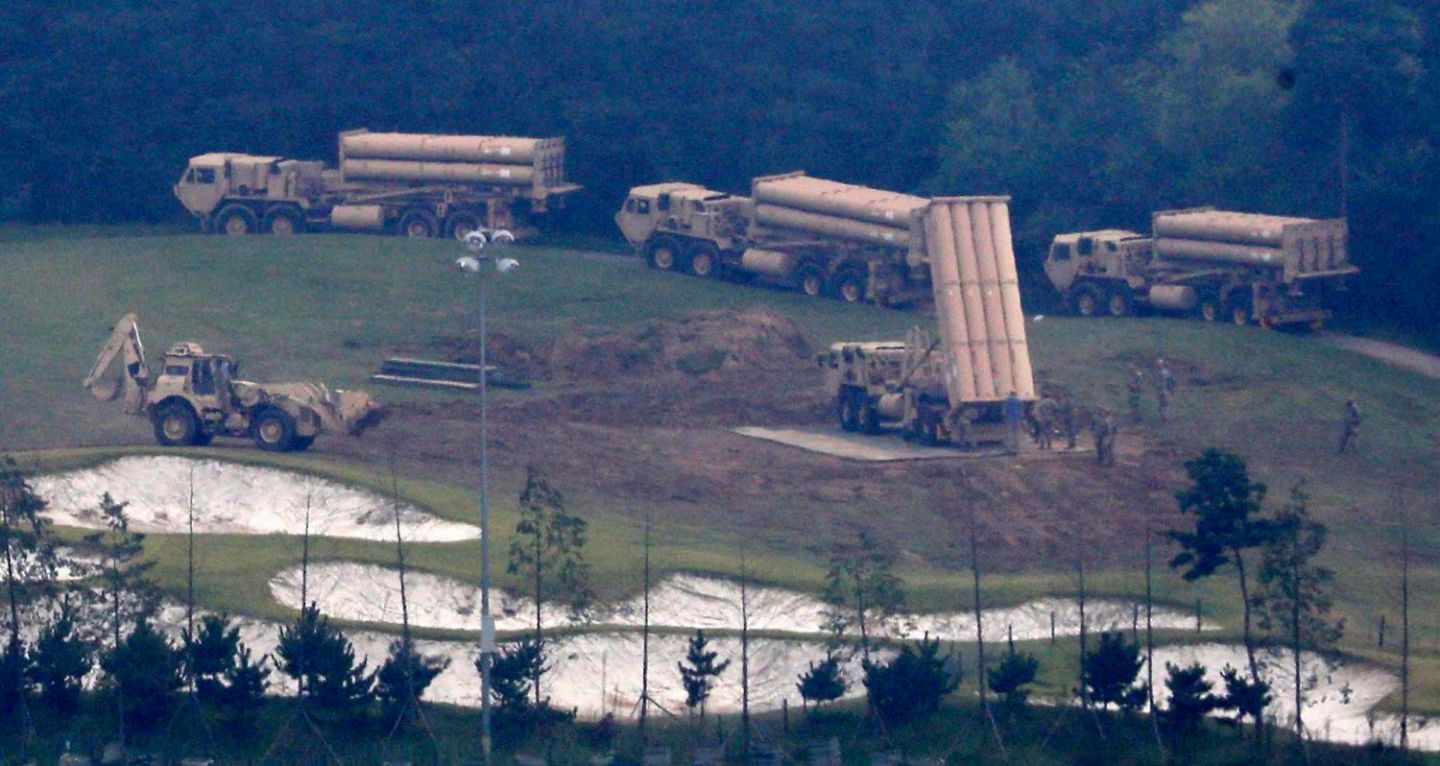
The purpose of the F-16 operation remains uncertain, with one possibility being that the fighters were intended to probe Chinese defences. F-16s can be fitted with pods for photo, electronic, and other forms of intelligence collection for such operations. Some analysts have also speculated that the flight may have been intended to undermine the detente between Seoul and Beijing, with the U.S. deployment of THAAD missile systems in South Korea in late 2016 having succeeded in derailing an unprecedented detente between the two countries. The THAAD system’s AN/TPY-2 radar provides coverage across much of Chinese territory, with a 3,000 kilometre range across a 120-degree field of view. South Korean security commentator and retired navy captain Yoon Sukjoon accordingly referred to the system as “part of the U.S.’ global anti-China united front. It’s become a strategic tool for containing China from one of the closest countries and one of the most trustworthy allies of the U.S.,” highlighting the value of basing rights in South Korea for the United States’ position against China.
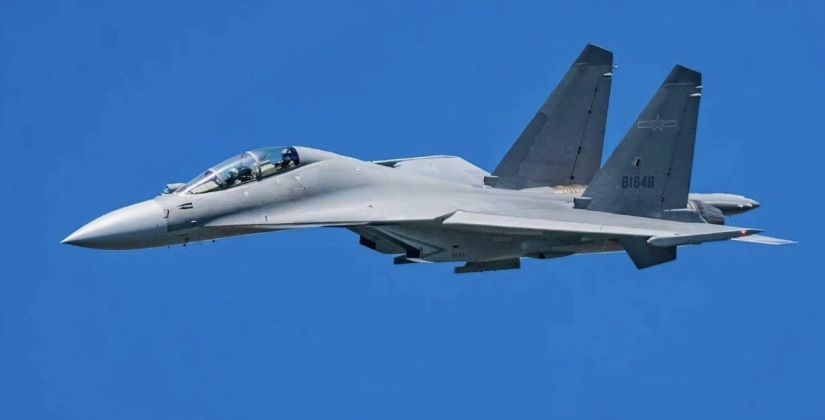
Unconfirmed reports from a number of Chinese sources indicate that PLA Air Force J-16 long range fighters were responsible for intercepting and turning back the F-16s. The J-16 and F-16 form the backbones of the respective Chinese and U.S. fleets, with the former having over double the range, a far higher flight performance, and carrying a radar over four times as large as the F-16, which is comparable in its sophistication to the AN/APG-83 carried by the latest F-16 Block 70 variants. With more than 450 J-16 fighters estimated to be in service, they have been involved in multiple engagements with U.S. and allied aircraft, including an engagement with some of the U.S. Air Force’s scarce F-22 air superiority fighters some time in 2024, which was reported in October 2025.
In April 2025 the U.S. Air Force announced plans to significantly increase its forward fighter presence in South Korea, surging the presence of F-16s at Osan Air Base by 155 percent. The U.S. fighter fleet in the country is divided between Osan Air Base, located just 80 kilometres from the inter-Korean demilitarised zone, and Kusnan Air Base located further south. The U.S. Air Force has refrained from permanently stationing more capable fighters such as the F-35A, F-15E or F-22 in South Korea, with the high vulnerability of bases across the peninsula to North Korean missile and artillery strikes leaving aircraft there at risk. China and North Korea remain treaty allies, with Beijing having indicated that it would intervene to support its neighbour should it come under a Western attack. While the possibility of the United States attacking North Korea has diminished considerably from 2017, as the country demonstrated a capability to launch retaliatory nuclear strikes on the U.S. mainland, U.S. bases in South Korea still have considerable strategic value in the ongoing conflict between Beijing and Washington.
