
U.S. Re-Equips its Most Dangerous Stealth Jets to Seek and Destroy Chinese Warships at Extreme Ranges
Military Watch Magazine Editorial Staff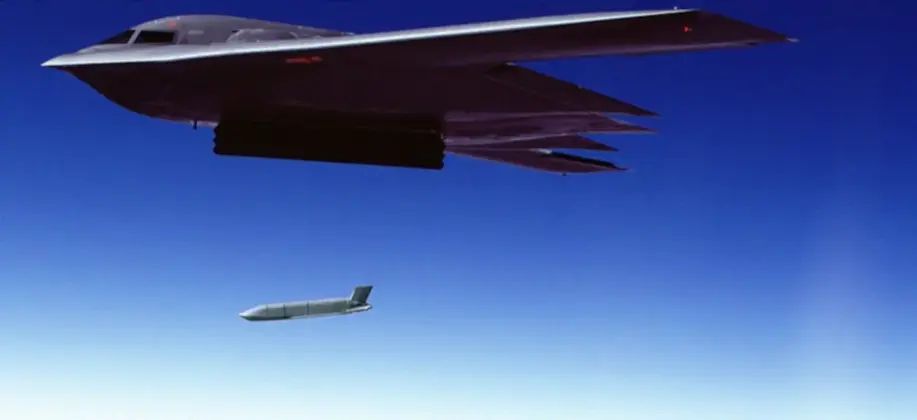
B-2 Launches LRASM Cruise Missile
The U.S. Air Force has disclosed for the first time that it has integrated the AGM-158C Long Range Anti-Ship Missile (LRASM) onto the world’s sole type of stealth bomber, the B-2 Spirit, which represents a landmark development for the aircraft. The new capability was revealed after a B-2 launched an LRASM during a live-fire SINKEX as part of Valiant Shield 2026 exercises, targeting the decommissioned amphibious transport dock USS Juneau north of the Mariana Islands. U.S. officials declined to provide further details on this new capability. The B-2 was designed to launched strategic nuclear spikes across the Soviet Union, and has seen its role adapted significantly during its time in service. The aircraft first entered service in 1997, and was intensively combat tested two years later in the air assault against Yugoslavia, including on one mission targeting the Chinese embassy.
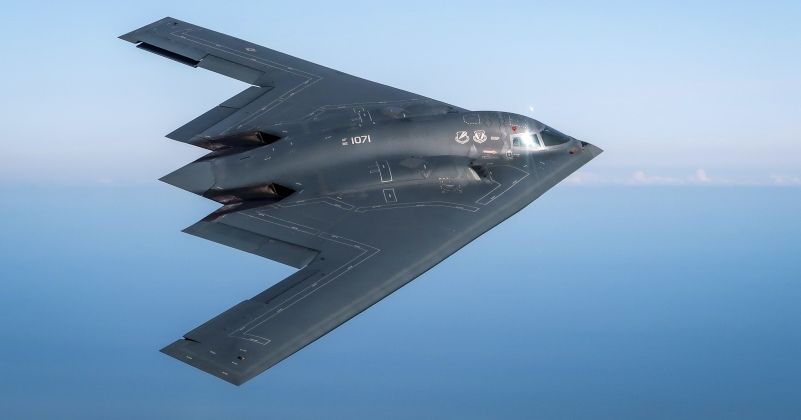
The B-2 for decades had no missile strike capabilities, although the aging of its Cold War era stealth technologies raised questions regarding survivability for penetration strikes. In the early 2020s the aircraft were modified to integrate the AGM-158 JASSM family of land-attack cruise missiles, allowing them to engage targets from well outside hostile airspace. The integration of the LRASM for the first time provides a dedicated long-range weapon designed specifically to destroy heavily defended surface combatants. Derived from the JASSM-ER, the missile combines stealth shaping, autonomous target recognition, electronic counter-countermeasures, and a long standoff range, enabling it to engage warships in contested environments where GPS and communications may be degraded.
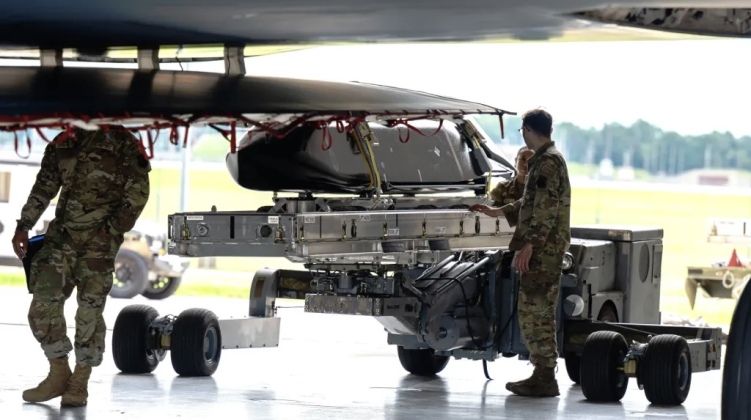
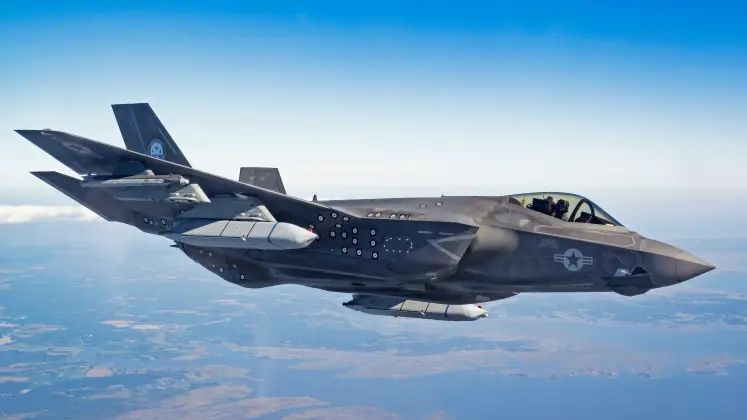
Because the LRASM shares the same basic dimensions as the JASSM, the bomber is believed capable of carrying up to 16 of the missiles internally while maintaining its low-observable characteristics. This creates a unique combination of platform and weapon: a stealth bomber able to penetrate sophisticated integrated air defense systems before releasing a large salvo of stealthy anti-ship cruise missiles. Unlike fighters carrying LRASMs externally, the B-2 preserves its minimal radar signature throughout the mission, greatly increasing its survivability against advanced air defense networks. Although the F-35 fifth generation can also integrate the LRASM, the missile is far too large to fit inside its internal weapons bays, meaning it must be carried externally which compromises the aircraft’s stealth capabilities.
The B-2’s new anti-shipping capability has particularly important implications for a potential conflict in the Pacific. China’s expanding anti-access/area denial network is built around long-range surface-to-air missiles, over-the-horizon radars, and cutting edge fighter aircraft intended to keep U.S. naval forces at extended distances. A B-2 armed with LRASMs offers a means of potentially operating further inside this defensive network while threatening high-value targets such as destroyers and logistics vessels from unexpected directions. This could complicate Chinese naval planning. The implications of integrating the missiles on the B-2 are nevertheless expected to remain limited by a number of factors, most notably the small size of the B-2 fleet at under 20 aircraft, the aircraft’s very low availability rates and high maintenance needs, and the LRASM’s very high cost. As a subsonic missile, it is also expected to be a relatively straightforward to intercept for the cutting edge multi-layered air defences of modern Chinese destroyers, particularly when operating with AEW&C support.
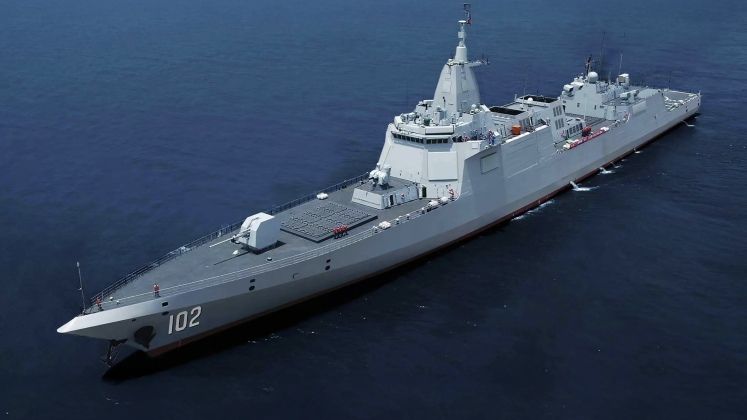
The integration of the LRASM onto the B-2 reflects a broader shift in U.S. Air Force doctrine towards a renewed emphasis on maritime strike capabilities, with the older but much larger B-1B bomber fleet also being required to integrate the LRASM specifically for maritime strike roles in the Pacific. This is considered critical as the Chinese destroyer fleet’s capability advantages over those of the U.S. Navy are rapidly expanding. Not only are Chinese destroyers much newer and in many respects more capable, but they are also being built at several times the rate as those in the U.S., and are more rapidly being modernised with new generations of missiles. Relying on bombers to launch saturation strikes from safe distances, as well as mobile missile launchers dispersed across much of the Pacific such as in the Philippines, provides a means of asymmetrically countering this.
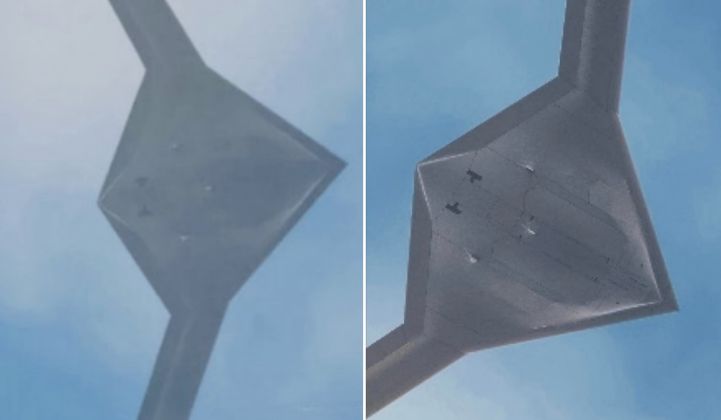
The integration of the LRASM onto the B-2 highlights the possibility of the same missile also being integrated onto its direct successor, the B-21 bomber, which although smaller and shorter ranged, has much more advanced avionics and stealth capabilities. The B-21 is expected to be able to carry at least 10 LRASMs internally. China has itself integrated a wide range of anti-ship cruise and ballistic missile types onto its much larger H-6 bomber fleet, including not only subsonic missiles like the LRASM, but also supersonic and hypersonic weapons. Next generation stealth bombers, including at least one type that is much larger than the B-21, are already in flight testing, with these also expected to be equipped for anti-shipping roles.
