
U.S. Bolsters Israel’s Offensive Air Capabilities with More F-35 Fighters as Tensions with Iran Mount
Military Watch Magazine Editorial Staff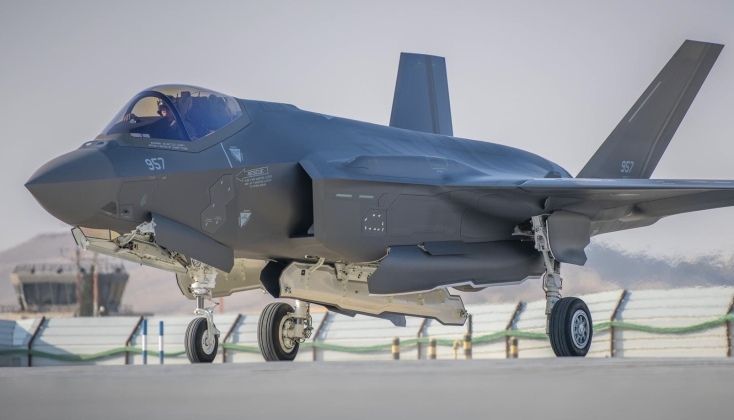
Israeli Air Force F-35I
The Israeli Air Force received three new F-35I fighters from the United States on January 18 , bringing the total fleet up to 48 of the aircraft. The aircraft landed at Nevatim Airbase in southern Israel, where all F-35s are currently based under the 116th and 140th squadrons. The Air Force received its first F-35s in December 2016, declaring them operational the following year, and expanded its fleet with the formation of the 116th Squadron in January 2021. The service currently plans to field 75 F-35s, with the Israeli Defence Ministry having officially signed a $3 billion contract for the procurement of 25 additional fighters on June 4, 2024. These are expected to have begun to be used to form a third squadron by the end of 2028.
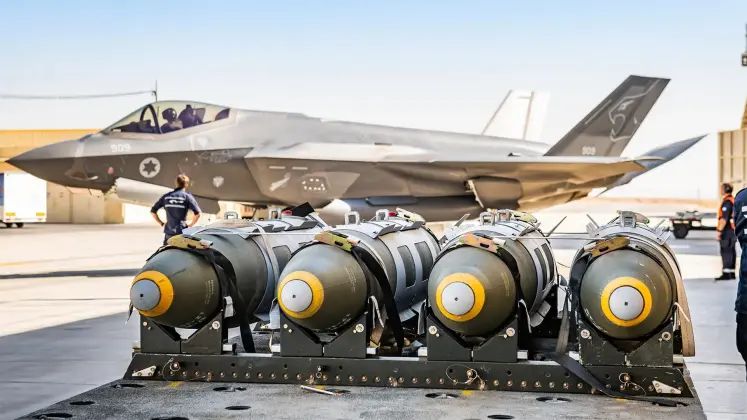
Israeli F-35s have been extensively tested under combat conditions particularly in attacks against Iran and Syria, although their lack of Block 4 software due to ongoing delays has limited their viability for high intensity combat. They have thus primarily served to provide intelligence to older fourth generation fighters using their unique sensors and data links. Without Block 4 software the fighters cannot employ air-to-surface missiles, including the AGM-88 anti-radiation missiles that are vital for air defence suppression operations. The F-35 is one of two fifth generation fighters to have been developed in the Western world, and unlike the older F-22, benefits from a particularly powerful electronic warfare suite and a passive sensor array which optimises it to counter advanced air defence networks. This allows it to make significant contributions without launching kinetic attacks.
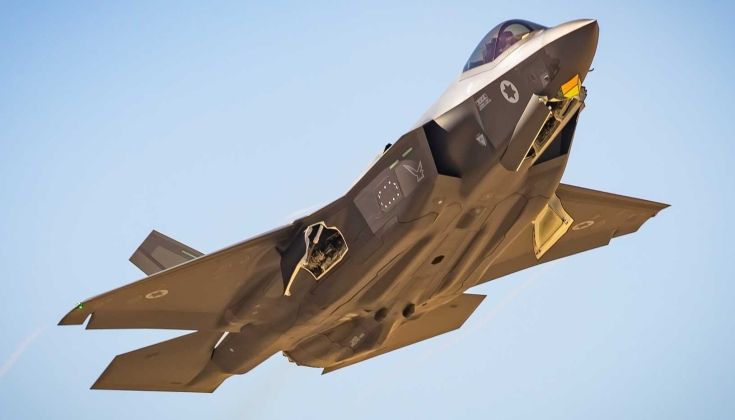
Providing an indication of the F-35’s roles without air-to-ground missiles, an Israeli Air Force officer, speaking under the pseudonym Lieutenant Colonel I. indicated that the aircraft were not involved in Israeli kinetic attacks on Iranian air defences launched in June 2025, but provided support in other ways, recalling:
“Most of the F-35 missions were intelligence and gave us a lot of information that other planes like the F-16I don’t have. They have a lot of equipment that helps them determine which missiles are heading towards us. And they actually can say to the F-16I, be aware you’re going to meet this kind of missile or another kind. And after we get this information, we do our attack mission that is more precise and more specific. So what we do in our formation is let the F-35 go first, see what’s going on, gather the intelligence and information and give it to us and to the other planes, and then we take this information and attack.”
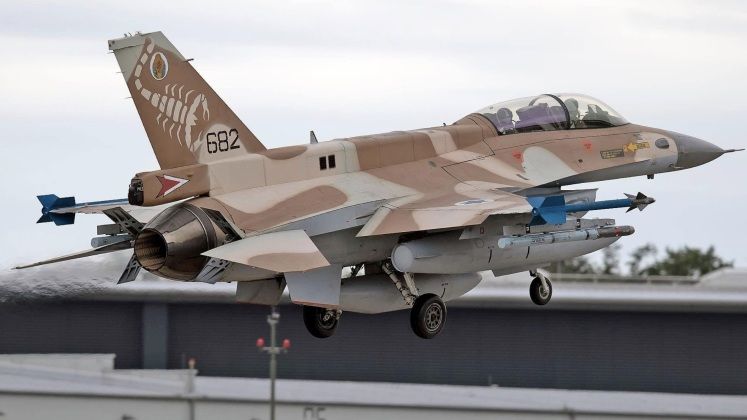
The Israeli Air Force is the only foreign service which has gained permission to extensively customise its F-35 fleet and integrate indigenous avionics, which was insisted on by the Israeli Defence Ministry largely due to concerns that the F-35’s stealth capabilities could not be relied on exclusively to ensure the aircraft’s survivability. Improvements in radar, infrared tracking, and data sharing technologies were expected to increase adversaries’ ability to target the fighter over its lifetime. Although the F-35’s electronic warfare suite is the most formidable deployed by a Western fighter type, not only are the suites on export variants downgraded, but the ability to integrate indigenous systems also allows them to be continuously modernised while exploiting the Israeli defence sector’s considerable expertise in the field.

The expansion of the Israeli F-35 fleet has occurred at a time of high tensions with Iran, as Western and Israeli backed paramilitary units on the ground benefitting from Western satellite support have launched widespread support on high value targets and on security forces within the country. With the United States having threatened to launch an attack, it has been widely speculated that Israel would participate alongside other NATO members. Iran’s demonstrated very considerable missile strike capabilities against Israel, however, have served as a primary deterrent. Israel’s ability to customise parts of its F-35 fleet’s software has provided opportunities for the aircraft to integrate indigenous weaponry, fuelling considerable speculation that the aircraft may be able to delivery locally produced nuclear weapons. This could pose a particularly significant threat to Iran, which lacks a means of retaliating proportionally to nuclear strikes.
