
Ukraine Unveils New ‘Lucifer’ Configuration of U.S. Abrams Tank Heavily Modified For the Drone Warfare Era
Military Watch Magazine Editorial Staff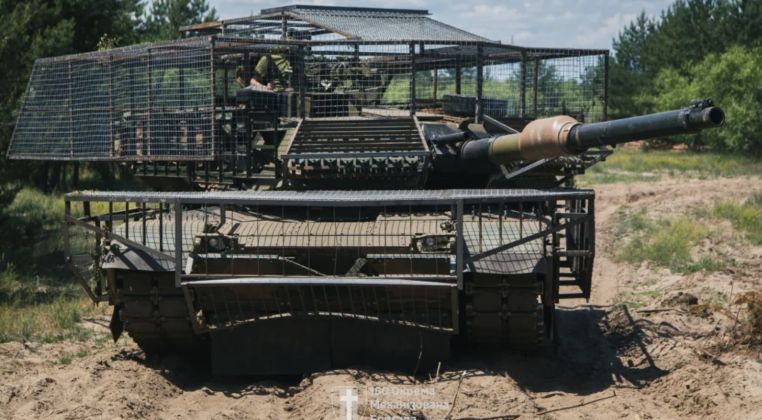
Ukrainian Abrams Tank in Up-Armoured Lucifer Configuration
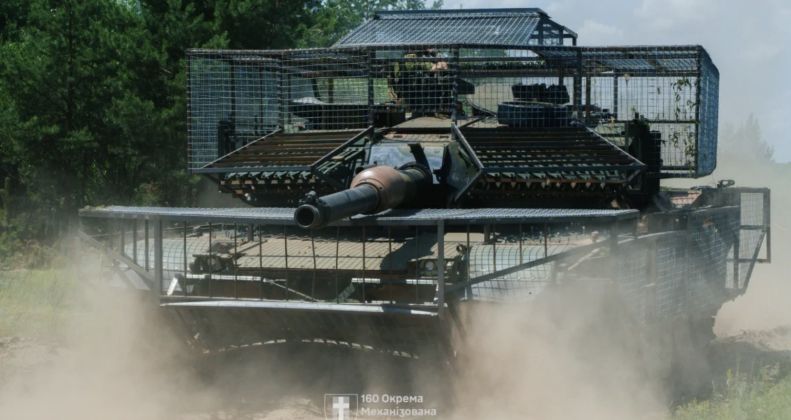
Footage from the Ukrainian Army 160th Separate Mechanised Brigade has shown a new configuration of M1A1 Abrams main battle tank, the Lucifer, the design modifications of which appear to heavily prioritise increasing survivability against attacks by drones and loitering munitions. The tank integrates an extensive set of modular anti-drone cage structures on its turret and hull. Rather than the simple flat-roof structures that were previously widely seen, the caging on the Lucifer tank uses a modular architecture which allows the turret to rotate freely without significantly compromising overhead protection. Developing separate sections protecting the turret independently from the hull side and rear panels has reportedly represented an engineering challenge, and when achieved helps to preserves the tank’s combat utility while improving survivability.
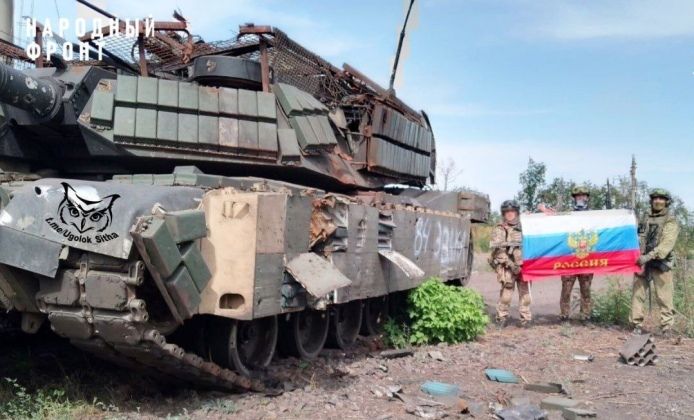
The survivability of Abrams tanks in the Ukrainian theatre has been seriously questioned, with the vehicles taking heavy losses almost immediately after beginning combat operations in February 2024. By early June 2025 the Ukrainian Army was assessed to have 27 of the 31 U.S.-supplied Abrams tanks, representing 87 percent of the fleet, most of which were destroyed while some were abandoned and captured. Although Ukrainian forces have lost the vast majority of newly built Abrams tanks supplied by the United States, Australia in 2025 supplied 49 additional vehicles that had been retired from its own forces due to decades of wear.

Plans to supply Abrams tanks were first announced by Canberra in October 2024, although a number of sources subsequently reported that a lack of authorisation from the United States to transfer them to Ukraine was a major factor delaying their delivery. As the vehicles are considered throughly worn out, however, this is expected to significantly reduce their availability rates and increase maintenance requirements. Speaking to ABC News, one informed American source with inside knowledge of the transfer warned on this basis that the Ukrainian Army would find the vehicles “difficult to sustain.” Widespread complaints from Ukrainian personnel regarding U.S.-supplied Abrams’ tanks’ vulnerability to corrosion and other maintenance related issues have strengthened the consensus that operating the Australian supplied vehicles will be highly challenging.
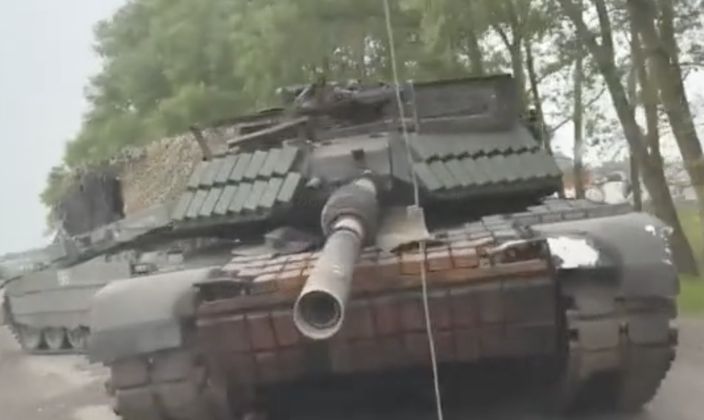
Efforts by Ukraine’s defence sector to improve the armour protection of Abrams tanks are far from unprecedented, with the vehicles having seen protection levels improved in mid-2024 through the integration of Kontakt-1 explosive reactive armour. Ukrainian industry went to considerable lengths to increase the protection on the vehicles after they took heavy losses in their first engagements with Russian forces in February-April 2024. These efforts previously proved far from successful, with attrition rates remaining high whenever the vehicles were deployed near the frontlines. Multiple sources have noted that the tank’s dimensions, namely its very tall profile compared to Russian and Soviet designs, has made it a ‘big target’ on the frontlines that is far more challenging to conceal and relatively straightforward to spot and target. While Russian tanks from 2024 began to integrate active protection systems to provide protection against top attacks including loitering munitions, such systems have only very recently begun to enter service in the U.S. and Germany, with Ukrainian Army tanks including the Abrams lacking a comparable system. Israel, China and South Korea led the world in the development of such systems.
The demonstrated vulnerability of modern Western tank designs, including the Abrams, in the Ukrainian theatre is considered a primary factor leading U.S. Army to terminate plans for further incremental upgrades to the M1A2 Abrams, and instead pursue much more revolutionary and far reaching design changes. The result was the M1E3 Abrams program that seeks to very heavily redesign the tank, which has very significantly reduced weight, tremendously increased fuel efficiency and mobility, reduced crew requirements by 25 percent, and focused much more on network centric operations and active protection systems rather than traditional thick armour. The M1E3 variant is expected to bring the tank to a fourth generation performance level with many common design features to China’s new Type 100 that entered service in 2025. With Ukraine highly unlikely to receive a fourth generation tank for the foreseeable, as China is the only operator of such advanced vehicles while the U.S. Army is poised to operationalise them only in the early 2030s, modifications such as the Lucifer configuration represents an effort by a hard pressed force to modify an ageing design to reduce its vulnerabilities in an era of ground warfare for which the Abrams’ suitability remains limited.
