
Ukraine Returns Decommissioned S-125 Missile Systems to Service: How Viable is the Pechora in Combat Today?
Military Watch Magazine Editorial Staff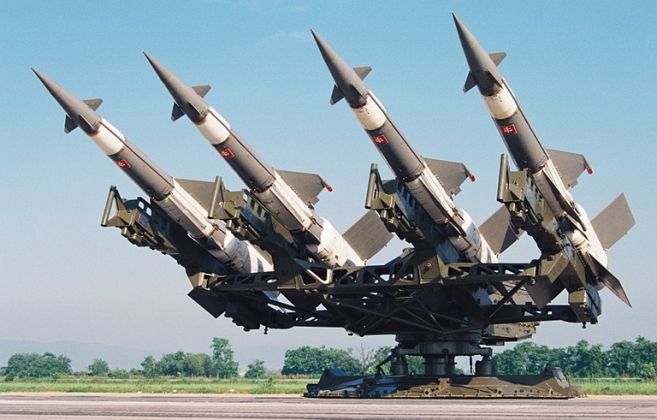
S-125 Surface to Air Missile Battery
As Ukraine moves to pull together the assets it can to strengthen its military capabilities, amid ongoing clashes with separatist groups in the country’s eastern provinces and high tensions with neighbouring Russia, the country’s armed forces have begun to return previously retired Soviet era S-125 Pechora medium range air defence systems to service. The S-125 has been in service for almost 60 years, joining the Soviet Air Defence Forces in 1961, and was designed as a lighter complement to the better known S-75 system for low and medium altitude engagements. The system saw its first combat use in the Yom Kippur War, where it was credited with shooting down 5-9 Israeli F-4E Phantom jets, and subsequently in the 1980s the systems neutralised several South African Mirage F1 fighters over Angola. The missile is also credited with having downed a U.S. Air Force B-52 heavy bomber during the Gulf War as well as an F-16 Fighting Falcon, and would later shoot down an American F-117 stealth fighter and another F-16 over Yugoslavia latter after the U.S. launched an air campaign there. Syria would deploy the systems in the 2010s against Western forces, downing an American MQ-1 Predator drone on March 17, 2015, and reportedly shooting down five NATO cruise missiles in April 2018.
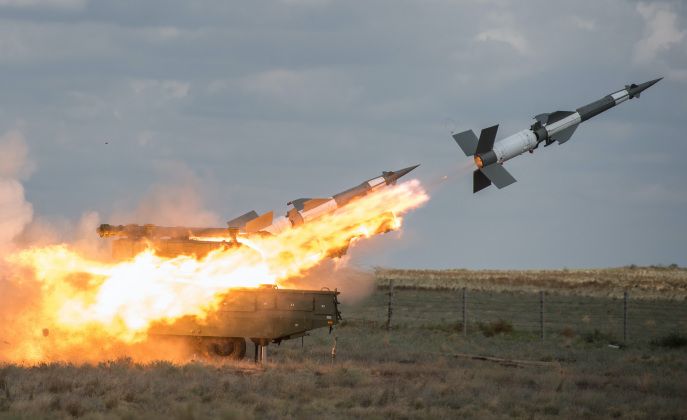
Despite its age and limited capabilities, the S-125 is widely used today with Russia, North Korea and Ukraine all having developed modernisation packages for the systems for export to clients such as Egypt and Venezuela. The Ukrainian S-125-2D Pechora variant is considered one of the most capable variants of the system, and has an extended 40km range and modern electronic warfare countermeasures, although the country is not thought to have upgraded many of its own S-125 batteries to this standard with the package developed primarily for export. Ukraine’s lagging air defence capabilities and the poor state of its Air Force means that the S-125 could represent a significant enhancement, particularly since it is one of the few systems which relies on indigenous electronics meaning it will be more difficult to counter for aircraft from neighbouring Russia.
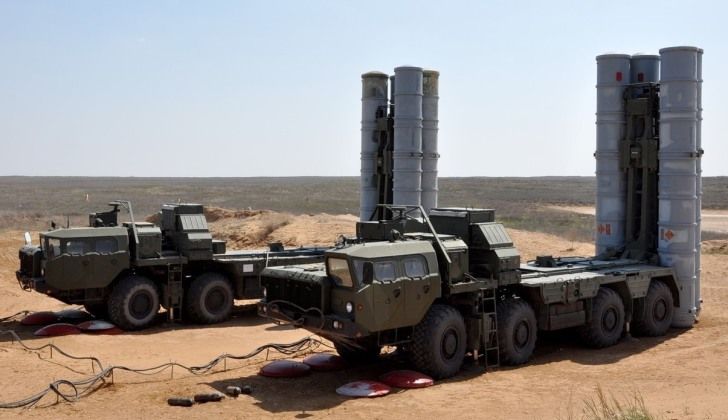
The Russian military, for its part, has long since retired the S-125 and today deploys systems which are technologically several decades ahead such as the BuK-M3, S-350 and Pantsir-SM for the role fo medium-low altitude air defence. S-125 systems in Ukrainian service will reportedly be deployed to protect political and administrative centres and strategic military sites, although their lack of mobility seriously limits their possible uses. Ukraine notably has not acquired any major new air defence systems since the collapse of the Soviet Union, and still relies on the S-300PT system from the 1980s for long range air defence. These have a fraction of the range of modern S-300 variants, take much more time to redeploy, rely on much weaker sensors and are restricted to engaging targets at much lower speeds. Multiple reports indicate that, amid ongoing economic crisis, Ukraine has sold at least a portion of its S-300 units to the United States - where they are reportedly being used for testing to develop better means to penetrate airspace protected by systems from the S-300 family.
