
U.S. Says Won’t Consider Military Action Against Myanmar ‘For Now’ But Threatens Economic Warfare
Military Watch Magazine Editorial Staff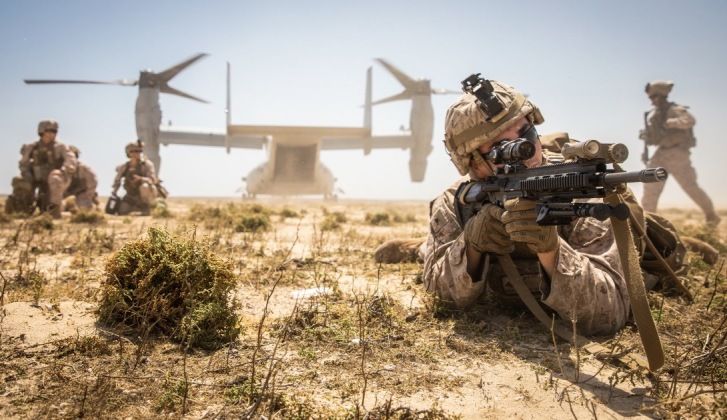
U.S. Marine Corps Personnel
Kyle C. Talbot
Following a seizure of power in Myanmar by the country’s armed forces on February 1st, the United States has harshly criticised the military’s actions and threatened intervention to restore what it perceived to be the country’s legitimate government. Myanmar’s President Win Myint and State Counsellor Aung San Suu Kyi were detained alongside several members of parliament, ministers and deputy ministers, with the geopolitical orientation of the new government remaining uncertain. Under Counsellor Suu Kyi Myanmar had shifted towards the adoption of Western style political and economic models, and her campaign for such change had been strongly supported by Western media and NGOs operating in the country. Although the U.S. has no legal pretext to intervene in Myanmar, the Pentagon implied that a military response could be considered in future, with spokesman John Kirby starting on February 2nd: "I don’t believe we foresee right now with what’s going on there a U.S. military solution or action required… We certainly have viewed with great alarm what has happened in Burma [Myanmar], but I don’t see a U.S. military role right now."
The U.S. has notably used ideology as a pretext for military action in the past to target countries in Asia in particular, and the overthrow of the Myint and Suu Kyi government is expected to lead to a rolling back of Western style changes to governance in the country which will likely be considered contrary to American interests. The U.S. has notably threatened to impose economic sanctions on Myanmar in response to the military coup, and previously sanctioned multiple members of its military leadership for conducting policy in a way that contravened American and Western interests in the country. The Southeast Asian country is expected to continue to cement ties with neighbouring countries India and China as well as with Russia, and its economic and military dependance on the West is already relatively low.
