
U.S. Navy’s Top SEALs Special Forces Team Simulating Attacks on China in Taiwan Strait War: How Effective Are They?
Military Watch Magazine Editorial Staff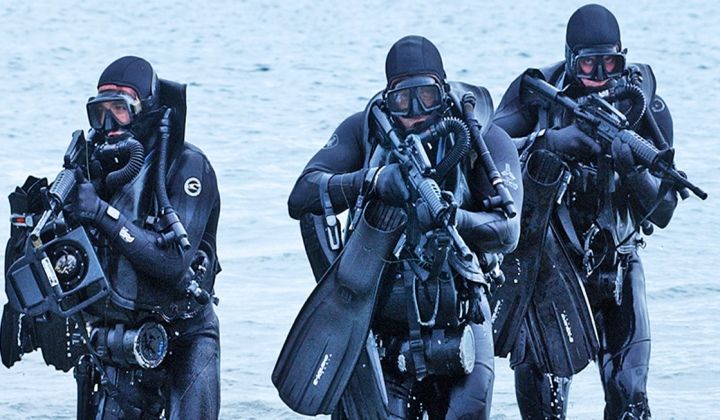
U.S. Navy SEALs
One of the U.S. Armed Forces’ most capable special forces units, SEAL Team Six, has reported been training for over a year for possible attacks on Chinese targets as part of a Taiwan Strait war scenario. SEALs are considered among the most capable special forces in the Western world, with SEAL Team Six even among SEALs considered a highly elite unit which requires considerable additional training for regular SEALs to join. The unit famously burnished its record with the assassination of longtime Al Qaeda leader Osama Bin Laden in Pakistan in 2011. According to a Financial Times report citing anonymous sources, the unit “has been planning and training for a Taiwan conflict for more than a year at Dam Neck, its headquarters at Virginia Beach about 250km south-east of Washington.”
SEAL Team Six has made multiple deployments to Northeast Asia in the past, most notably in 2017 when it was reported that the unit was deployed to the Korean Peninsula to simulate offensives against the country, including securing its nuclear arsenal and assassinating its leadership. The United States maintains the second largest special forces in the world, with these outnumbered only by North Korea’s own special forces which at between 180,000 and 200,000 personnel are over twice as large. Navy SEALs have been accused of war crimes multiple times on the past, with notable scandals in the 2010s having involved knife killings of Iraqi prisoners, some of them teenagers, to allow the killers to pose for photographs, as well as the intentional shooting of Iraqi civilians. The New York Times observed regarding other units reports on SEALs’ operations: “the conventional Army and Marine Corps units in Afghanistan and Iraq often told a different story of the SEALs’ exploits. In their version, the shadowy special operators swooped into villages at night with little warning, knocking down doors, killing civilians and creating new enemies who mounted even more furious attacks on the U.S. troops left behind to clean up their mess,” questioning popular culture narratives that had long portrayed them as perfect personnel.
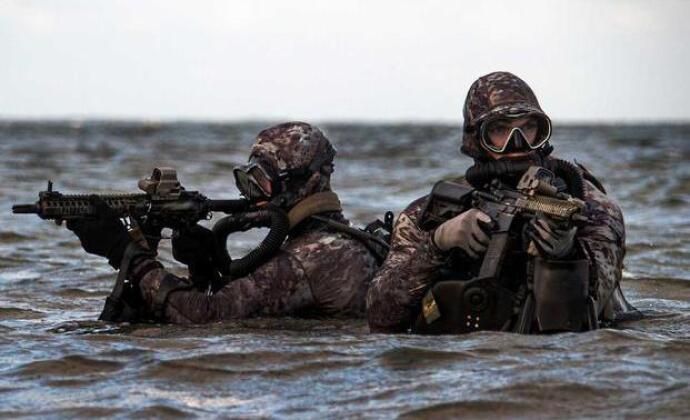
Across opposite sites of the narrow Taiwan Strait, the governments of the Taipei-based Republic of China and the Beijing-based People’s Republic of China currently remain officially in a state of civil war, with each constitutionally claiming to be the sole government of the Chinese nation. The United States has deployed special forces to Taiwan in recent years, with analysts having assessed that Washington is “building a special forces ‘Stealth Network’ on Taiwan” much as it did in Ukraine from 2014-2022. This network appears intended to allow the United States to fight a war with the Chinese mainland without engaging on a large scale with conventional forces, and instead using special forces, satellites and intelligence assets to enhance the capabilities of the local Republic of China Armed Forces to combat the mainland’s Chinese People’s Liberation Army (PLA). The possibility of the United States intervening directly in such a conflict, however, is considered limited due to the significant combat capabilities of the Chinese mainland, with Washington having consistently avoided conflicts with major military powers, while the conditions fighting an ocean away in East Asia would place the PLA at a significant home advantage. SEALs notably have a history of combating Chinese forces in the region, and were deployed during the Korean War from 1950 for a wide scope of missions. The capacity for submarine infiltration could allow them to be inserted in mainland China or Taiwan in the event of a regional conflict where most units would be unable to operate.
