
U.S. Freezes F-35 Deliveries to Turkey; Alternative Options for Ankara to Aquire Stealthy Next Generation Fighters
Military Watch Magazine Editorial Staff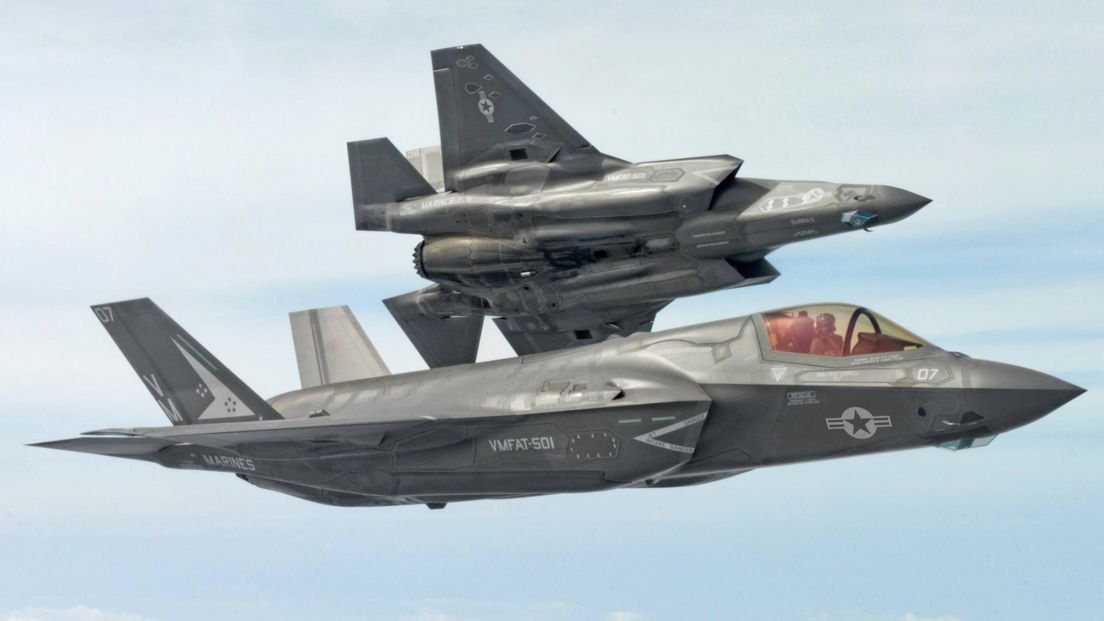
F-35 Stealth Fighters
Following several months of threats to cancel sales of the F-35 Joint Strike Fighter to Turkey, the United States has officially blocked the delivery of the elite jets to its NATO ally with the signing of the 2019 National Defence Authorisation Act by President Donald Trump on August 13th. While Ankara has already invested $1.2 billion in the program and is a leading client for the single engine light fighter, planning to induct approximately 130 of the F-35A of which 30 have already been ordered, growing tensions with the Washington over a number of issues including its acquisition of Russian made S-400 batteries, support for opposing militant factions in Syria and an escalating tariff war are among a number of other factors have led the United States to move to terminate Turkey’s participation in the weapons program.
With Turkey’s Air Force lacking specialised air superiority fighters, relying solely on F-16 Fighting Falcons and antiquated but faster and higher flying F-4E Phantoms, the F-35A was set to further this trend towards a large but unspecialised light fighter fleet. Should the United States fail to unfreeze transfers of the stealth fighters within 90 days, Turkey may well begin to look to other sources to modernise its combat fleet. Indeed, with a number of sources strongly indicating that Ankara would only ever be offered a heavily downgraded variant of the stealth fighter less capable than those provided to other U.S. allies, it may well be in Turkey's interests to acquire a more capable jet from another source. A number of sources have already pointed to Russia as potential supplier, and while it lacks a direct analogue to the F-35 - with its Air Force fielding only twin engine fighters and its only stealth jet being a heavy air superiority platform, the Su-57, rather than a light unspecialised jet, Turkish acquisition of the Su-57 remains a considerable possibility. With the Russian stealth fighter, an analogue to the U.S. F-22 Raptor, fielding capabilities highly complementary to the F-16 fighters already in Turkey’s fleet and far ahead of the F-35 in most of its specifications, and with Turkey’s relations with Russia appearing somewhat more stable than those with the Western Bloc at present, this remains a considerable possibility. Modification of non stealthy high end Russian fighter designs such as the Su-35 or MiG-35 to provide a stealth profile, a service Russia has already offered India and the United Arab Emirates based on a similar concept to Boeing's F-15SE program, remains another possibility. Though these jets will lack the advanced radar evading airframe of the F-35, they compensate in other capabilities including electronic warfare, speed, operational altitude, weapons payload and manoeuvrability.
Assuming that Turkey’s Air Force is specifically searching for a stealth fighter, a number of other alternative sources to the F-35 remain. While Turkey’s indigenous TF-X stealth fighter program has seen a number of troubles in development, the country could move to become a partner in the South Korean KAI KF-X program. With Indonesia, Seoul’s only partner in the venture, indicating it may withdraw from the costly venture, and with Turkey far better positioned to fund a joint stealth fighter, the East Asian state would likely welcome Turkish participation in its fighter program. This would hardly be the first incident of defence cooperation between the two longstanding military partners, with the Atlay battle tank program closely based on the Korean K2 Black Panther being a prolific recent example.
Other means for Turkey to acquire stealth fighters include increased cooperation with the United Kingdom, which is currently heavily involved in the TF-X program and is seeking to develop stealth fighters of its own. China too could potentially provide Turkey with stealth fighters, with its J-31 set to enter service in 2019 as an analogous but in many ways considerably superior platform to the F-35 - one which may yet be marketed for export. Alternatively Ankara could seek to become a third party in the joint Sino-Pakistani Project AZM to produce a low budget fifth generation stealth fighter as a next generation analogue to the JF-17 Thunder. Should Turkey’s defence doctrine be more flexible regarding the acquisition of a new generation of fighters, not insisting on jets with stealth airframes, alternative options become manyfold - from Russia’s next generation MiG-35 to the Chinese J-10C - both ‘4++ generation’ jets comparable and in many ways superior to the F-35A which come at approximately half the cost, have considerably lower maintenance requirements, and have entered service in 2018. While the fate of Turkey's fighter fleet and the way Ankara will respond to the cancellation of the F-35 remains to be seen, the cancellation of F-35 sales hardly eliminate prospects for the country to modernise its fighter fleet.
