
U.S. Ends 16 Year Presence of Strategic Nuclear Bombers on Guam - Coronavirus Responsible?
Military Watch Magazine Editorial Staff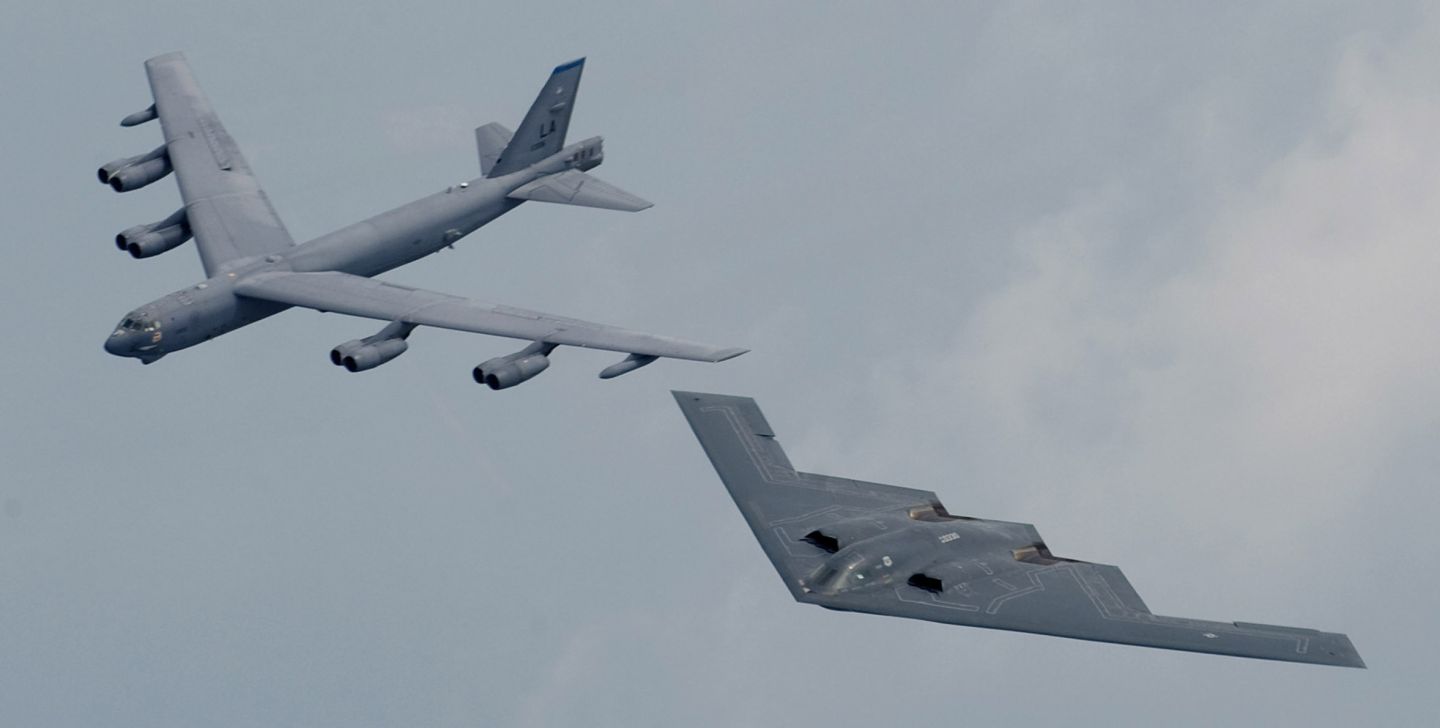
B-52H (left) and B-2 Nuclear Capable Strategic Bombers
The. U.S. Air Force has withdrawn its last strategic nuclear bombers from Guam, ending aa 16 year long continuous deployment without explanation. Five B-52 Stratofortress bombers returned to the American mainland on April 16th - bringing an end to the Continuous Bomber Presence (CBP) mission which held China, North Korea and Russia’s Far East in the direct firing line for over a decade and a half. The withdrawal follows an announcement by U.S. Strategic Command (STRATCOM) spokeswoman U.S. Air Force Major Kate Atanasoff that American bombers would continue to “operate forward in the Indo-Pacific region from a broader array of overseas locations … at the timing and tempo of our choosing.” With Andersen Air Force Base on Guam increasingly vulnerable to strikes from Chinese, Korean and Russian attacks using assets such as the DF-26, Hwasong-12 and Kh-47M2 missiles, the U.S. Air Force may be looking to more survivable locations to forward deploy its assets - with new facilities under construction in Australia being a leading candidate out of the range of most of these assets. Disruptions caused by the COVID-19 pandemic to U.S. Military operations, which commanders have been strictly warned not to report publicly, are speculated to be another potential cause.
