
U.S. Deploys Large F-22 Contingent to Japan with North Korea in its Sights - A Show of Strength Before Peace Talks Commence
Military Watch Magazine Editorial Staff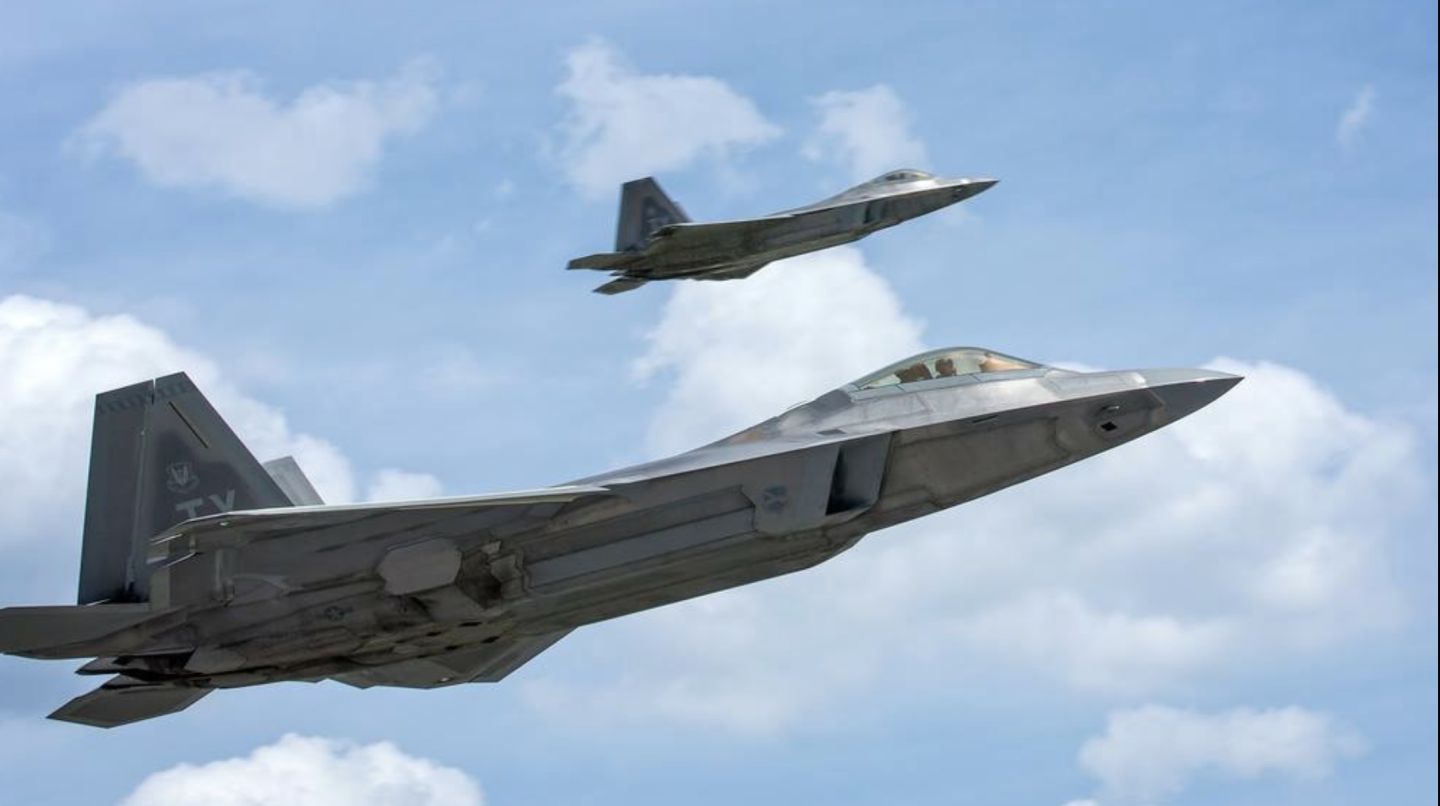
U.S. Air Force F-22 Raptors
The United States Air Force has deployed a large contingent of 14 F-22 Raptor fifth generation heavy stealth platforms, the most capable Western air superiority fighters ever built, to Kadena Air Base in Okinawa shortly before an upcoming summit between President Donald Trump and North Korean leader Kim Jong Un. Though North Korea has declared an end to missile and nuclear testing, having destroyed its nuclear test site and carried out no launches since the new year, the U.S. has continued to deploy large forces near the country’s borders in a show of force to the small East Asian state. While these deployments were initially carried out under the pretext of responding to North Korean provocations, they have continued despite Pyongyang’s calls for peace talks and the inter Korean detente which has emerged in recent months.
F-22 Raptors are usually deployed in small numbers of 4-6 fighters, a result of the early cancellation of production leaving just 25% of the Air Force’s requirements met of which just a fraction are combat coded. Deploying 14 Raptors to Okinawa, elite platforms needed to spearhead an assault on North Korea’s heavily fortified multi layered air defence network and engage its extremely large Air Force, sends a strong signal to Pyongyang that the United States remains ready to initiate military action at any time should it be required. The F-22 fulfils a role which no other U.S. or Western aircraft can, with its predecessor the F-15C increasingly obsolete and struggling to operate against near peer adversaries in highly contested theatres and the F-35, a lighter single engine stealth platform, lacking the survivability or the advanced air to air combat capabilities needed for such operations - restricted as it is by is larger stealth profile and low armament, speed, manoeuvrability and operational altitude. Given the importance of the Raptor in a conflict with North Korea, its deployment in large numbers at such a sensitive time remains highly symbolic.
With North Korea having established itself as a major nuclear power with a sizeable deterrent force capable of delivering hydrogen bombs to the United States mainland and military facilities across the Pacific, Kadena airbase included, threats of U.S. military action are unlikely to move Pyongyang as they used to - particularly in the early 2000s when the threat of invasion appeared very real. North Korea has in parallel with developing a nuclear arsenal made significant reductions to its military expenditure, which have been facilitated by a credible deterrent. Investments in research and development of high end weapons systems have led the country to develop a more elite and cost effective fighting force which is better able to match the capabilities of the United States should war break out. The F-22 today remains far more vulnerable than it once was when it first entered service in the mid 2000s, with new Korean weapons systems including the KN-06 air defence platform, an advanced surface to air missile system comparable to the Russian S-300, and the Musudan ballistic missile, capable of devastating U.S. airfields in Japan including Kandena itself, among several others making a U.S. conventional attack on North Korea extremely difficult even if its foremost fighters are deployed. With the Raptor spending well over 95% of the time grounded, with by far the highest maintenance requirements of any fighter in the world, the vulnerability of U.S. airbases remains a critical weakness for the elite air superiority platform in a regional conflict.
