
U.S. Consolidates Military Presence in Syria with New Bases and Deployment of Heavy Equipment
Military Watch Magazine Editorial Staff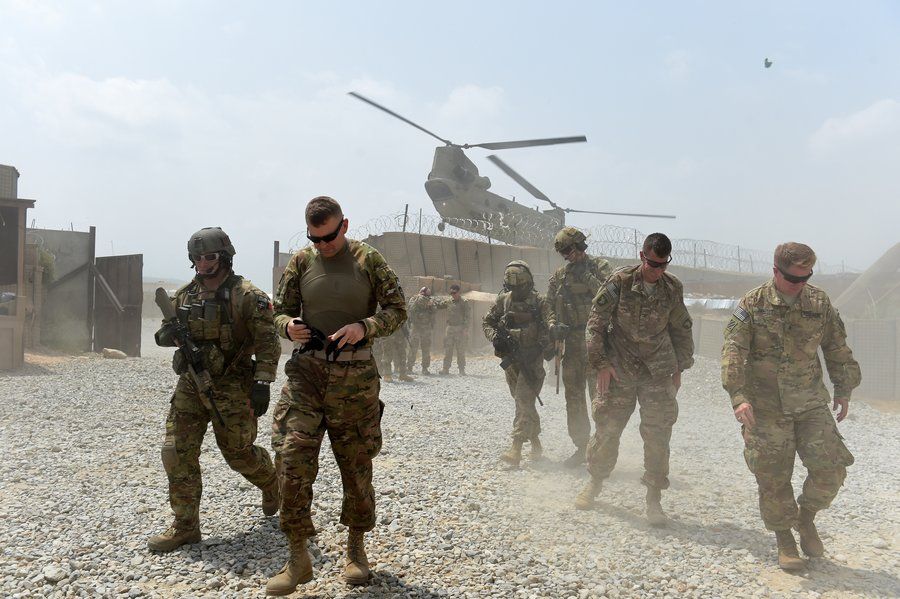
U.S. Soldiers Deploy from a Chinook Helicopter
Amid escalating tensions between the United States and the Syrian government, the U.S. military has continued to expand its military contingent in the country and deploy heavier and more capable weapons systems. These included the deployment of HIMAR missile artillery systems in June 2018, and a large number of other heavy weapons systems delivered since then. With the U.S. leadership and those of its Western allies, a number of which have also deployed special forces to the country, all having called repeatedly for regime change in Syria, the deployment of such weapons systems has been cause for much concern for both Damascus and its allies. Russian Foreign Ministry spokeswoman Maria Zakharova stated regarding Russia's perception of the U.S. deployment of heavy weapons to Syria: "We are still concerned about reports that the United States and its allies are consolidating their illegal military presence in the territory of sovereign Syria. In particular, heavy military equipment is arriving to the zone established by the United States around the settlements of al Tanf in the southeast of the country."
Alongside the deployment of heavy equipment, the U.S. military has constructed new military bases on Syrian territory - most recently two new bases in the Manbij region. Reports indicate that in early April 300 U.S. soldiers arrived in Manbij city with a convoy comprised of armored vehicles and construction machines and conducted regular patrols around the area. France's military has also reportedly sent troops to support the U.S. military's efforts to hold this territory. France much like the U.S. has also called for the deposition of the Syrian government and has threatened military action to see this through.
The U.S. military has reported that Syrian forces are conducting a gradual build up east of the Euphrates River near the location of American troops. The U.S. had devoted considerable effort to arming and training pro Western militias in the country, which have acted as proxy forces and frequently clashed with the Syrian military. The Syrian Democratic Forces militia is but one example. Direct clashes between the United States and Syrian militaries have been confined primarily to the air however, and include U.S. and European air attacks on a Syrian Su-22 strike fighter, on Syrian troops engaged in combat with Islamic State (ISIS) forces in Deir Ez Zor and U.S. missile strikes on a Syrian airbase. Tensions and the potential for conflict on the ground between Syria and the United States remain high.
The U.S. military has constructed and continues to expand military bases in the country, taking advantage of the turmoil of Syria's seven year war with a number of Islamic insurgent groups to occupy key strategic positions within the country's borders. With Syria a longstanding Western adversary and close strategic partner of both Russia and North Korea, the country would never have otherwise permitted a Western military presence on its territory. As a result of years of ongoing conflict however the Syrian military is in no position to effectively launch any military action against the U.S. - the forces or which are supported by air and naval assets deployed across the Middle East. The Syrian government has stated its vehement opposition to what has been widely referred to as an illegal occupation of its territory and violation of its sovereignty - but whether it will tolerate a U.S. presence indefinitely following the collapse of the Islamist threat and defeat of Islamic State, Al Qaeda and other such groups remains to be seen.
