
U.S. Unprecedentedly Expanding Stinger Missile Production as Man-Portable Air Defences See Growing Demand
Military Watch Magazine Editorial Staff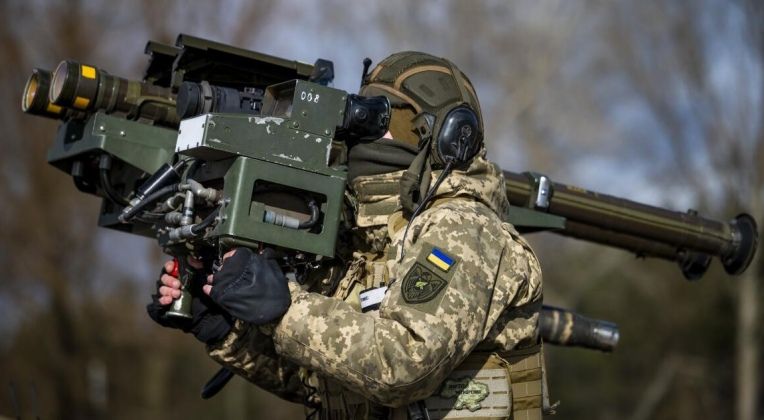
Ukrainian Serviceman with Dual Mounted Stinger Launcher
LA Times/ Pete Kiehart
The United States is undertaking a major expansion of production for the FIM-92 Stinger man-portable air defence system (MANPADS), seeking to replenish depleted inventories while meeting growing demand from NATO allies and non-NATO strategic partners. The effort reflects a broader reassessment within the Pentagon that recent conflicts have demonstrated the continued importance of short-range air defence weapons against helicopters, low-flying aircraft, cruise missiles, and increasingly against unmanned aerial vehicles. The value of man-portable air defence systems has bene highlighted in recent conflicts in the Ukrainain theatre and in Iran, with heavy losses among U.S. and Israeli aircraft during hostilities that began on February 28 attributed largely to effective use of lightweight short range air defence systems.
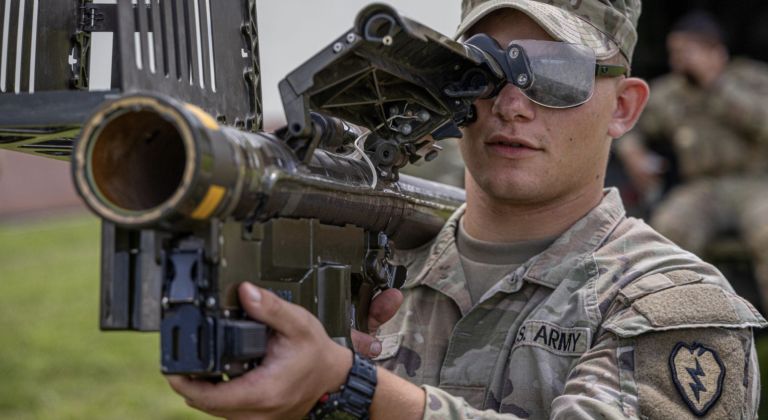
The United States allowed Stinger production to lapse for close to two decades due to low demand after the end of the Cold War, with a rise in demand from 2022 forcing Raytheon to recall retired engineers, many in their 70s, to train a new generation of workers. Much of the expertise required to manufacture the missile had effectively disappeared after years without production, with employees relying on design drawings dating back to the Carter administration. Company officials described having to recover old testing equipment from storage and re-establish manufacturing processes that had not been used in decades. Many of the missile’s electronic components had become obsolete, forcing Raytheon to redesign circuit boards and replace unavailable parts before production could resume.
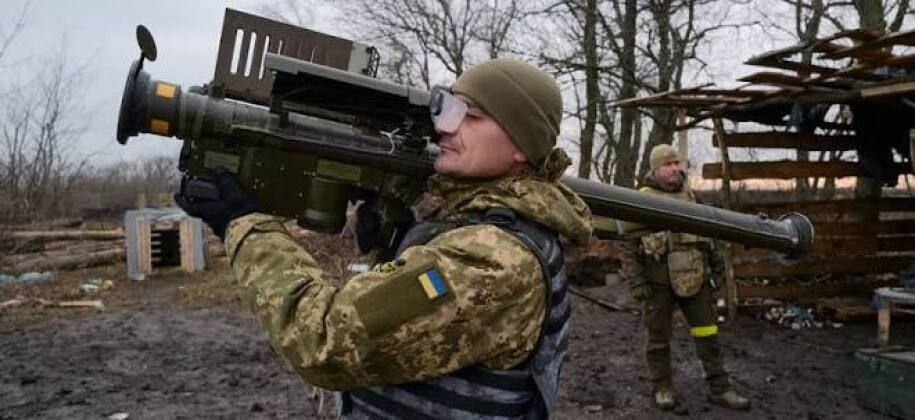
Production timelines were consequently much longer than expected. Although the U.S. Army ordered 1,700 replacement Stingers in 2022 after thousands had been transferred to Ukraine, Raytheon estimated it would take approximately 30 months before new missiles would begin leaving the production line, largely because of the time needed to rebuild the industrial base and retrain the workforce. Initial deliveries were therefore not expected until 2026. Alongside increased production in the United States, elements of manufacturing, maintenance and supply support are being expanded across Europe as part of wider NATO initiatives to strengthen the alliance’s defence industrial base. By distributing production across multiple countries, NATO hopes to improve resilience, shorten delivery times, reduce dependence on U.S. facilities, and ensure that European allies can sustain high rates of ammunition consumption during a prolonged conflict.
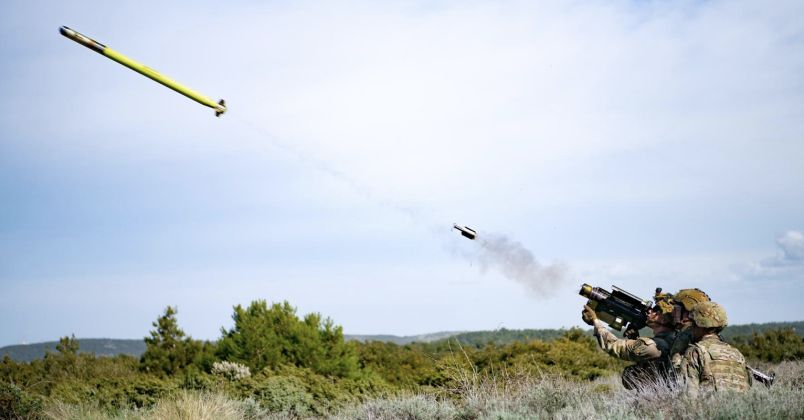
The renewed emphasis on Stinger production follows several years of unexpectedly high missile consumption. Thousands of missiles were transferred to Ukraine following the escalation of the war with Russia in 2022, significantly reducing U.S. stockpiles. Although transfers later slowed as inventories became strained, the conflict demonstrated that modern high-intensity warfare can consume air defence missiles at rates far exceeding Cold War planning assumptions. The subsequent war with Iran further reinforced these concerns by placing extraordinary pressure on American interceptor inventories, highlighting the difficulty of rapidly replacing sophisticated precision-guided weapons once large-scale combat begins.
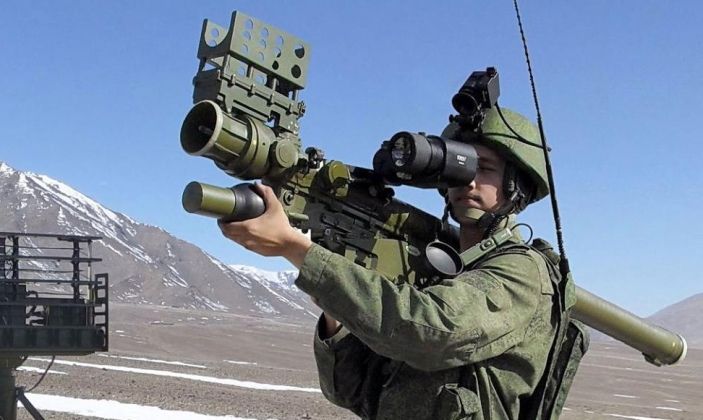
Due in large part to its age, the Stinger is generally regarded as less capable than the latest generation of Russian man-portable air defence systems, which remain one of the few capability areas where the country has retained a global lead. Russia’s 9K333 Verba, which entered service in 2014, incorporates a sophisticated three-band optical seeker operating across ultraviolet, near-infrared and mid-infrared wavelengths. This greatly improves target discrimination while making the missile considerably more resistant to flares and other infrared countermeasures. The Verba is also optimised to engage small targets with weak heat signatures, including many classes of drones and cruise missiles, an area in which older Stinger variants are less effective.
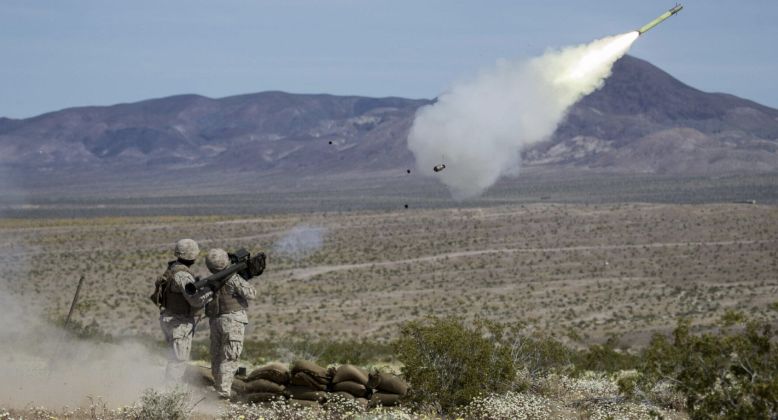
The Stinger’s seeker technology remains limited, and while the latest variants have significantly improved reliability and digital processing, the missile’s basic seeker architecture remains less advanced than that of newer systems including the Russian Verba. Russian designers have placed greater emphasis on defeating sophisticated electronic countermeasures and engaging increasingly difficult aerial targets. This reflects decades of continuous investment in MANPADS development, whereas the United States allowed Stinger production to contract sharply after the Cold War before only recently restarting large-scale manufacturing.
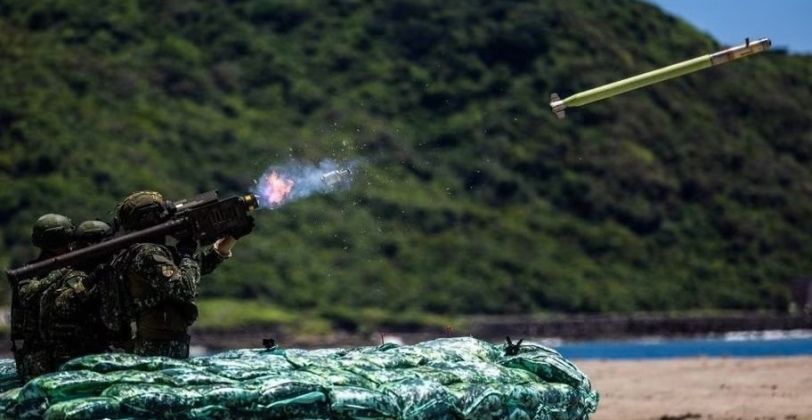
The expansion of Stinger production therefore highlights a broader transformation in Western defence planning. Rather than focusing solely on developing increasingly sophisticated next-generation weapons, the United States and its allies are increasingly recognising that industrial capacity, production resilience and the ability to sustain prolonged combat may prove equally decisive. Recent conflicts have shown that even technologically superior militaries can rapidly exhaust critical missile inventories, making the ability to manufacture large numbers of weapons almost as important as the weapons themselves.
