
U.S. Air Force Hits Major Milestone in Hypersonic Missile Program With New Test of AGM-183A Platform
Military Watch Magazine Editorial Staff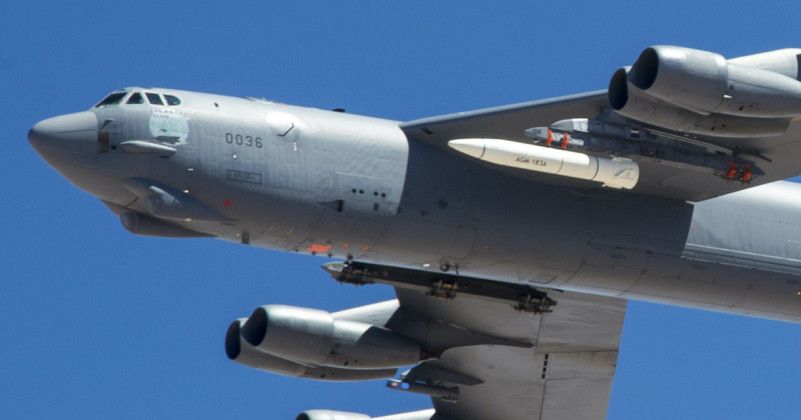
B-52H Bomber with AGM-183A Hypersonic Missile
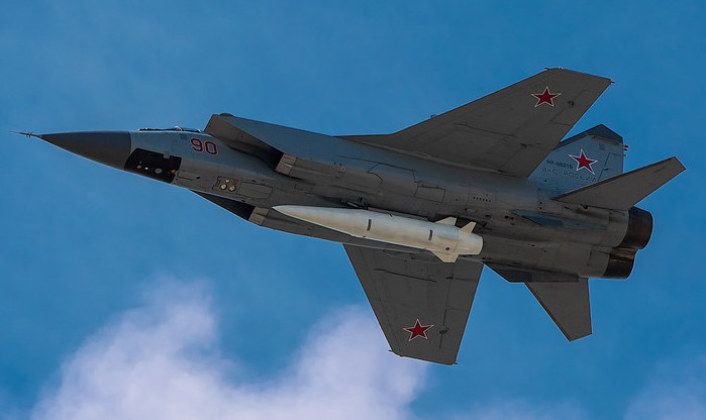
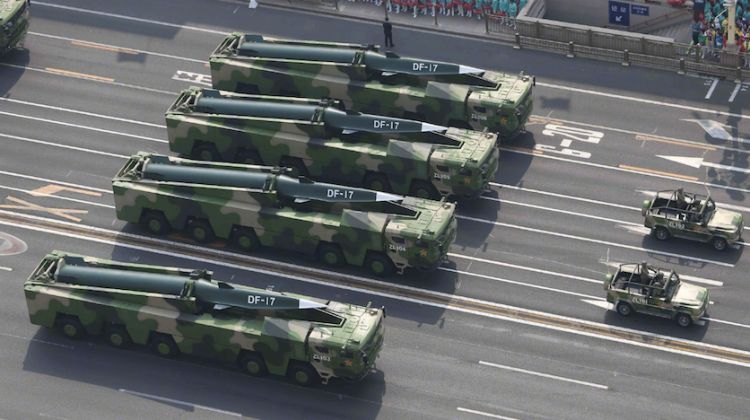
The U.S. Air Force has carried out the final captive-carry test of the Lockheed Martin AGM-183A Air-launched Rapid Response Weapon (ARRW), a hypersonic missile deployed from heavyweight aircraft and intended to provide the U.S. Military with a lead over near peer adversaries in air launched standoff weaponry. Accelerated work on the AGM-183A platform followed the unveiling of a range of revolutionary new hypersonic weapons by Russia and China, such as the former’s Kh-47M2 air launched platform revealed in 2018 and the latter’s ground launched DF-17 in service since 2019. The U.S. would expand funding for hypersonic weapons from mid-2018 in response to the new Russian weapons, and the AGM-183A promises to outperform any of its currently serving Russian analogues including the Kh-47M2 which is at present considered the world’s most capable heavyweight air to ground missile.
The latest test for the AGM-183A came on August 8th at Edwards Air Force Base, California, with the missile fired by a B-52H Stratofortress heavy bomber. The firing was carried out by the 419th Flight Test Squadron and Global Power Bomber Combined Test Force, and saw telemetry and GPS data successfully transmitted from the missile to the Navy's Point Mugu Sea Range ground stations on the California coast. The test also verified system integration with the B-52, and practiced concepts of operations that will be conducted during its first Booster Test Flight scheduled for later this year. Brigadiier General Heath Collins, the Air Force Program Executive Officer for Weapons, stated regarding the recent test: “This is a major milestone for the program, the team and our Air Force... ARRW is the first step in bringing game-changing hypersonic capabilities to our Warfighters.”
Although it is by far the oldest American bomber in service, the Vietnam War era B-52 is considered the most capable in the U.S. Air Force with its low maintenance requirements, high sortie rate and excellent reliability leading the service to plan to keep the platform in service even after retiring the much newer B-1B and B-2 platforms. The AGM-183A is also set to be deployed by the Air Force’s new F-15EX platform, the heaviest Western fighter with a standoff air to ground capability, and by B-1B Lancer supersonic bombers until their retirement in the early-mid 2030s. It remains to be seen whether Russia will develop a similarly capable missile in order to retain its lead or at the very least retain parity with the new American missile, described as a ‘super duper missile’ by President Donald Trump, with the AGM-183A setting the bar high and able to strike targets at Mach 20 where the Russian platform can only strike at Mach 10. It also remains uncertain whether the AGM-183A will have comparable manoeuvrability to the Kh-47M2, or whether its sheer speed will be relied on to evade air defence systems.
