
U.S. Air Force Deploys F-22 Raptor and B-2 Spirit Stealth Jets to Pearl Harbor in Show of Force - A Sign of Strength or Vulnerability?
Military Watch Magazine Editorial Staff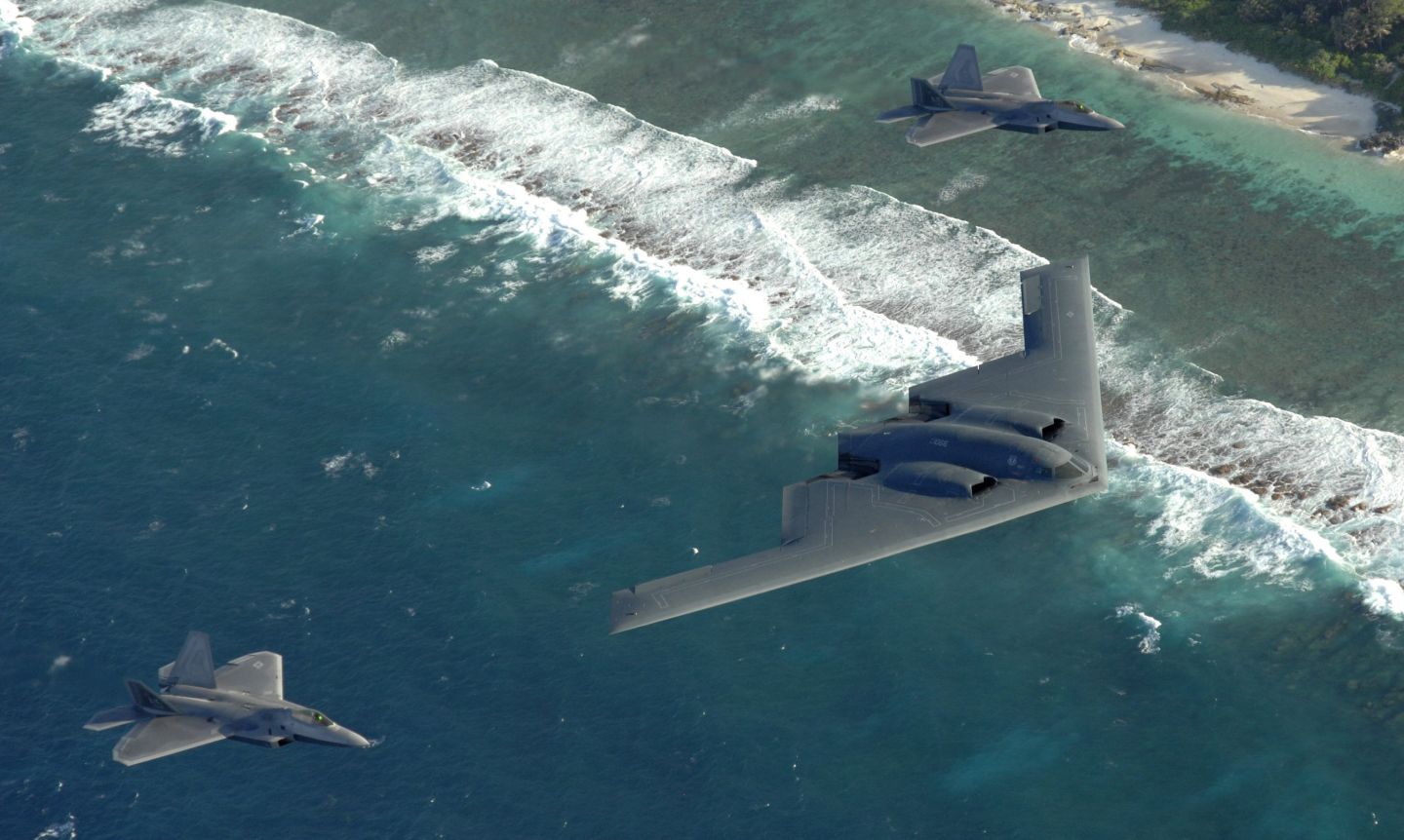
U.S. B-2 Spirit and F-22 Raptors in Formation Over the Pacific
The United States Air Force has conducted its first ever training exercise involving B-2 Sprit strategic bombers and F-22 Raptors based in Hawaii in a major show of force to its adversaries in East Asia. The exercise comes amid growing tensions with China and Russia and an unresolved conflict with North Korea - all East Asian powers against which the Raptors and Spirits are expecting to play a leading role in a potential war. Entering service in 2005 and 1997 respectively, the two aircraft represent the pinnacle of Western stealth technology - with both relying heavily on advanced radar evading capabilities to enhance their survivability against enemy air defences. Both the F-22 and the B-2 retain considerable ranges, and are designed to penetrate deep into enemy airspace as part of a first wave of attack to strike key targets and undermine enemy defences, thus clearing the way for less survivable aircraft such as the F-18 and F-35 to commence attacks in second and third waves. Deployment of these two combat jets in particular therefore carries with it a clear message - one which America’s three major East Asian adversaries are all likely to take into account.
Hawaii has long served as a key forward operating base for U.S. military operations in the Asia-Pacific, and the state also houses the U.S. Pacific Command - arguably the most important American facility of its kind other than the Pentagon. The recent exercise represents the first time B-2 bombers have operated from Pearl Harbour, and the bombers were joined by F-22 air superiority jets from the Hawaii Air National Guard. Speaking regarding the exercise, U.S. Air Force's director of air and cyberspace operations in the Pacific, Majour General Stephen Williams, stated: "The B-2 Spirits' first deployment to (Pearl Harbor) highlights its strategic flexibility to project power from anywhere in the world. The B-2s conducted routine air operations and integrated capabilities with key regional partners, which helped ensure a free and open Indo-Pacific… The U.S. routinely and visibly demonstrates commitment to our allies and partners through global employment and integration of our military forces."
With U.S. military facilities closer to the Asian mainland all threatened by the strike capabilities of potential major adversaries, with North Korea (Hwasong-12, China (DF-26) and Russia (Kh-47M2) having all recently tested advanced ballistic missiles capable of striking American bases in Guam, Okinawa, Tokyo, Cheju with nuclear warheads, an increasing emphasis on Pearl Harbour in Hawaii may well indicate a partial retreat from the increasingly vulnerable forward operating bases relied on in the past. As the B-2 and F-22 are the highest maintenance bomber and fighter in the world respectively, each requiring several days, in the B-2’s case weeks, on the ground for each combat sortie conducted, both are potentially highly vulnerable should they operate from bases closer to the Asian mainland where airfields are likely targets for air and missile attacks. How the distribution of U.S. assets will continue to change over time as the strike capabilities of American adversaries evolve remains to be seen.
