
Turkish Helicopters for Islamabad; Could Pakistan’s T129 ATAK Gunships Undermine its Military Readiness?
Military Watch Magazine Editorial Staff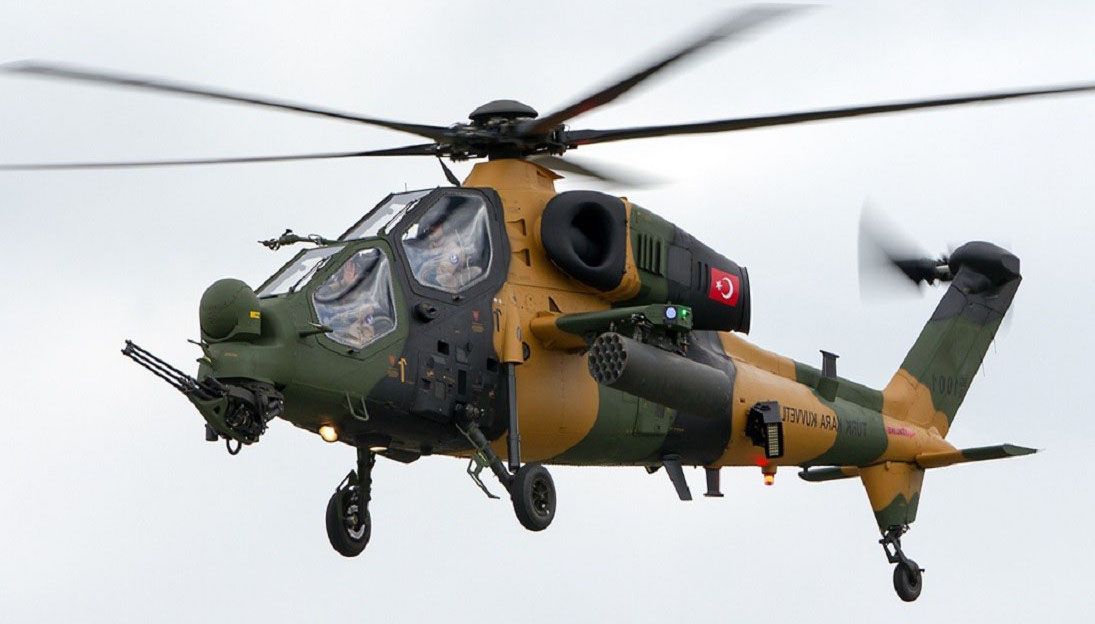
T129 ATAK Helicopter
In the largest arms deal in the history of the two states, Turkey is set to deliver 30 of its new T129 ATAK helicopter gunships to Pakistan to augment the South Asian state's ageing fleet of U.S. made AH-1 Cobras. With the Cobra first introduced n 1967, the Vietnam War era platform is increasingly inadequate to meet Islamabad’s defence needs - particularly in light of both the growing number of indigenous attack helicopters fielded by neighbouring Iran as well as India’s acquisition of cutting edge Russian Mi-35 and U.S. Apache helicopters. With Pakistan’s Cold War era defence partnership and close military ties to the United States fast deteriorating, the country has increasingly sought alternatives to U.S. and Western made arms. With China providing Pakistan with frigates and submarines for its navy, state of the art battle tanks for its ground forces and aiding Islamabad in jointly producing JF-17 fighters and developing new fifth generation jets for its air force, Turkey has emerged as a secondary defence partner for the South Asian state.
Introduced in 2014, the ATAK helicopter was developed by Turkish Aerospace Industries as the first indigenous aircraft of its kind. Like the majority of indigenous Turkish weapons systems, the helicopter was heavily based on a foreign design - in this case the European Agusta A129 Mangusta. The platform is specialised in operating in rough terrain, at high altitudes and in hot weather - suiting Turkey’s own terrain as well as that of Pakistan. The T129 is faster and retains a longer range and higher climb rate and service ceiling than the A129, which is critical considering its likely deployment to Pakistan’s mountainous regions. The ATAK is likely to be deployed for counterinsurgency operations, for which the AH-1 are poorly suited, according to reports from the Pakistani military. Pakistan’s Major General Nasir Shah stated regarding the older U.S. made platform’s limited capabilities in high altitude engagements: “The AH-1 helicopters have provided effective close support for our ground forces engaged in counter-insurgency operations, but they cannot be employed effectively in high altitude operations above 8,000 feet.”
The ATAK is capable of fulfilling both attack and tactical reconnaissance roles, though it is considerably lighter and less well armed than other more sophisticated attack platform such as the U.S. Apache - which has more than double the weight of the Turkish made platform. With only a single gun and four rocket pods, the ATAK’s firepower and armour pale in comparison to heavier dedicated attack helicopters. The rotary wing aircraft’s relatively low maintenance requirements and acquisition and operational costs nevertheless make it an attractive option for the Pakistani Army. For counterinsurgency operations the platform’s capabilities are more than sufficient, while the AH-1 is likely to be reserved for frontline deployments near Pakistan’s border with India.
A significant danger for Pakistan of acquiring the ATAK is that while it is primarily produced by Turkey, Ankara’s relatively underdeveloped defence industries means that the platform relies heavily on European made components and is produced jointly with Italy’s Leonardo. The helicopter’s engine, the LHTEC T800, was developed in the United States. With Western powers increasingly taking a hostile stance towards Pakistan as the South Asian state cements military and economic ties to China, and growing accusations being made regarding Islamabad’s support for Taliban insurgents against European and U.S. forces in Afghanistan, Western sanctions and an arms embargo remain a possibility. Indeed, such action would hardly be unprecedented with similar embargoes and economic pressure being applied during the 1990s to press Islamabad to abandon its nuclear program - as well as the cancellation of a deal to supply Islamabad with AH-1Z Viper attack helicopters in mid 2018. Should relations deteriorate further, a significant possibility, Western producers could very well halt supplies of components and spare parts needed to service Pakistani ATAK aircraft - grounding the fleet much as they did to that of Iran in the 1980s.
The United States for its part has frozen sales of additional fighter jets to Islamabad amid mounting tensions, and European producers may well soon follow. While Turkey is a key emerging economic and defence partner for Pakistan, Ankara would be unable to stop a European or U.S. arms embargo from crippling the Pakistani helicopter fleet. Purchasing the ATAK gunships therefore remains extremely risky for Pakistan, and the gunships remain vulnerable to Western sanctions and arms embargoes which could well put the entire fleet out of service within months.
