
Tensions Escalate in Syria as the United States and Iran Make New Rocket and Missile Deployments
Military Watch Magazine Editorial Staff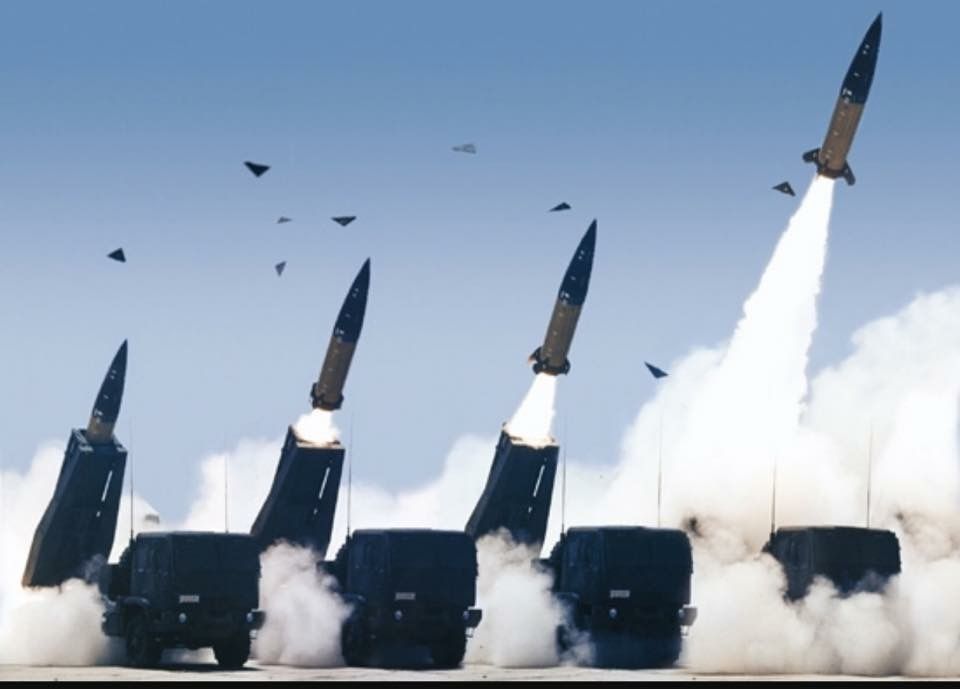
HIMAR Missile Artillery
With increasing gains being made by the Syrian Arab Army against Islamist militant forces, with the support of its Russian, Iranian and North Korean allies on the ground, the tide of the Syrian conflict has increasingly favoured a Syrian government victory since September 2015. It was then that the Russian Air Force and Special Forces intervened on the side of the Syrian government and decisively changed the course of the war. Syria's various opposition forces, which have been dominated by Islamist fighters, are supported primarily by the United States, Turkey, Saudi Arabia and Qatar, with other support coming from across the NATO alliance, the Arabian Gulf and even Israel. These powers' interests have all been threatened by the victories of Syria's armed forces, victories which could not be stalled by sanctions or by providing Islamist groups with arms shipments, material assistance or even recruitment assistance. As a result a more direct approach has been taken by the United States to attempt to forestall the defeat of its proxies - direct military intervention on Syrian territory with its own forces.
U.S. forces began their involvement in Syria with air and missile strikes against Islamic State militants, but have more recently deployed ground troops to hold territory. Hostile intentions towards the Syrian government and its allies are undeniable, with repeated calls for regime change by the U.S. government while the U.S. Air Force and Navy have targeted Syrian forces repeatedly and with growing frequency. Most recently this has manifested in the downing of a Syrian Su-22 Strike Fighter on June 18th by a U.S. Navy F-18 Hornet. The U.S. Military and Special Forces have meanwhile deployed to Syrian territory in increasing numbers. The most recent escalation has been the deployment of the High Mobility Artillery Rocket System (HIMAR) rocket artillery system to Syrian territory on June 15th, 2017, which drew criticism from the Russian Defence Ministry and was believed to be a means to facilitate further strikes against Syrian government forces.
Three days after the United States' deployment of the HIMAR rocket artillery Iran made use of its own medium range missile systems to strike Islamist forces in Syria from its territory, "a warning to terrorists" according to Iran's Revolutionary Guard forces. Like the United States, Iran has deployed its own army and Special Forces to Syria. Iran's limited use of its missile forces shortly after the U.S. deployment of its own rocket artillery may well have served as a warning to U.S. forces that it was not the only party which could escalate with such means.
The situation in Syria remains highly precarious, with each party seeing its vital interests threatened but at the same time having to act carefully to prevent direct confrontation with other major powers. Future escalations are highly likely, as no party is willing to concede its vital interests - which for the U.S. necessitates preventing Syria being reunited under the Russian aligned government of President Bashar Al Assad. As Syrian forces near a final victory, the United States is set only to increase its activities to prevent or delay this eventuality. The deployment of HIMAR systems indicates that overt military actions by U.S. forces against the Syrian military could well be set to continue.
