
Syrian Military Prepares for Large Scale Offensive in Daraa Province; Plans to Crush Insurgency Where it First Began
Military Watch Magazine Editorial Staff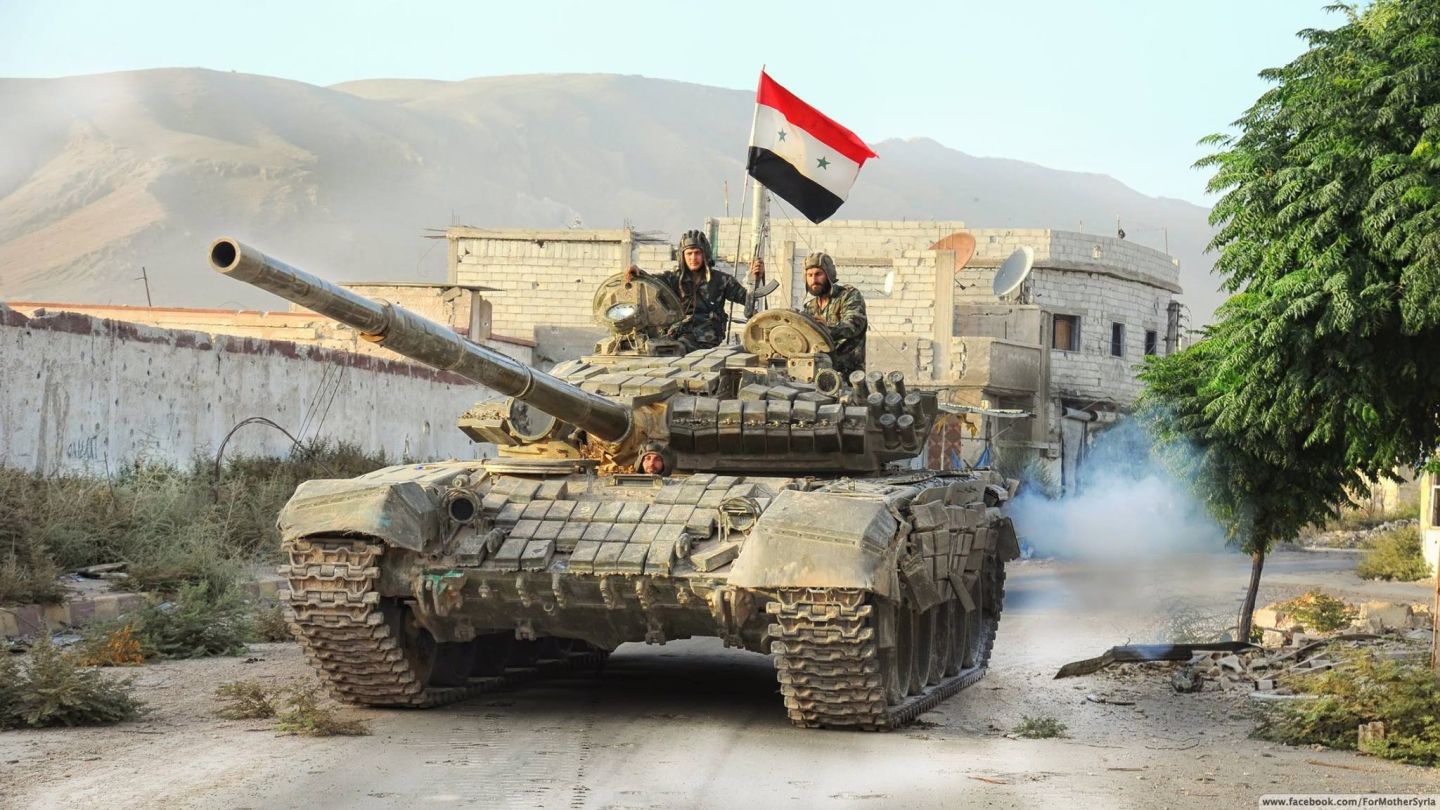
Syrian T-72 Battle Tank
After over seven years of war which has claimed hundreds of thousands of lives, Syria’s armed forces have come close to securing a total victory against the Islamist insurgent groups and Western and Arab sponsored militias which have long sought to overthrow the government in Damascus. Remaining insurgent strongholds are few in number and with the defeat of the Islamic State (ISIS), the largest and most heavily armed of all the anti government factions, hopes among Syria’s adversaries to see its government deposed by force quickly collapsed. One of the final insurgent strongholds today is Daraa province, a place of great symbolic significance for the ongoing war effort. It was in Daraa, near the Jordanian border, that the insurgency first begun in mid 2011 - and based on accounts by the Syrian government it was where foreign mercenary forces first entered the country to attack police and military units - killing several hundred within a month. With the Syrian military primarily trained for inter state conflict, and lacking experience in counter insurgency tactics, ground was quickly lost and casualties were heavy when facing these forces and control of Daraa was soon ceded.
Reports indicate that the Syrian military has begun to mobilise forces for a large scale offensive near Daraa, redeploying assets from Damascus and elsewhere to the southern front in preparation for an attack to return the province to government control. Syrian military sources indicate that allied Hezbollah and Iranian forces will not participate, possibly a measure to avoid drawing the attention of neighbouring Israel which has regularly carried out air attacks against these parties, though participation of allied Russian and North Korean assets remains a possibility. Among the forces marshalling for the assault are elite Republican Guard units, which have been redeployed from Damascus, as well as a number of paramilitary forces. The Syrian military has attempted to negotiate terms of surrender with a number of the islamist groups, which it has done with some success in a number of other regions, though whether it will succeed in this stronghold of the insurgency remains to be seen.
The United States for its part, which has maintained a large military presence in Syria against the wishes of Damascus, has sought to dissuade Syrian forces from recapturing territory from anti government militant groups which the Western Bloc has long supported, and the U.S. Air Force has on several occasions intervened in support of these non state actors. Whether insurgents in Daraa will receive overt military support from any of their sponsors remains to be seen. Syrian ground forces are themselves set to make extensive use of one of their most invaluable assets, air support, to minimise risks to their personnel and avoid losses. The Syrian Air Force, while primarily trained to engage that of neighbouring Israel in a major air war, has since the outbreak of the conflict adapted to a counterinsurgency and strike role. The country’s low maintenance MiG-21 fighters in particular have been of great value, with their sturdy airframes able to fly several sorties per day with minimal needs for spare parts and servicing. It is likely that as forces build up on the ground, the Air Force is also readying its assets to wage an air campaign to recapture Daraa and begin to bring an end to the war where it first began.
