
Syria May Look Elsewhere for Modern Air Defences to Replace Russia's S-300; Part Three - HQ-9, China
Military Watch Magazine Editorial Staff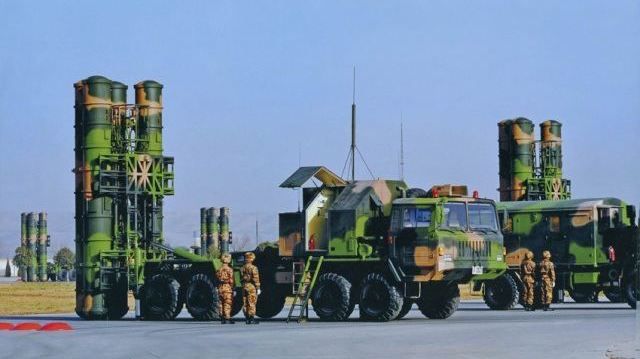
Chinese HQ-9 Surface to Air Missile System
A third potential source for long range air defence systems to upgrade the Syrian air defence network is China, a country which has maintained limited military ties to Damascus and provided some tacit support for its war effort against Islamist insurgent groups. China’s indigenous air defence systems are among the most capable in the world, and the HQ-9B long range platform is considered superior to the most advanced S-300 variants in an anti aircraft role - though still inferior to the Russian S-400. The induction of the HQ-9C in the near future could well give Beijing a platform in many ways more capable than even the S-400 however. China has shown itself highly willing to export the HQ-9 to a number of states, offering the platform to Turkey in a tender against Russian and Western alternatives and temporarily winning - until Russia moved to offer its S-400 and displaced the Chinese defence system. A number of Soviet successor states including Turkmenistan and Uzbekistan have been offered the weapons system, and Pakistan is already confirmed to have acquired the HQ-9 as an asymmetric defensive measure against advanced Indian combat aircraft.
The HQ-9 targets hostile aerial targets by firing two stage missiles armed with large 180kg warheads, and these travel at speeds of up to Mach 4.2. The surface to air missiles make use of thrust vector control, and are guided by a combination of inertial guidance, mid course uplink and active radar terminal guidance systems. The Chinese air defence platform retains an engagement radius of up to 300km and incorporates advanced semi active radar homing & infrared homing capabilities. Combined with its computing power, speed, range and high payload this makes it truly lethal, posing a major threat to hostile aircraft at all altitudes. The HQ-9 in Syrian hands would likely prove an even greater asset than the S-300 PMU-2 initially offered by Russia, and the system is highly compatible with older Russian made platforms such as the S-200 already fielded by Damascus. While China maintains strong economic ties to Israel, it has also proven to have fewer political concerns regarding selling its weapons systems abroad and will likely be more willing than Russia to withstand limited Israeli and Western pressure not to sell the platform to Damascus. The country has sold both offensive and defensive weapons to both Western and Iranian aligned forces in the Middle East in the past and continues to do so until the present - emerging as a key supplier to Iran, Saudi Arabia, Qatar and the United Arab Emirates of systems form combat aircraft to anti ship cruise missiles, attack drones and even intercontinental ballistic missiles.
Unlike the S-300, which Russia was reportedly considering providing free of charge, Syria will most likely be expected to pay in full for the HQ-9, while China may also expect to take greater role in the country’s post war reconstruction in return for the weapons system. While China’s willingness to provide the HQ-9 remains uncertain, threatening to provide the weapons system to Syria could well give Beijing key leverage over Western powers regarding their military deployments in East Asia - or alternatively force Israel to itself exert pressure on its Western allies in line with Chinese interests to prevent Beijing from providing Syria with the weapons system. With Syria having also been unable to acquire modern interceptors from Russia to match the elite of the Israeli Air Force, being offered only relatively basic MiG-29 medium weight fighters, China may well also fill this niche after the war in a way Russia is unable to for political concerns, providing Syria with modern fighters for its defence capable of matching the Israeli F-15 and this providing some form of parity between the two Middle Eastern powers. China’s willingness to export its top tier fighters such as the J-11B remains as of yet unknown however.
