
SY-400 in Doha; Qatar's Chinese Ballistic Missiles as an Effective Deterrent Aimed at the Emirates and Saudi Arabia
Military Watch Magazine Editorial Staff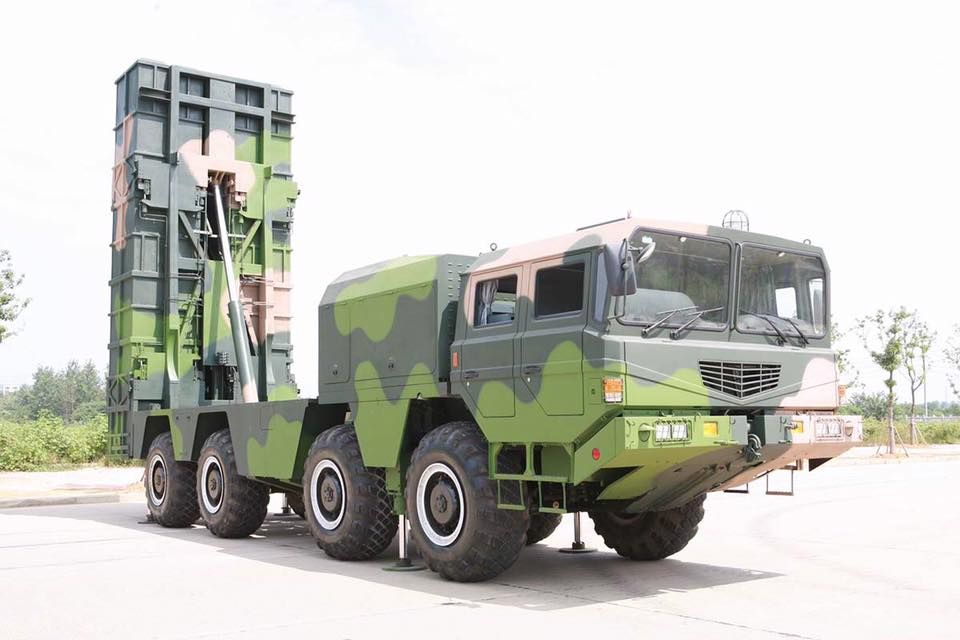
SY-400 Missiles on Transporter Erector Launcher
Defpost
First revealed in December 2017, the small Arabian monarchy of Qatar has acquired a sizeable arsenal of Chinese made SY-400 short range ballistic missiles. The SY-400 was developed specifically for China's export clients, and serves as an alternative to the Russian Iskander-E. The missiles have been in service since 2008, and have a range of 400km - putting them well within range of major targets in the United Arab Emirates and Saudi Arabia. The platform is considered a lighter and lower cost alternative to more advanced missile systems, such as the North Korean Rodong-1 in Iranian service.
Qatar's acquisition came at a time of growing tensions with its Arab neighbours, with a months long blockade imposed on it and threats of military action coming from Saudi Arabia and the United Arab Emirates. The country's has made a series of arms purchases including F-15E strike fighters from the U.S., S-400 SAM systems from Russia, and now ballistic missiles from China. The purchase of the SY-400 was denounced by Saudi Arabia as an aggressive move - though it is one which could prove highly effective in deterring military action by Qatar's adversaries. While it will take well over a year, possibly several, for Qatar to both receive fighter jets and air defence systems and to learn how to operate these complex systems effectively - the SY-400 gives it a relatively simple and near instant way of enhancing its capabilities. Both Saudi Arabia and the United Emirates have been made well aware of their vulnerability to even the most primitive of missiles, with their supposedly state of the air U.S. made air defences failing to down even primitive lone Yemeni missiles using technology dating back to the 1980s. Against Qatar's new SY-400, highly mobile platforms mounted on transporter erector launchers, the two Arab states' modern cities could be ludicrous targets. One need only imagine the September 11th attacks in New York City, only with a far higher payload and more specialised attack platforms compared to hijacked aircraft - and in far greater numbers. Even single missile striking Burj Khalifa in Dubai could bring the entire 830m structure down with a catastrophic impact which would dwarf the attack on the Twin Towers.
With Qatar's military far eclipsed in its capabilities by its neighbours - a single unit of Saudi F-15 fighters could likely destroy Qatar's meagre and questionably trained Air Force within a day - the purchasing of ballistic missiles could well be seen as an asymmetric measure against its larger adversaries. This is notably a measure Iran has invested in heavily, developing an advanced missile program with North Korean assistance with the ability to devastate cities in Saudi Arabia and the UAE - compensating for their far greater defence budgets with a cost effective and direct means of striking. They key to deterrence and stability is mutual vulnerability, and ballistic missiles are an effective means of making the Qatar's adversaries as vulnerable as the small state is itself - despite its overall negligible military capabilities.
