
Sweden's Saab Sees a Growth in Weapons Sales as a Result of Growing Military Tensions Globally
Military Watch Magazine Editorial Staff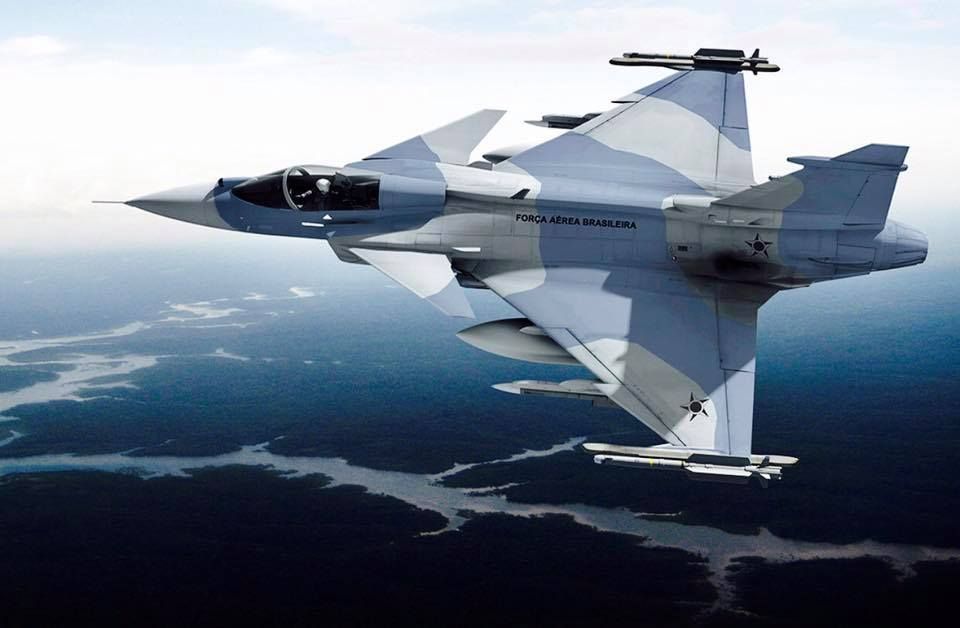
Saab Gripen Light Multirole Fighter
Sweden's leading arms manufacturer, the Saab Defense Group, has experienced a significant growth in sales and is expecting further increases to its revenues in the near future. Saab reported in October 2017 that it has received a 62% increase in booked orders in the first nine months of the year. Booked orders from January to September 2017 amounted to $2.9 billion - more than the total number of orders for 2016 in just nine months. Increased tensions in the Asia-Pacific region, particularly as a result of the Korean crisis, were cited as a reason for highly optimistic forecasts. Saab is one of several Western arms corporations which has sought to reap extensive benefits from the effects of the United States' 'Pivot to Asia' in the early 2010s - an event which led several nations throughout the region to increase their defence expenditures.
One of Saab's most prolific products, the Gripen light multirole fighter, is today one of the lightest fourth generation fighters ever designed. With a cost far exceeding that of the F-16 and MiG-29, its Russian and American equivalents, with few capability advantages and several drawbacks in comparison, the Gripen's success in export markets has been limited. Indeed, with such small production relative to Mikoyan and Lockheed Martin, Saab's fighter program was bound to cost more and funds available for investment in research and development were never going to be as high - with the small Swedish manufacturer lacking the economies of scale of the two superpowers. Saab has nevertheless recently attempted to market their fighter to a number of potential buyers such as India, Indoensia and Switzerland with little success. Growing tensions in both Eastern Europe and in East and South Asia have given Saab far greater prospects for exporting their fighter despite its shortcomings. Saab has gone to great extents to market their product, including designing a carrier based variant of the Gripen, Gripen M, for entry into India's carrier based fighter competition. Such an ambitious project is highly unlikely to materialise into any successful exports, with countries with far more experience in carrier based operations such as Russia, France and the United States offering their own platforms. India is almost certain not to purchase carrier based fighters from a country with no experience operating aircraft carriers - but the Gripen M is nevertheless a sign of Saab's tenacity when it comes to trying to gain market share for its products.
Projects such as the A26 submarine, which fared poorly on the European market, could also potentially be met with more success in the Asia-Pacific region - where they are today being marketed aggressively. Growing regional tensions are seen as a critical opportunity in this regard. Whether Saab will be able to market its products successfully in Asia-Pacific remains in question, as Sweden has little history of sales to the region and is faced by fierce Russian and U.S. competition - a market that few in Europe have had success in penetrating meaningfully. Nevertheless, prospects for new arms sales today are higher than they have been in many years - and with the U.S. military presence in the region only growing and tensions mounting such business opportunities are only going to increase. Saab may yet see its attempts to market products to Asia and penetrate the region's arms markets bear some fruit.
