
Sweden's Military Faces Significant Difficulties Acquiring a Cost Effective and Reliable Air Defence System
Military Watch Magazine Editorial Staff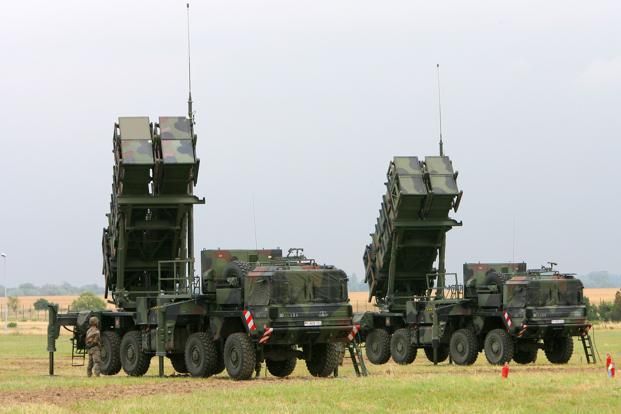
Patriot Missile Batteries
AFP
Perceiving a growing threat from Russia, and as part of its effort to strengthen military ties to the NATO alliance, Sweden's government announced in November 2017 its intention to purchase U.S. Patriot missile batteries. The missiles are the most advanced Western made long range SAM systems capable of fulfilling both anti aircraft and anti missile roles, but are primarily tasked with countering ballistic missile attacks. The Swedish military budgeted $1.25 billion to purchase four Patriot units with accompanying radar, wiring and fire ramps. However the Swedish Defense Materiel Administration (FMV) recently discovered that hidden costs could well lead to a final price of $3.1 billion - almost 250% of what they were initially willing to pay. This would make the Patriot system the largest foreign arms procurement in the country's history.
Sweden had initially requested 200 PAC3 missiles and 100 simpler missiles for the Patriot systems, aimed primarily at countering Russian Iskander ballistic missiles. These missiles imposed significant additional costs however - but without them the Patriot would be essentially useless. According to Joakim Lewin of the FMV, the price could increase further as the demand for more of the costly missiles could grow exponentially in future. He stated regarding the Patriot system: "It cannot be entirely without missiles. This would render the entire system quite meaningless. On the other hand, though, it's most important to get started with personnel training, and it requires more materiel,"
Critics of the Patriot deal have suggested less costly alternatives. As perhaps the most capable and cost effective SAM systems currently in service, the Russian S-300 and S-400 systems have proven to be extremely popular export platforms in recent years. Though these systems surpass the Patriot in all fields including range, rate of fire, accuracy and altitude among others, purchasing them is hardly a feasible option for a state which perceives Russia to be its primary potential adversary. China and South Korea have also developed potent and cost effective SAM systems exceeding the capabilities of the Patriot. Purchasing these is also highly unlikely for political reasons particularly considering that the Korean platform, the Cheolmae II, was developed with substantial Russian assistance. On the other hand air defences have proven to hardly be the forte of Western defence industries. When analysing European alternatives to the Patriot, their capabilities particularly in terms of range left much to be desired - while the American system was considered a more effective complement to existing Swedish weapons systems. The additional advantage of enhanced defence ties with the United States, something Sweden increasingly seeks, was also not to be underestimated. As the Swedish Defence Materiel Administration stated: "Due to the threat assessment made by the Armed Forces and the demands made upon us, the Patriot became a better option." Ultimately Sweden is likely to increase its defence budget to accommodate the purchase, while the threat of Russian aggression would serve as an excellent pretext under which to do so. The Patriot's performance nevertheless remains highly questionable, with its combat record against even the most primitive of ballistic missiles such as the Scud-B, demonstrated from 1991 to 2017, leaving much to be desired and causing operators such as Saudi Arabia to look to Russia and Israel for alternatives. This being considered, the Patriot's ability to protect Swedish airspace from even basic threats, let alone platforms as advanced as the Russian Iskander, remains in serious question.
