
Super Hornet in the Blue Angels: First F-18E Fighter Joins U.S. Navy’s Air Demonstration Squadron
Military Watch Magazine Editorial Staff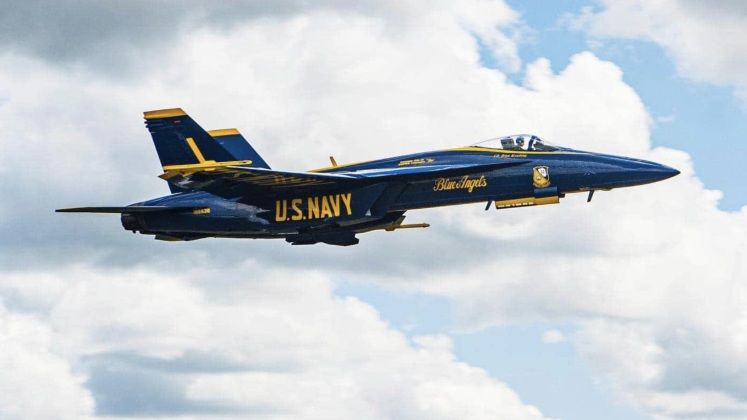
Blue Angels F-18E Super Hornet
The U.S. Navy’s Blue Angels air demonstration squadron has received its first Boeing F-18E Super Hornet fighter, which touched down at the unit's home base at Naval Air Station Pensacola in Florida on July 27th. This followed the publication of pictures of the first F-18E in Blue Angels colours, with the fighters set to replace the older F-18C Hornet in the unit. Navy Command Brian Kesselring, commanding officer and flight leader of the Navy Flight Demonstration Squadron, stated regarding the transfer: “Acquiring our first Super Hornet is a momentous step in our inevitable transition scheduled for later this year and it required a herculean effort to get these fleet jets ready for our team. We would like to especially thank the teams at Boeing, Chief of Naval Air Training Command, Naval Air Systems Command, Fleet Readiness Center Southeast, and Naval Supply Systems Command Weapons Systems Support." The Blue Angels are set to receive a complete squadron of Super Hornets by the end of 2020, and are expected to be able to perform airshows with them by the end of 2021. The squadron will include 9 F-18Es and 2 of their twin seat variants the F-18F, all of which will be modified to suit the team's unique needs.
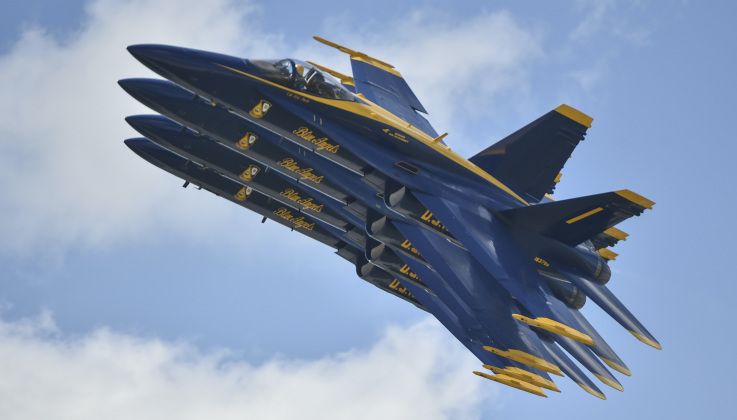
The Blue Angels have been active since 1946, and have flown the F-18 Hornet for 34 years starting in 1986. The Hornet replaced the A-4F Skyhawk II from that time, which itself had replaced the F-4J Phantom II in 1969. With the F-18 Hornet retired from the U.S. Navy in 2019, the Super Hornet is currently the only fighter which deploys from American carriers - the first time the service has had to rely on just a single jet. Both the Super Hornet and the Hornet are closely based on the F-5 Freedom Fighter which entered service in the U.S. Air Force in 1962, but are considerably larger with entirely new engines, avionics and weaponry. The Super Hornet was developed as a heavier more powerful derivative of the Hornet, and provided a lighter and cheaper option for the Navy to the F-14D Tomcat heavyweight platform. While the Tomcat had a much larger radar, a longer range and a higher speed its maintenance requirements and operational costs were both high - leading to its gradual phasing out of service after the Cold War’s end in favour of the cheaper Super Hornets. The F-18E is currently set to be joined in frontline service by the F-35C fifth generation stealth platform and later on by the sixth generation Air Dominance Fighter.
